
Over the past two days, Prime Minister Narendra Modi attended the 49th Association of Southeast Asian Nations (Asean) Summit, the Quad leaders’ summit, the 23rd Asean-India Summit and the 21st East Asia Summit (EAS) in Manila, the Philippines. The meetings covered tourism, critical minerals, maritime cooperation and regional security.
India’s participation highlights its engagement with several international groupings and strategic partnerships. From Brics and the G20 to the Quad and the Shanghai Cooperation Organisation (SCO), these platforms bring countries together around shared economic, political and security interests. India is a member of some, a strategic or dialogue partner of others, and engages with groupings such as Asean despite not being a member.
What are these groupings, what are their objectives, and what role does India play in them? Here is a look at some prominent alliances and diplomatic platforms.
Brics
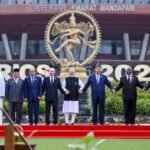
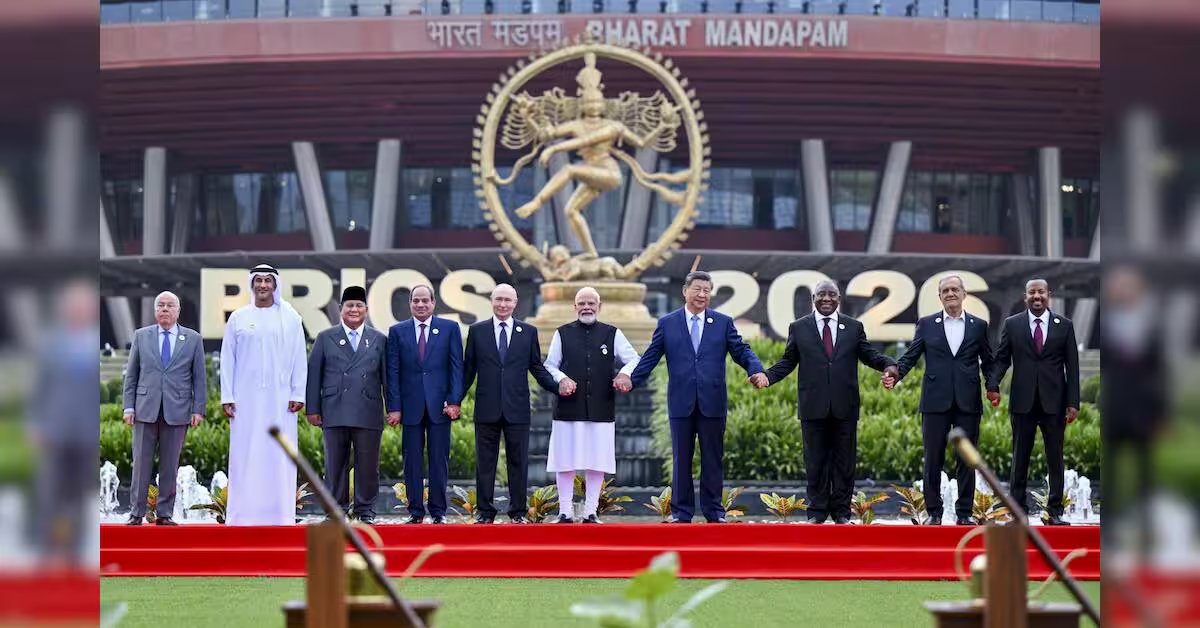
Brics is an intergovernmental bloc of 11 major emerging economies. Originally comprising Brazil, Russia, India, China and South Africa, it coordinates economic, political and strategic policies to give developing nations greater influence in global affairs.
Following expansions in 2024 and 2025, the bloc, often called Brics+, has 11 full members: Brazil, Russia, India, China, South Africa, Egypt, Ethiopia, Iran, Saudi Arabia, the United Arab Emirates and Indonesia. Its 10 partner countries are Belarus, Bolivia, Cuba, Kazakhstan, Malaysia, Nigeria, Thailand, Uganda, Uzbekistan and Vietnam.
India holds the 2026 Brics chairship. Leadership rotates annually, from January 1 to December 31, among member states, traditionally following the order of the letters in the Brics acronym.
Brics seeks to counterbalance Western-led institutions such as the G7, International Monetary Fund and World Bank, while reshaping global trade and finance. According to EY India’s Economy Watch, Brics+ accounts for roughly 45 per cent of global GDP by purchasing power parity, drives more than half of global economic growth and represents nearly half of the world’s population.
With major producers such as Saudi Arabia, Russia, Iran, the UAE and Brazil, it also has significant influence over oil, gas, agricultural output and critical minerals needed for clean energy and technology. Members also promote trade in local currencies to reduce reliance on the US dollar.
G20
The Group of Twenty (G20) brings together 19 major countries, the European Union (EU) and the African Union to coordinate policies on trade, finance and global challenges. India is a founding member. Established in 1999 following the Asian financial crisis, it was upgraded to a leaders’ summit in 2008.
The G20 has no permanent secretariat and operates under a rotating presidency. The US holds the presidency in 2026 before handing it to the UK in 2027. Its members represent roughly 85 per cent of global GDP, 75 per cent of international trade and two-thirds of the world’s population.
The forum brings developed and developing nations together to build consensus. It coordinates responses to global crises, including the 2008 financial crash and pandemic-era debt relief, and addresses issues such as artificial intelligence governance, climate finance and clean energy transitions.
Quad
The Quadrilateral Security Dialogue, or Quad, comprises India, the US, Japan and Australia. Revived in 2017 after an earlier attempt at cooperation in 2007, it seeks to promote a free, open, inclusive and stable Indo-Pacific.
Its agenda includes maritime security, critical and emerging technologies, infrastructure, cybersecurity, disaster relief, health security and resilient supply chains. However, it is not a formal military alliance and has no mutual defence treaty.
The grouping has gained significance amid concerns about China’s expanding influence in the Indo-Pacific and the need to maintain freedom of navigation and a rules-based regional order. For India, it provides a platform to deepen cooperation with three major strategic partners and advance its Indo-Pacific interests. The leaders met in Manila on November 17, 2026, on the sidelines of the Asean summit.
SCO
The Shanghai Cooperation Organisation (SCO) was established in 2001 by China, Russia, Kazakhstan, Kyrgyzstan, Tajikistan and Uzbekistan. India and Pakistan joined as full members in 2017, followed by Iran in 2023 and Belarus in 2024, taking its membership to 10 countries.
The organisation focuses on regional security, counterterrorism, combating extremism and separatism, economic cooperation and connectivity. For India, membership enables direct engagement with Russia, China and Central Asian countries on regional security and connectivity.
I2U2
I2U2 comprises India, Israel, the United Arab Emirates and the US. Initially called the International Forum for Economic Cooperation, it was formally launched at the foreign ministers’ level in 2021 and held its first leaders’ summit in 2022.
Unlike traditional security alliances, it focuses on economic and technological cooperation, including investment, infrastructure, food security, clean energy, water, transport and space. For India, it offers an opportunity to strengthen economic and strategic engagement with West Asia and deepen ties with Israel, the UAE and the US.
Other international groupings
Asean
Established in 1967, the Association of Southeast Asian Nations (Asean) promotes economic growth, political stability and regional cooperation. Its 11 members include Brunei, Cambodia, Indonesia, Laos, Malaysia, Myanmar, the Philippines, Singapore, Thailand, Vietnam and Timor-Leste. India is not a member but has been a dialogue partner since 1995 and a strategic partner since 2012. Engagement with Asean is central to India’s Act East Policy.
East Asia Summit
Established in 2005, the East Asia Summit (EAS) brings together 19 participants, including the 11 Asean members, India, Australia, China, Japan, New Zealand, South Korea, Russia and the US. The leaders-led forum discusses regional issues such as maritime security, terrorism, economic integration, climate change and connectivity. India is a founding participant, using the platform to engage with major regional powers.
G7
The Group of Seven (G7) comprises Canada, France, Germany, Italy, Japan, the UK and the US. Established in 1975 as the Group of Six, it expanded when Canada joined in 1976. The European Union also participates in its meetings. The informal grouping coordinates responses to global challenges, including trade, financial stability, energy security, climate change and geopolitical conflicts. India is not a member but has attended several summits as an outreach partner.