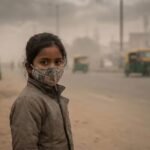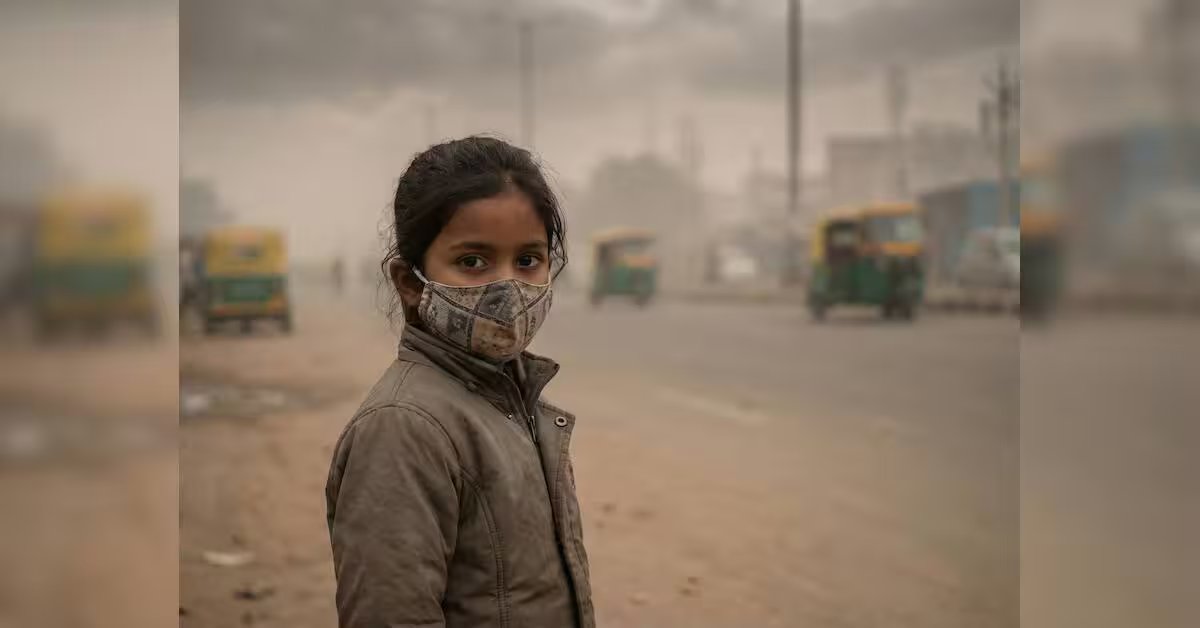

Delhi’s air quality remained in the ‘poor’ category on Wednesday morning, with the city-level Air Quality Index (AQI) easing to 214 at 7 am from 246 at the same time on Tuesday, according to the Central Pollution Control Board’s (CPCB’s) real-time data. PM2.5 continued to be the prominent pollutant in the capital.
The improvement comes a day after the Commission for Air Quality Management (CAQM) revoked restrictions under Stage III of the Graded Response Action Plan (Grap) across Delhi-NCR. The decision, taken on November 17, followed a downward trend in pollution levels, with Delhi’s daily average AQI recorded at 204. Measures under Grap Stages I and II remain in force.
The Delhi Directorate of Education has also directed schools to resume physical classes for all students with immediate effect. In a circular dated November 17, the department said the CAQM had revoked Stage III actions under the Grap schedule and instructed government, government-aided and unaided recognised private schools to conduct classes in physical mode.
Uttam Nagar records highest AQI in Delhi
Despite the improvement in the city-level reading, pollution levels remain elevated across several parts of the capital. Of the 58 Delhi monitoring stations with valid readings at 7 am, 37 recorded AQI levels above 200. One station reported a reading above 300, while none entered the ‘severe’ category.
Uttam Nagar recorded the highest AQI at 399, followed by Chandni Chowk at 292 and Burari Crossing at 286. Delhi Technological University (DTU) recorded 279, while Sirifort registered 278. NIH Narela reported 277, North Campus, Delhi University, recorded 276, and CRRI Mathura Road stood at 270.
At the other end, Major Dhyan Chand National Stadium recorded the lowest AQI at 113, followed by Cantonment Area at 124 and the Delhi Pollution Control Committee’s Pusa station at 125. These locations were in the ‘moderate’ category.
Under the CPCB’s National Air Quality Index classification, readings between 0 and 50 are categorised as ‘good’, 51 and 100 as ‘satisfactory’, 101 and 200 as ‘moderate’, 201 and 300 as ‘poor’, 301 and 400 as ‘very poor’, and 401 and 500 as ‘severe’.
NCR cities continue to report elevated pollution
Air quality across neighbouring National Capital Region (NCR) cities remained mixed. Bhiwadi in Rajasthan recorded the highest AQI among the listed NCR cities at 289, followed by Gurugram at 265, Faridabad at 254 and Bahadurgarh at 252.
Greater Noida recorded an AQI of 217, while Delhi stood at 214. Ghaziabad reported 196 and Noida 190. Further out, Panipat recorded 173, Sonipat 153 and Rohtak 151. The readings indicate that several cities around the capital continued to report poor air quality even as the regional pollution situation improved.
Ballabgarh becomes the most polluted city in the country
Among the 282 cities with valid readings in the CPCB’s 7 am dataset, Ballabgarh in Haryana recorded the highest AQI at 330, followed by Bileipada in Odisha at 307 and Bikaner in Rajasthan at 303.
Khanna in Punjab recorded an AQI of 291, followed by Bhiwadi at 289 and Gummidipoondi in Tamil Nadu at 284. Gurugram registered 265, while Panchgaon in Haryana recorded 264.
At the other end of the spectrum, Eloor in Kerala reported the lowest AQI at 30, followed by Leh in Ladakh at 37. Srinagar in Jammu and Kashmir and Kalaburagi in Karnataka both recorded 40. Kiul in Bihar reported 41, while Chamarajanagar and Chikkamagaluru in Karnataka recorded 42 and 43, respectively.
Grap Stage III lifted, but other restrictions remain
The CAQM’s November 17 order revoked the restrictions imposed under Grap Stage III with immediate effect, citing the improvement in Delhi’s daily average AQI to 204. The commission said forecasts by the India Meteorological Department and the Indian Institute of Tropical Meteorology indicated that air quality was likely to remain in the ‘poor’ or ‘very poor’ categories in the coming days.
However, the withdrawal of Stage III does not mean all pollution-control restrictions have ended. Measures under Grap Stages I and II will continue to be implemented across the NCR.
The CAQM has also retained the separate precautionary measures announced in its October 30 order for the period from November 5 to 20. These include restrictions on dust-generating demolition and outdoor construction activities across the NCR, subject to specified exemptions, and a direction for government and private offices in Delhi and certain NCR districts to operate with up to 50 per cent of staff attending physically, with the remaining employees working from home where applicable.