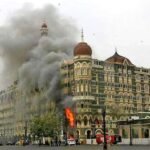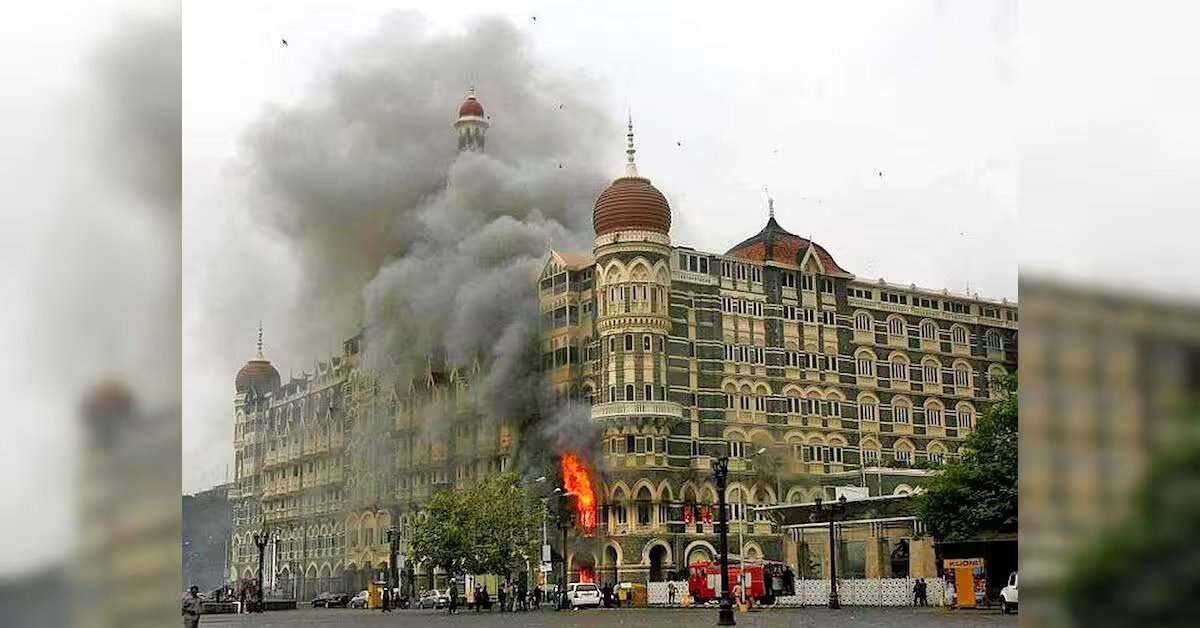

For three days, the city’s fast-paced rhythm came to a halt as the attacks unfolded and a massive security response followed. According to news agency PTI, the incident left 166 people dead and injured more than 300, including civilians, foreign nationals, security personnel and hospital staff.
Nearly 18 years later, the events of those nights remain etched in India’s memory for the scale of violence, the prolonged siege and the heroic rescue operations that followed.
How the attack unfolded
The attackers, divided into four teams, set off from Karachi on November 21. On November 23, they hijacked the Indian fishing boat Kuber and killed its crew. They forced the captain to navigate towards Mumbai before murdering him too. The terrorists then approached the city in inflatable boats.
November 26: The night the siege began
Evening: Around 7 km off the coast, the terrorists abandoned Kuber and moved towards the city.
8:00 pm: They split into groups and landed at Badhwar Park and Sassoon Docks in south Mumbai.
9:20 pm: The first wave of attacks began. The crowded Chhatrapati Shivaji Terminus, Nariman House, Leopold Cafe and the Oberoi Trident were hit. Two gunmen stormed the Taj Mahal Palace Hotel and opened fire on guests and staff.
November 27: Fire, gunfights and rescues
12:30 am: Assistant Sub-Inspector Tukaram Omble confronted Kasab and grabbed the barrel of his AK-47 rifle. He was shot at close range while holding on, allowing other officers to overpower Kasab. While Kasab was arrested, Ismail Khan was killed. Fires erupted at the Taj, damaging its dome.
1:00 am: Army personnel reached the hotel as firefighters worked to control the flames. Police cordoned off the Oberoi Trident.
6:00 am: National Security Guard (NSG) commandos arrived and launched operations at both hotels, rescuing several hostages.
4:00 pm: Fighting continued across the Taj and Oberoi. At Nariman House, rescue efforts began amid explosions and gunfire.
November 28: Key breakthroughs
7:00 am: NSG commandos landed on the roof of Nariman House from a helicopter, and the operation intensified.
11:00 am: The siege at the Oberoi Trident ended, with the remaining hostages freed and both gunmen killed.
4:00 pm: The standoff at Nariman House concluded, and the surviving hostages were rescued.
November 29: The Taj retaken
6:00 am: After a fierce overnight battle, NSG commandos secured the Taj Mahal Palace hotel. The last attackers were neutralised, ending the 60-hour siege and freeing the remaining hostages.
8:00 am: An all-clear was declared after NSG commandos conducted room-by-room sweeps of the Taj Mahal Palace hotel to defuse unexploded grenades and clear the premises before handing control back to the Mumbai Police.
What followed after the attack?
Following the attacks, then Union Home Minister Shivraj Patil, Maharashtra Chief Minister Vilasrao Deshmukh and Deputy Chief Minister RR Patil resigned amid widespread public outrage over intelligence and security lapses.
Several steps were taken to overhaul the security system. Parliament passed laws to create the National Investigation Agency (NIA) and amended the Unlawful Activities (Prevention) Act (UAPA). The government also strengthened coastal surveillance and set up regional NSG hubs in Mumbai, Chennai, Hyderabad and Kolkata.
Based on the interrogation of the sole surviving gunman Ajmal Kasab and forensic evidence, India compiled dossiers establishing that the attackers belonged to the Pakistan-based group LeT. Kasab was convicted in 2010 and executed in November 2012.
David Coleman Headley, one of the key conspirators who conducted reconnaissance of Mumbai ahead of the attacks, remains incarcerated in the United States, serving a 35-year federal prison sentence. Meanwhile, Tahawwur Hussain Rana, another accused in the conspiracy, was extradited from the US to India in April 2025 and is lodged in New Delhi’s Tihar Jail, awaiting the framing of charges in his trial.
The trial against Zabiuddin Ansari, alias Abu Jundal, the handler who taught Hindi to the 10 Lashkar-e-Taiba terrorists, is underway in the 26/11 terror attacks case. However, steps to execute proclamation orders against six other accused, including Lashkar operatives Hafiz Saeed and Zaki-ur-Rehman Lakhvi, are yet to be taken.
The scars continue to haunt
The scars left by the tragic events continue to haunt those who witnessed them and the families who lost their loved ones. Every year, floral tributes are paid at the Mumbai Police headquarters to those who made the ultimate sacrifice while fighting the terrorists during the attacks. Homage is also paid at Mumbai CSMT, Cama and Albless Hospital and other locations targeted by the Pakistani terrorists.
Mumbaikars also gather at “Prerana Sthal”, the statue of Assistant Sub-Inspector Tukaram Omble, who fought the terrorists with a lathi and was killed while capturing Kasab at Girgaon Chowpatty in south Mumbai.