
The Bharatiya Janata Party (BJP) on Monday accused the Congress and Leader of Opposition Rahul Gandhi of being unable to acknowledge India’s achievements after the country retained its position as Asia’s third most powerful nation in the 2026 Asia Power Index released by Australia’s Lowy Institute.
The report placed India behind the United States and China, while highlighting its growing regional influence and Prime Minister Narendra Modi’s standing as the second-most effective regional leader, after Chinese President Xi Jinping.
India’s overall score rose by 0.5 points to 40.5, consolidating its status as a major power in Asia despite a decline in its economic capability.
The BJP described the findings as evidence of India’s expanding strategic, economic, diplomatic and cultural influence, crediting Modi’s leadership for the country’s growing global standing.
BJP accuses Congress of spreading negativity
BJP leader Sambit Patra cited the report in a post on X, saying it reflected India’s progress in diplomatic influence, future resources, economic relationships and defence networks.
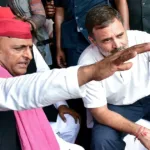
He said the country was increasingly establishing its identity as a global power and accused Rahul Gandhi and the Congress of questioning India’s achievements instead of acknowledging its progress.
“While the world is acknowledging India’s growing strength and global leadership, Rahul Gandhi and the Congress party are constantly trying to spread negativity by questioning the country’s achievements,” Patra said.
He asked Gandhi to explain why the Congress found it difficult to recognise India’s achievements when international institutions were acknowledging the country’s growing power and what he described as the effective leadership of Prime Minister Narendra Modi.
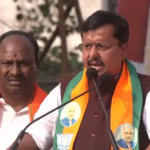
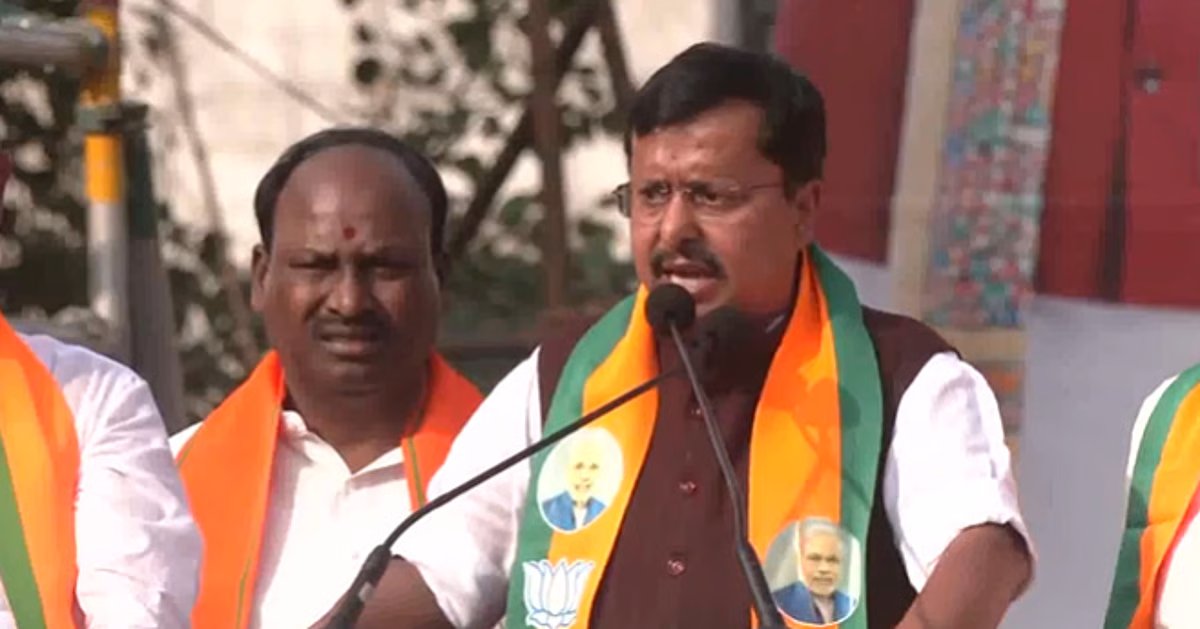
BJP national president Nitin Nabin also criticised Gandhi over his remarks on the Indian economy during a rally in Telangana. Nabin said India had made significant progress by global standards, contrasting its position during the Congress-led United Progressive Alliance (UPA) government with its current standing.
He said India had been counted among the “fragile five” economies during the UPA years but had emerged as the world’s fourth-largest economy under Modi’s leadership.
Union minister Kiren Rijiju said India had moved far ahead under the Prime Minister’s leadership.
“If the opposition doesn’t praise us, it doesn’t mean they are right. They have their right to speak, but the country has changed. India has moved far ahead,” Rijiju was quoted as saying by PTI.
BJP MP Ravi Shankar Prasad also accused Gandhi of spreading falsehoods about India while abroad and overlooking the country’s achievements on the global stage.
At a press briefing, Prasad referred to Modi’s ranking as Asia’s second-most effective regional leader after Xi Jinping. He also said India was the only country whose economic relationships with other nations had not declined.
Congress says India does not need external endorsement
Congress MP Manish Tewari acknowledged the findings of the Lowy Institute report but said India had always been a major power and did not require endorsement from political parties or foreign institutions to establish its standing.
“Lowy Institute is a respected think tank in Australia,” Tewari told IANS.
“India has had its own standing in the world going back to 1947. We have always been a major power. We do not really need anybody’s endorsement to know our intrinsic strengths. Suffice to say that think tanks keep coming out with reports from time to time. Lowy Institute is a respected institute, and I will definitely peruse that report,” he said.
What the Asia Power Index 2026 says about India
The Lowy Institute’s 2026 Asia Power Index ranked 27 countries and territories across the region, using 131 indicators covering eight measures of power, including economic and military capability, resilience, future resources, economic relationships, defence networks, diplomatic influence and cultural influence.
India retained third place, with its overall score increasing to 40.5. The report said the country had become more influential in Asia despite a slight decline in relative economic capability and a year focused on domestic challenges.
India’s economic capability score fell by 0.7 points to 26.4, affected by a weakening rupee, changes in the International Monetary Fund’s method of measuring economies and a nearly $20 billion decline in outbound investment.
However, the country’s future resources score rose to 56.2, supported by an improved economic outlook. Its cultural influence also recorded the largest gain among its measures, increasing by 2.3 points to 43.8.
India’s diplomatic influence remained its strongest measure, with a score of 70.3. The report said expert assessments of Modi’s regional leadership had improved, placing him second behind Xi Jinping. However, perceptions of his global leadership and strategic ambition had weakened, partly reflecting India’s lower diplomatic profile during the Gulf conflict.
The report also noted that India had strengthened its defence networks through greater regional engagement and BrahMos missile sales to Southeast Asian countries. Stable trade and investment ties helped India remain among the few countries whose economic relationships did not weaken, lifting it two places to seventh in that category.
India’s defence networks score rose by 2.1 points to 18.6, taking it to ninth place, while its future resources and military capability scores also improved.
US-China power gap narrows to its lowest level since 2018
The report said the United States and China continued to dominate Asia’s power rankings, but their overall power gap had narrowed to its lowest level since the index began in 2018.
The US scored 78.9, while China recorded 73.6, leaving a difference of just 5.3 points. The gap in military capability was also at its narrowest on record.
According to the Lowy Institute, the narrowing gap was driven largely by Washington’s setbacks rather than major advances by Beijing. The US administration’s focus on the conflict with Iran in West Asia diverted attention and resources from Asia, while the war depleted American stocks of long-range missiles and affected perceptions of its diplomatic influence.
The United States recorded declines in economic capability, military capability, defence networks and diplomatic influence. Its diplomatic influence score fell by six points to 76.7, marking its largest decline on record and its fourth consecutive annual fall.
China, meanwhile, remained broadly stable across most measures and gained in military capability, cultural influence and resilience, while its economic relationships score declined.
The report said China’s military modernisation and expanding maritime capabilities had strengthened its regional position, while the United States continued to retain significant advantages in defence spending, air power and global force projection.
Despite the narrowing gap between Washington and Beijing, the Lowy Institute said the regional balance of power remained predominantly bipolar, with the two countries continuing to dominate Asia.