
By Cory Weinberg
When Christopher Kirchhoff, a former Pentagon official, joined Anthropic for a three-month fellowship in 2024, he was surrounded in the corporate lunchroom by “bookish” young technology workers who peppered him with questions about national security, he said.
The company only had hundreds of employees at the time, and he said he was awed by what people posted in internal Slack channels about what they were working on. He remembered one employee showing colleagues an early demonstration of artificial intelligence performing basic computer tasks, including buying a Nike sweatshirt online and shipping it to Anthropic’s office without human intervention. “Everyone knew it was a door to the future,” Kirchhoff said.
That relatively small circle of workers is now in line for enormous paydays.
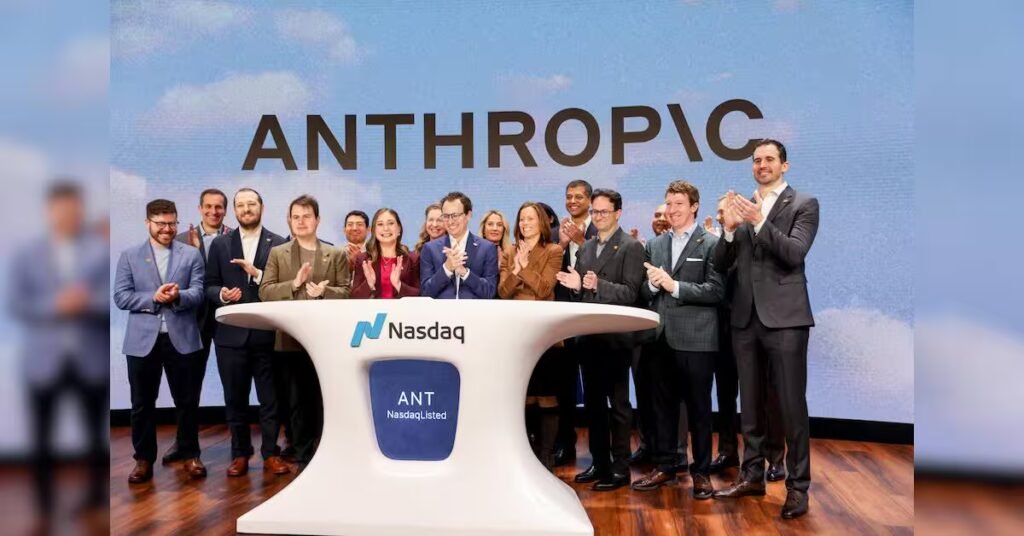
On Thursday, Anthropic vaulted into one of the world’s most valuable companies, after its record-setting initial public offering. That has created sudden, enormous wealth for hundreds of employees who had an early hand in its assent.
The bulk of the wealth the company created during its rise will go to a relatively small group of people, who joined it in the early years when Anthropic was worth far less. Anthropic’s investor prospectus ahead of the IPO not only reflected how rapidly it has grown — it had 940 employees at the end of 2024 and about 5,300 as of September — but also showed that those 940 employees stood to gain the most.
The company started trading on Nasdaq on Thursday, following what was the largest IPO in history that valued Anthropic at about $1.5 trillion less than six years after its founding. Its shares opened notably higher than the $83 a share level set in its IPO, briefly pushing the company’s value over $2 trillion.
“We’ve been very disciplined about turning down people who are deeply technically talented but don’t fit our culture,” he said. Dr. Amodei and his six co-founders, who made an emotional split from OpenAI during the pandemic in 2020, each own Anthropic stakes now worth more than $20 billion.
Employees who joined in 2024 might have had little reason, from the outside, to imagine how big the company would become. It had generated only about $41 million in sales the previous year and hadn’t yet attracted many brand-name venture capital investors to give their seal of approval.
As Anthropic has grown, it has actively sought out employees with more typical tech backgrounds and business-focused ambitions. The company wrote in its prospectus, for instance, that it planned to hire more sales people.
Nicholas Joseph, an early employee responsible for training Anthropic’s model, pointed out in the petition that work was being done by AI itself, rather than by humans. “I’m not sure if or where it tops out, but a rapid acceleration in capabilities might be dangerous for society,” he wrote.
Driving those fears now is the same calculus that attracted early AI believers to Anthropic — that the technology was going to keep developing. Lillian Li, a tech investor at the Scottish fund manager Baillie Gifford, remembered meeting Anthropic executives for the first time in 2023. She had heard initially about the company’s potential from AI researcher friends, all of whom had a sense that “the next five years were going to look very different.”
“They were very earnest and sincere people that wanted to do good for the world and no one had taken seriously prior to that,” she said.