

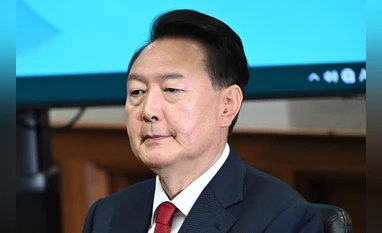
Seoul: In a dramatic development, an independent prosecutor in South Korea has sought the death penalty for former President Yoon Suk Yeol on charges of rebellion linked to his short-lived imposition of martial law in December 2024. If convicted and sentenced to death, Yoon would become the first South Korean president since 1996 to face such a punishment after leaving office.
On Tuesday, the independent counsel Cho Eun-suk and her team urged the Seoul Central District Court to impose the maximum penalty, describing Yoon’s martial law decree as “anti-state activities” and a form of self-coup. The prosecution alleged that Yoon attempted to neutralise the constitutional system and undermine democratic governance in order to prolong his hold on power.
Yoon, who was removed from office in April 2025 and is currently in jail, is facing eight separate trials related to the martial law episode and other scandals that emerged during his presidency. Among all charges, the allegation that he directed a rebellion is considered the most serious and carries the heaviest punishment under South Korean law.
According to the prosecution, Yoon’s decision to declare martial law was not a legitimate exercise of presidential authority but a deliberate attempt to override constitutional checks and suppress political opposition. The decree led to the deployment of armed troops in central Seoul, where soldiers surrounded the National Assembly and entered election-related offices. Although no major injuries were reported, the move shocked the nation and triggered widespread political and public backlash.
Appearing in the same courtroom later, Yoon strongly rejected the rebellion charges, calling the investigations “frenzied” and accusing authorities of manipulation and distortion of facts. The conservative former president argued that his declaration of martial law was a desperate measure to alert the public to what he described as the dangers posed by the liberal Democratic Party, which he said had used its legislative majority to block his policy agenda.
Yoon further maintained that the exercise of emergency presidential powers cannot be classified as rebellion, insisting that his actions were constitutional and motivated by national interest.
The court is expected to deliver its verdict in February, though legal experts believe a life sentence is more likely than execution. South Korea has not carried out an execution since 1997, and courts have rarely handed down death sentences in recent decades, even in high-profile cases.
Historically, Yoon’s case draws comparisons with former military strongman Chun Doo-hwan, who was sentenced to death in 1996 for mutiny and corruption following South Korea’s authoritarian era. Chun’s sentence was later commuted to life imprisonment, and he was eventually pardoned and released.
Yoon’s downfall has been described as spectacular and unprecedented in modern South Korean politics. His martial law decree — the first of its kind in more than 40 years — revived painful memories of the 1970s and 1980s, when military-backed regimes routinely used emergency powers to crush pro-democracy movements.
While the final outcome remains uncertain, the case has already become a landmark moment, highlighting the strength of South Korea’s democratic institutions and the principle that even former presidents are not above the law.