

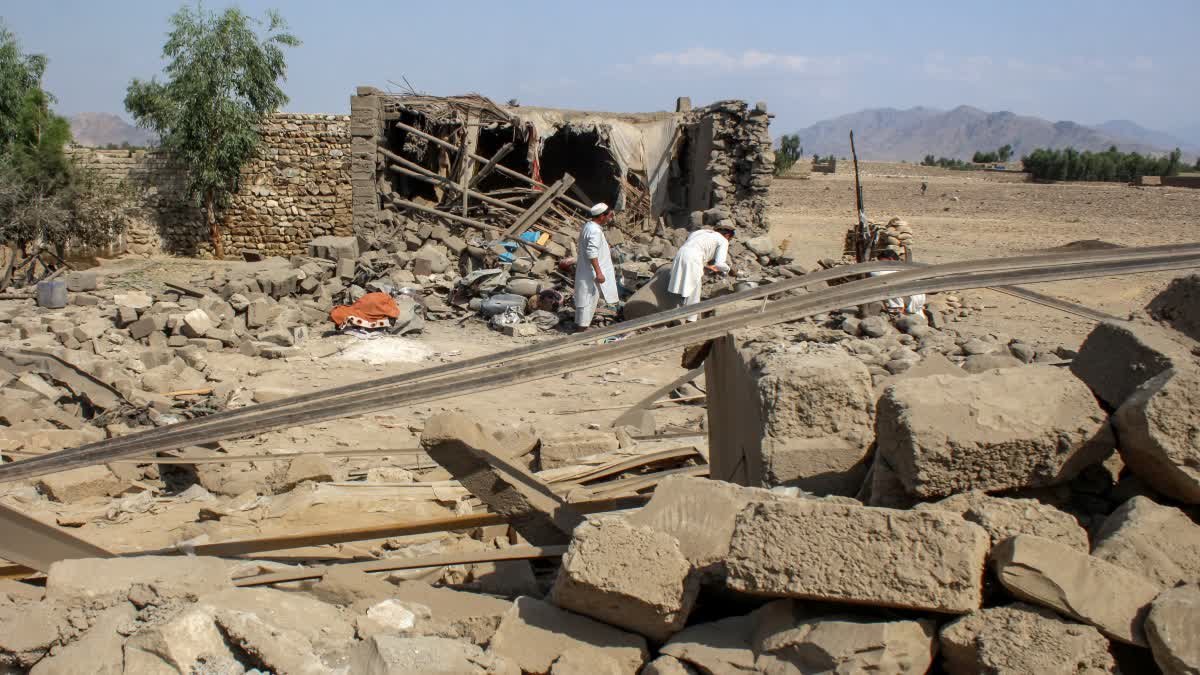
Afghanistan / Pakistan: Pakistan carried out aerial strikes inside Afghan territory, targeting multiple locations in eastern and southeastern Afghanistan, killing at least 20 civilians, including women and children, according to Afghan officials. The attacks took place during the holy month of Ramadan, further escalating tensions between the two neighboring countries.
According to sources cited by TOLO News, Pakistani fighter jets struck a religious madrasa in the Barmal district of Paktika province. Additional airstrikes were reported in the Khogyani district of Nangarhar province.
Afghan government spokesperson Zabihullah Mujahid said in a post on X that Pakistani forces bombed civilian areas in both Nangarhar and Paktika. “As a result of these attacks, at least 20 civilians, including women and children, were killed or injured,” he said.
Pakistan Cites Retaliation for Suicide Attacks
Pakistani media outlets confirmed the air operations, stating that the strikes were conducted against what Islamabad described as terrorist hideouts along the Pakistan-Afghanistan border. Geo News, citing Pakistan’s Ministry of Information, reported that seven camps linked to militant groups—including Fitna al-Khawarij (FAK) and ISIS-K—were targeted.
Pakistan claimed the operation was a “precise and justified response” to recent suicide bombings in Islamabad, Bajaur, and Bannu during Ramadan. The Pakistani government alleged that these attacks were carried out at the direction of handlers based in Afghanistan and claimed responsibility was taken by militants associated with Tehrik-i-Taliban Pakistan and ISIS-K.
Diplomatic Tensions Intensify
Despite Pakistan’s claims that it has repeatedly urged the Afghan Taliban to prevent militant groups from using Afghan soil to launch attacks, Islamabad itself has long faced international scrutiny over allegations of providing safe havens and logistical support to extremist groups operating in the region.
In a statement reported by Dawn, Pakistan’s Foreign Office said the country reserves the right to take action inside Afghanistan to protect its citizens. Foreign Ministry spokesperson Tahir Andrabi stated that “all options remain on the table” until Afghan territory is no longer used for terrorism against Pakistan.
Pakistan also called on the international community to pressure Afghanistan’s interim government to fulfill commitments made under the Doha Agreement and prevent cross-border militant activity.
The latest airstrikes have raised serious concerns over civilian safety and the risk of wider regional instability, as tensions between Islamabad and Kabul continue to escalate.