

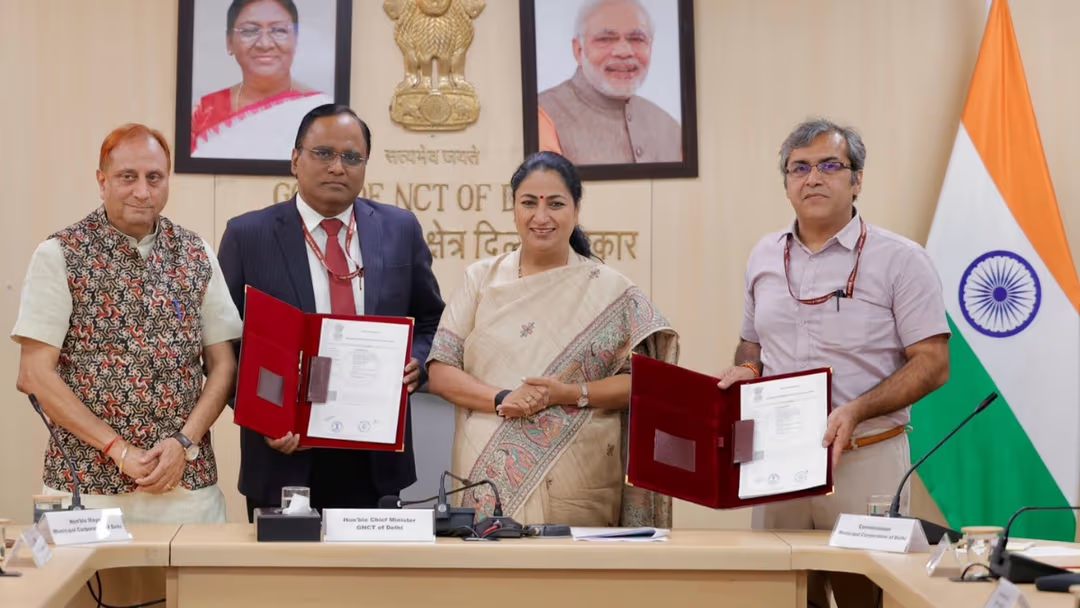

New Delhi : Oil India Limited (OIL), a Maharatna Central Public Sector Enterprise (CPSE) under the Ministry of Petroleum & Natural Gas (MoPNG), has signed a Memorandum of Understanding (MoU) with the Municipal Corporation of Delhi (MCD) to establish Compressed Bio-Gas (CBG) plants that will convert segregated organic municipal solid waste into clean, renewable energy.
The MoU, signed on July 30, 2026, represents a significant step towards promoting waste-to-energy solutions, urban sustainability, and the circular economy in India’s capital. The initiative aligns with the Government of India’s vision of reducing landfill dependency, enhancing sanitation, and accelerating the country’s transition to cleaner sources of energy.
MoU Signed in the Presence of Top Delhi Leadership
The agreement was signed in the presence of Delhi Chief Minister Smt. Rekha Gupta and Delhi Mayor Shri Pravesh Wahi, highlighting the importance of the collaboration between the public sector energy company and the municipal administration.
Senior officials from the Delhi Government, Municipal Corporation of Delhi, and Oil India Limited also attended the signing ceremony, reaffirming their commitment to sustainable urban development and environmental conservation.
Two High-Capacity CBG Plants Planned
Under the terms of the agreement, Oil India Limited will initially establish two Compressed Bio-Gas plants in Delhi:
- One CBG plant with a processing capacity of 500 tonnes per day (TPD) of segregated organic municipal solid waste.
- Another CBG plant with a processing capacity of 300 TPD.
Combined, the two facilities are expected to generate approximately 30–32 tonnes of Compressed Bio-Gas per day, creating a valuable source of clean fuel from biodegradable urban waste.
The plants will process organic waste collected across the city, converting it into renewable biofuel through advanced waste-to-energy technology.
Transforming Waste into Clean Energy
The proposed CBG facilities will play a crucial role in converting biodegradable municipal waste into Compressed Bio-Gas, a clean and environmentally friendly alternative to conventional fossil fuels.
By processing organic waste instead of sending it to landfill sites, the project is expected to:
- Reduce the volume of municipal waste reaching landfills
- Lower methane emissions generated from decomposing organic waste
- Produce clean renewable fuel suitable for transportation and industrial applications
- Improve urban sanitation and waste management
- Promote sustainable resource utilization through circular economy practices
The initiative demonstrates how urban waste can be transformed into an economic resource while addressing environmental challenges.
Supporting National Clean Energy and Sustainability Goals
The partnership directly supports several flagship initiatives of the Government of India, including:
- Swachh Bharat Mission, by improving scientific waste management.
- SATAT (Sustainable Alternative Towards Affordable Transportation), which promotes the production and use of Compressed Bio-Gas across the country.
- India’s Net Zero emissions commitment, by encouraging renewable energy generation and reducing greenhouse gas emissions.
The project also contributes to India’s broader agenda of enhancing energy security, resource efficiency, and environmentally sustainable urban infrastructure.
Strengthening Oil India’s Green Energy Portfolio
Traditionally known for its upstream oil and gas operations, Oil India Limited has been steadily expanding its presence in renewable energy, green hydrogen, biofuels, and waste-to-energy projects as part of its long-term sustainability strategy.
The collaboration with MCD further strengthens the company’s growing waste-to-energy portfolio and reflects its commitment to supporting India’s clean energy transition while diversifying beyond conventional hydrocarbons.
Through initiatives such as this, Oil India is positioning itself as an integrated energy company focused on balancing conventional energy production with environmentally responsible technologies.
Driving the Circular Economy in Urban India
The project is expected to become an important example of the circular economy model, where municipal waste is treated as a valuable resource rather than discarded as refuse.
By converting organic waste into renewable fuel, the initiative creates environmental, economic, and social benefits simultaneously—reducing pollution, generating clean energy, and improving urban waste management systems.
As Indian cities continue to grapple with increasing volumes of municipal waste, projects like these could serve as scalable models for sustainable urban development across the country.
Key Highlights
- Oil India Limited (OIL) has signed an MoU with the Municipal Corporation of Delhi (MCD) on July 30, 2026.
- The agreement aims to establish two Compressed Bio-Gas (CBG) plants using segregated organic municipal solid waste generated in Delhi.
- The MoU was signed in the presence of Delhi Chief Minister Smt. Rekha Gupta and Delhi Mayor Shri Pravesh Wahi.
- The project includes:
- One CBG plant with 500 TPD capacity
- One CBG plant with 300 TPD capacity
- Together, the plants are expected to produce approximately 30–32 tonnes of Compressed Bio-Gas per day.
- The initiative will help reduce landfill dependence, improve sanitation, cut greenhouse gas emissions, and produce renewable clean fuel.
- The project supports the Swachh Bharat Mission, SATAT initiative, and India’s Net Zero goals.
- The partnership further strengthens Oil India Limited’s growing waste-to-energy and clean energy portfolio.
Source: Official announcement by Oil India Limited (OIL) regarding the Memorandum of Understanding with the Municipal Corporation of Delhi, dated July 30, 2026.