

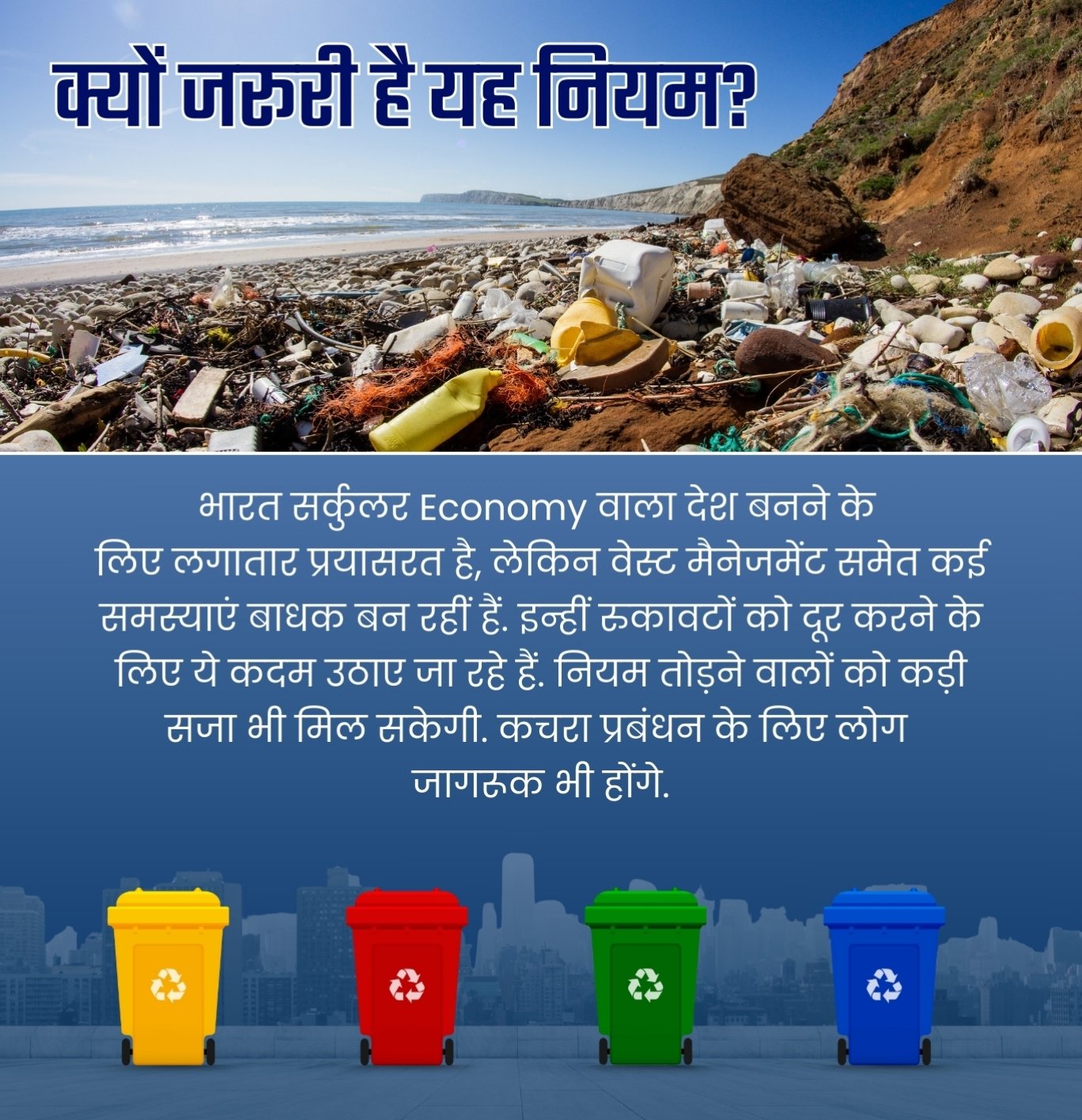
Hyderabad: In a major push toward becoming a circular economy, the Government of India has notified the Solid Waste Management (SWM) Rules, 2026, which will come into force from April 1, 2026. The new rules will replace the decade-old SWM Rules, 2016 and aim to transform how waste is handled across the country.
The rules were notified by the Ministry of Environment, Forest and Climate Change (MoEFCC) under the Environment (Protection) Act, 1986, and place strong emphasis on waste segregation at the source, stricter accountability, and scientific disposal.
Mandatory Segregation of Waste at Source
Under the new framework, all waste must be segregated at the point of generation into four categories:
- Wet Waste: Kitchen and organic waste such as vegetable peels, food scraps, meat waste, and flowers. This waste will be treated locally through biomethanation or composting.
- Dry Waste: Materials like plastic, paper, metal, glass, wood, and rubber, which will be sent to Material Recovery Facilities (MRFs) for sorting and recycling.
- Sanitary Waste: Items such as diapers, sanitary napkins, tampons, condoms, and blood-contaminated materials, which must be wrapped securely and stored separately.
- Special Care Waste: Includes paint containers, bulbs, mercury thermometers, and expired medicines, to be collected only by authorized agencies and disposed of at designated centers.
Stricter Rules for Bulk Waste Generators
The new rules impose tighter controls on Bulk Waste Generators (BWGs)—institutions producing more than 100 kg of waste per day or having a built-up area exceeding 20,000 square meters.
Such entities will now be required to manage waste on-site. If they fail to do so, they must obtain an Extended Bulk Waste Generator Responsibility (EBWGR) certificate, making them legally accountable for safe collection, treatment, and disposal of their waste.
Online Monitoring and Penalties
Non-compliance with the SWM Rules will attract environmental compensation and monetary penalties, especially for:
- Operating without registration
- Misreporting data
- Improper waste handling
The Central Pollution Control Board (CPCB) will launch a centralized online portal to digitally track waste—from generation and collection to transportation and final disposal—ensuring end-to-end transparency.
Use of Waste-Derived Fuel Made Mandatory
To promote alternative fuels, industrial units and cement plants located within 100 km of waste-to-energy facilities will now be required to meet 5% to 15% of their fuel needs using Refuse-Derived Fuel (RDF) generated from waste.
Restrictions on Landfilling and Legacy Waste Cleanup
The new rules significantly limit landfilling, allowing it only for non-recyclable and inert waste. Existing dumping sites will undergo remediation and scientific cleanup.
Failure to segregate waste will result in higher user charges, which will exceed the cost of proper waste management. Annual audits will be conducted by State Pollution Control Boards to ensure compliance.
Special Provisions for Hills and Islands
Recognizing unique geographical challenges, the rules introduce special guidelines for hilly regions and islands. Local authorities in these areas may also charge user fees from tourists to manage waste sustainably.