
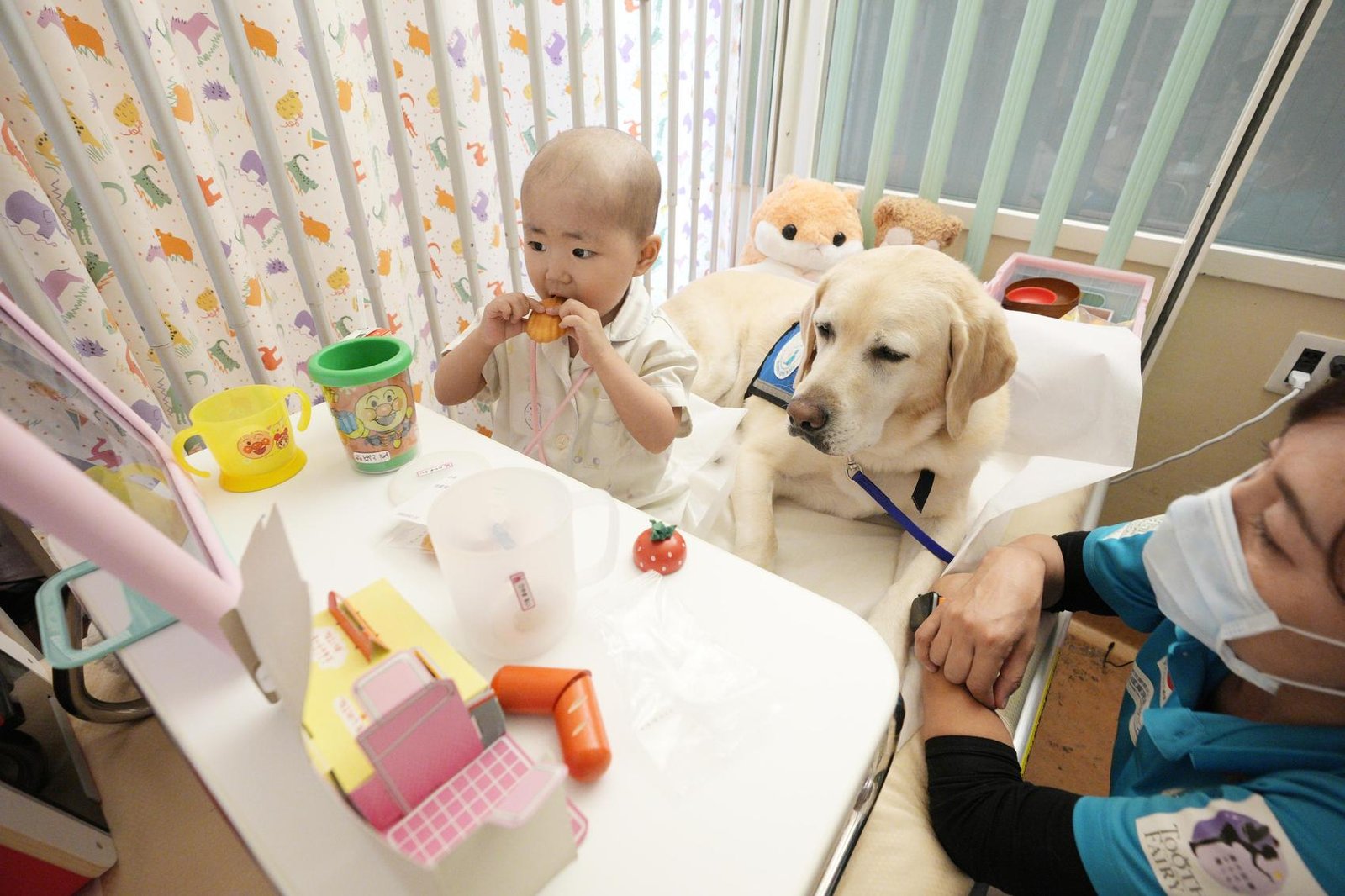
Tokyo: In a quiet pediatric ward in Tokyo, the arrival of a Labrador retriever named Masa brings smiles, laughter and a brief escape from illness for hospitalized children. Masa is a facility dog—a specially trained animal that works alongside medical staff to support children undergoing long-term treatment or waiting for organ transplants.
As Masa enters the ward, children’s faces light up. Unlike therapy dogs that make occasional visits, facility dogs are integrated into medical care through personalized treatment plans. They help children cope with fear, pain and emotional stress, offering moments of normal childhood within the strict confines of hospital life.
Facility dogs were introduced in Japan around 15 years ago, but their presence remains limited due to high training and maintenance costs. Currently, only a small number of hospitals employ them.
In October, Masa visited the National Center for Child Health and Development in Tokyo, where children eagerly interacted with him. Three-year-old Rui Hiyama, who has been hospitalized for nearly a year while undergoing cancer treatment, pretended to give Masa a toy injection. Smiling brightly, she then took him for a short walk around the ward, holding his leash.
“Even though she is confined to the ward, she becomes cheerful whenever she plays with Masa,” said Rui’s mother, Saori Hiyama.
The dogs also help ease anxiety during medical tests and procedures. An 11-year-old boy described Masa as a “hero,” saying the dog helped him overcome his fear of medical examinations. During one visit, the two played the game Jenga together, filling the ward with laughter.
Masa’s handler, Ayami Gonnokami, is a certified pediatric nurse with 25 years of experience. She closely coordinates with doctors and nurses, carefully deciding how and when Masa should interact with each child.
“Some children shut themselves off during painful treatments,” Gonnokami said. “Even at those times, Masa can simply stay by their side.”
She recalled a case where a weak, bedridden child was able to stand and walk after spending time with the dog.
Dr. Nobuyuki Yotani, head of the hospital’s palliative care department, emphasized the emotional value of such interactions. “Time spent with Masa allows children to return to being just children, without the label of illness,” he said. “It greatly improves their quality of life.”
Facility dogs in Japan are dispatched by the nonprofit organization Shine On! Kids, which launched the program in 2010 at Shizuoka Children’s Hospital. Currently, one facility dog is assigned to each of four hospitals in Tokyo and Kanagawa Prefecture. The organization plans to introduce another dog at Kobe Children’s Hospital in Hyogo Prefecture in fiscal 2027.
As Japan continues to explore holistic approaches to pediatric care, hospital dogs like Masa are proving that healing is not only about medicine, but also about comfort, companionship and moments of joy.