

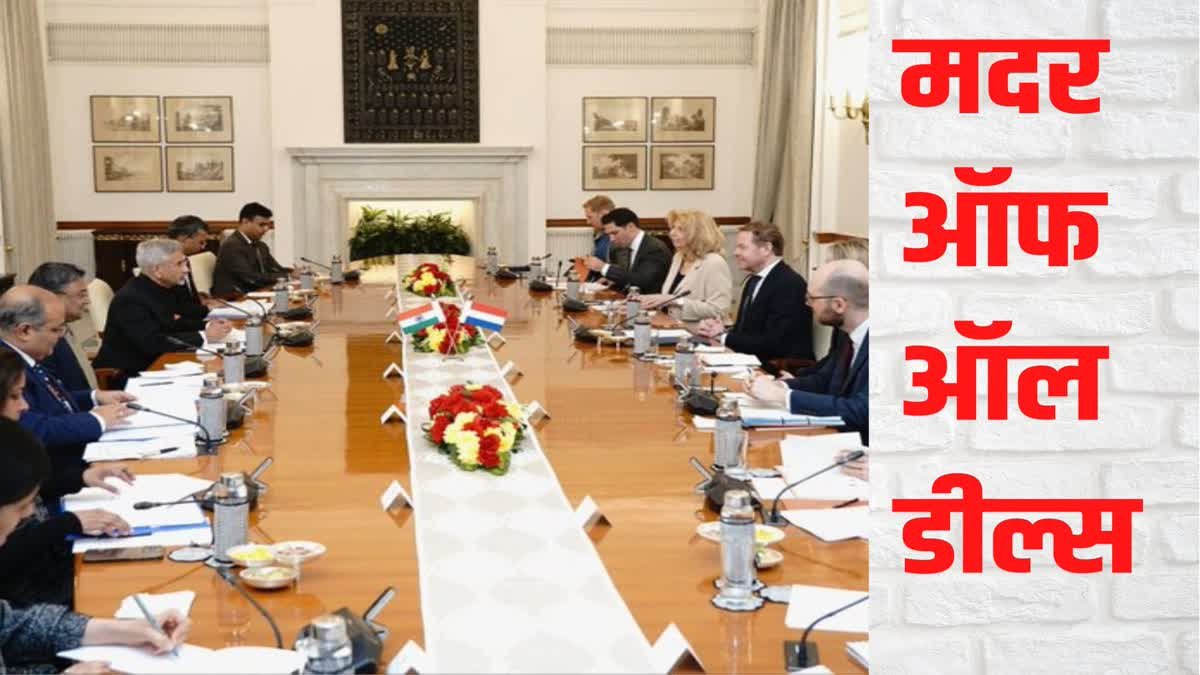
Why India and Europe are betting big on each other to reduce dependence on the US and China
As global trade realigns amid geopolitical tensions, India and the European Union (EU) are moving closer to finalizing what leaders on both sides have described as the “mother of all deals”—a comprehensive Free Trade Agreement (FTA that goes far beyond tariffs and market access.
The negotiations come at a critical moment. Trade friction between India and the United States over tariffs continues, despite repeated statements from former US President Donald Trump. At the same time, Europe’s relationship with both the US and China has grown increasingly strained, particularly over strategic autonomy, supply chains, and security concerns such as Greenland and Ukraine.
Against this backdrop, India and the EU see each other as reliable, long-term strategic partners in an uncertain world.
Why This Deal Matters
The European Union is already India’s largest trading partner. In FY 2024–25, bilateral goods trade touched $136.53 billion, with India exporting $75.85 billion worth of goods and importing $60.68 billion from the EU.
The EU is also one of India’s biggest investors, with cumulative foreign direct investment (FDI) of $117.4 billion between April 2000 and September 2024.
On the sidelines of Republic Day celebrations, Indian Commerce Minister Piyush Goyal and European Commission President Ursula von der Leyen are expected to announce major progress in the negotiations. Both leaders have emphasized that this is not just a trade pact, but a strategic economic partnership.
Reducing Dependence on the US and China
Since Donald Trump’s return to the US presidency, trade uncertainty has increased. Both India and the EU are uncomfortable with Washington’s unpredictable tariff policies. At the same time, Europe is actively trying to reduce its dependence on China, which it increasingly views as an unreliable partner—especially after witnessing how deeply the US remained tied to Chinese supply chains during earlier tariff wars.
The EU wants to avoid a scenario where it becomes economically constrained due to over-reliance on a single country for critical minerals, industrial inputs, or manufacturing capacity. India, with its growing economy, political stability, and expanding manufacturing base, fits that need.
India, too, is pursuing diversification. Rather than depending heavily on any one country—whether the US, China, or others—it is gradually opening its economy to global competition while strengthening domestic manufacturing under its long-term Vision 2047 growth plan.
What Is a Free Trade Agreement?
A Free Trade Agreement is a pact between two or more countries to eliminate or significantly reduce import duties, quotas, and other trade barriers. FTAs are among the most effective tools for expanding exports, lowering production costs, and integrating economies into global value chains.
India has already signed 17 trade agreements, including FTAs or economic partnership agreements with the UK, Australia, the UAE, Japan, South Korea, Singapore, and Sri Lanka. Preferential trade agreements exist with countries like Chile and groups such as Mercosur.
The EU, meanwhile, has FTAs with Japan, South Korea, and Vietnam.
Who Gains—and How
If finalized, the India–EU FTA would reduce or eliminate import duties on over 90% of traded goods, either immediately or in phases over five to ten years.
Key Indian sectors expected to benefit include:
- Textiles and apparel
- Pharmaceuticals
- Petroleum products
- Steel and machinery
Labor-intensive sectors such as textiles and footwear could see zero duties from day one, boosting employment and exports.
European companies, in return, are likely to gain better access for products such as cars, wine, capital goods, and advanced industrial equipment, while also expanding manufacturing operations inside India.
Strategic Technology and Talent Exchange
Beyond trade, the agreement could unlock deeper cooperation in:
- Defense manufacturing
- Semiconductors
- Civil aviation
- Clean energy
- Digital public infrastructure
Europe is particularly interested in India’s talent pool, especially in IT and artificial intelligence. Indian professionals are seen as a major asset for Europe’s aging workforce and digital transition.
The EU’s SAFE defense fund, worth €150 billion, could also open doors for Indian defense manufacturers to establish production units in Europe—something no non-European country has yet achieved.
Unresolved Challenges
Despite momentum, several sensitive issues remain:
- Agriculture and dairy: India is unlikely to open its farm and dairy sectors, even though Europe is pushing for access.
- Carbon taxes: The EU’s Carbon Border Adjustment Mechanism (CBAM) could hurt Indian small and medium enterprises by taxing carbon-intensive imports.
- Data protection and patents: Regulatory differences still need alignment.
- Geopolitics: Europe has criticized India’s stance on the Ukraine war and its ties with Russia, though India has recently reduced crude oil imports from Russia.
A Deal of Global Scale
According to Ursula von der Leyen, if India and the EU fully integrate their markets, the partnership would represent nearly two billion people and about one-quarter of global GDP—making it one of the largest economic alliances in the world.
That scale explains why policymakers and analysts alike are calling it the “mother of all deals.”
If successful, the India–EU FTA could reshape global trade flows, strengthen supply chain resilience, and mark a decisive shift toward a multipolar economic order—with India firmly at its center.