
New Delhi:
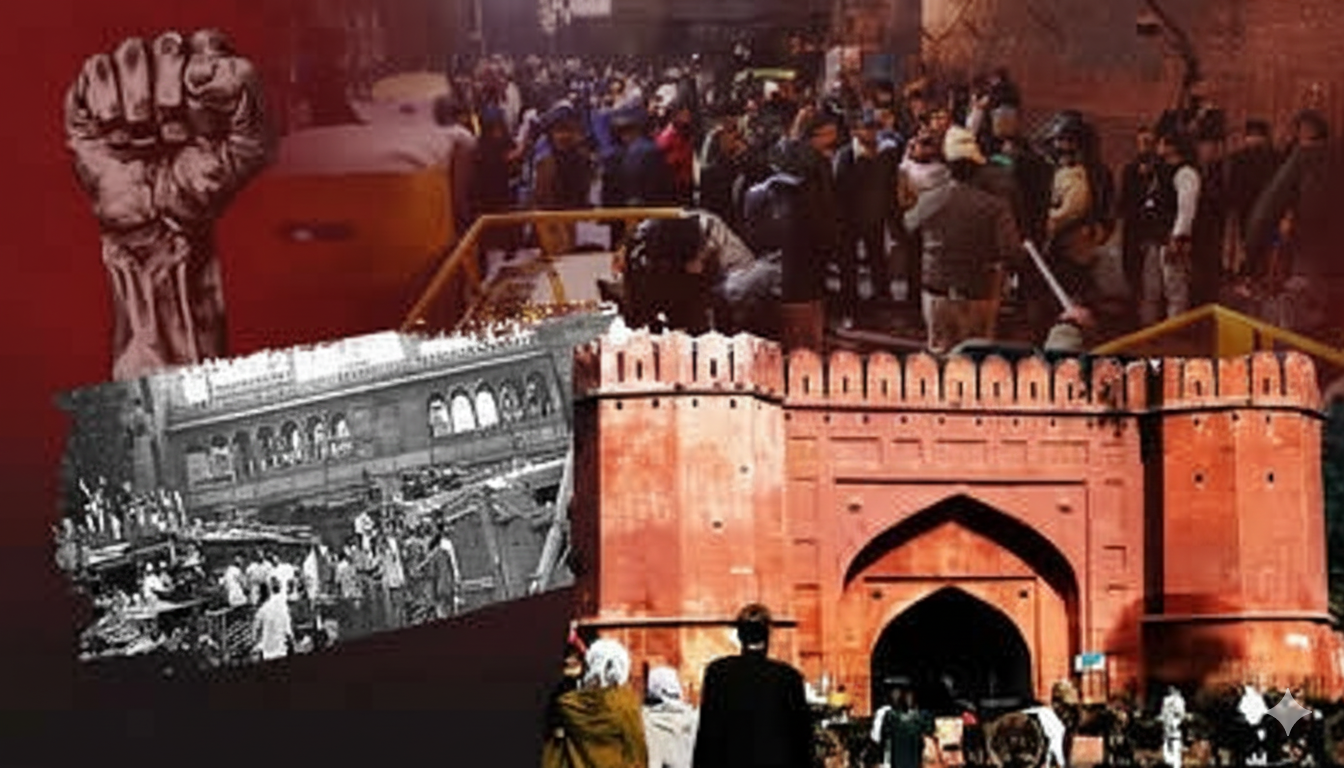
Recent violence near the Faiz-e-Ilahi Mosque in Delhi’s Turkman Gate area has once again brought a painful chapter of India’s history back into public memory. While the latest incident involved rumours of a mosque being targeted during an anti-encroachment drive—leading to unrest and the arrest of 12 people—the name Turkman Gate itself carries a far heavier historical burden dating back to the Emergency era of 1976.
Why Turkman Gate Matters
Turkman Gate, named after the nearby dargah of 13th-century Sufi saint Hazrat Shah Turkman Bayabani, is one of Delhi’s most historically sensitive localities. For many, it symbolises one of the darkest episodes of the Emergency imposed by Prime Minister Indira Gandhi, when civil liberties were suspended and state power was exercised with unprecedented force.
The 1976 Demolition Drive
In April 1976, during the Emergency, a massive demolition drive was launched at Turkman Gate. The operation was carried out under the influence of Sanjay Gandhi, Indira Gandhi’s younger son, who—despite holding no official government position—wielded enormous authority.
Sanjay Gandhi was determined to “beautify” Delhi. According to accounts from that time, he wanted a clear, uninterrupted view from Turkman Gate to Jama Masjid, which he felt was blocked by densely populated slums. The task of executing this vision fell to senior bureaucrat Jagmohan, who ordered bulldozers into the area to clear long-established settlements.
Local residents resisted fiercely. Many families claimed their presence in the area dated back to the Mughal era. The demolition order was seen as arbitrary, cruel, and disconnected from ground realities.
Forced Sterilisation Fuels Public Anger
The demolition drive coincided with another deeply unpopular policy of the Emergency: forced sterilisation. Officials were given daily sterilisation targets and often used police force to meet them. Men from Turkman Gate and nearby areas were reportedly picked up and taken for sterilisation against their will.
This combination of forced evictions and coercive population control pushed public anger to a breaking point.
April 19, 1976: Protest Turns Deadly
On April 19, 1976, residents called for a strike and gathered in large numbers to protest the demolitions. As bulldozers moved in, clashes erupted. Protesters resorted to stone-pelting, and police responded with live firing.
The firing reportedly continued through the night. The next day, more bulldozers arrived and flattened homes—along with bodies that still lay on the ground. The exact death toll remains disputed to this day.
- Official figure: 6 deaths
- Unofficial estimates: 20 or more casualties
Due to strict censorship under the Emergency, news of the killings did not immediately reach the rest of the country. The first reports appeared in foreign media, after which Indian newspapers cautiously followed.
Aftermath and Lack of Accountability
Following the defeat of Indira Gandhi’s government in the 1977 general elections, the Shah Commission was established to investigate Emergency-era excesses. The commission held several officials responsible for the Turkman Gate killings and the broader misuse of power.
However, no concrete action was taken against those named. Just three years later, the Congress returned to power. By then, Sanjay Gandhi had entered formal politics and was elected to the Lok Sabha from Amethi.
A Lingering Legend
In the years that followed, a belief took hold in popular memory: any government that interferes with the Turkman Gate dargah will not survive. Many linked the fall of Indira Gandhi’s government to the violence carried out in this area.
Echoes in the Present
The recent unrest near Faiz-e-Ilahi Mosque, though unrelated in scale or intent, has revived memories of that traumatic past. Heavy deployment of police and RAF personnel in the area has further strengthened comparisons with the Emergency period.
Turkman Gate remains more than just a locality—it is a reminder of how unchecked power, bulldozers, and state violence once collided with ordinary citizens, leaving behind scars that India has not fully healed even decades later.