

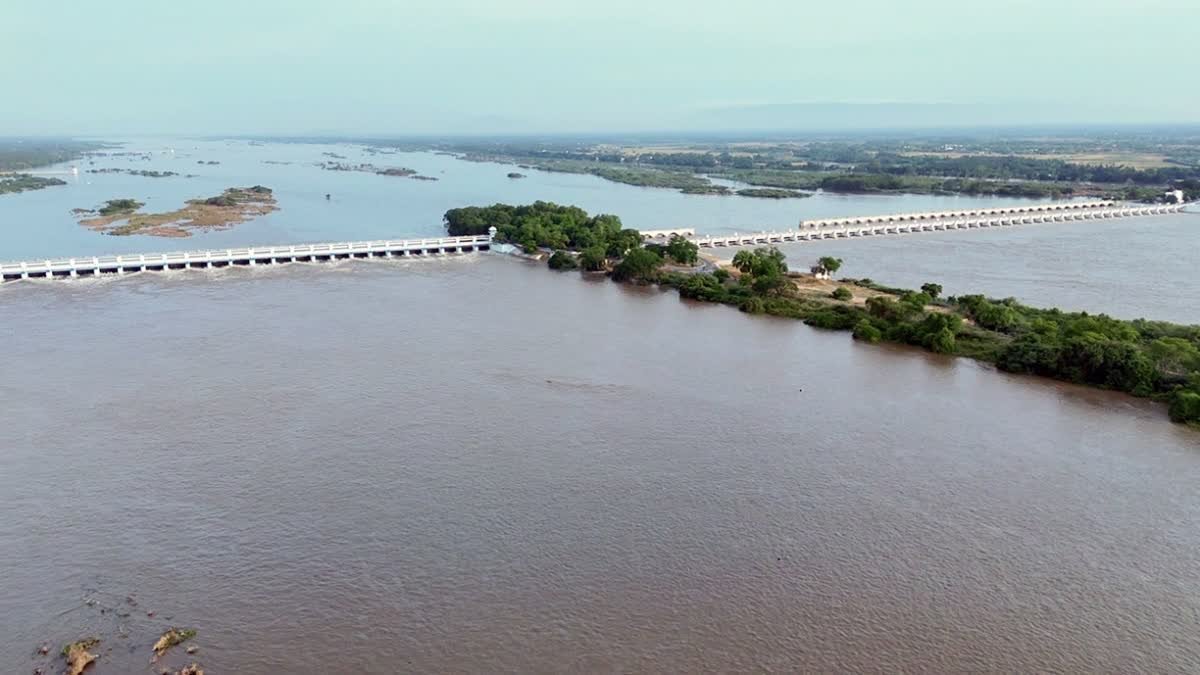

New Delhi : In a significant development in the long-standing Cauvery water-sharing dispute, the Cauvery Water Management Authority (CWMA) has upheld the recommendation of the Cauvery Water Regulation Committee (CWRC) directing Karnataka to release 3,500 cusecs of Cauvery water per day to Tamil Nadu for the next 15 days.
The decision was taken during an emergency consultative meeting of the CWMA in New Delhi, following a review of water availability in the Cauvery River Basin, reservoir levels, and the drinking water requirements of the basin states.
CWMA Upholds CWRC Recommendation
The CWMA, the apex body responsible for implementing the Cauvery water-sharing mechanism, endorsed the recommendation made earlier by the CWRC, which had directed Karnataka to ensure a daily flow of 3,500 cusecs at Biligundlu, the interstate water monitoring point on the Karnataka–Tamil Nadu border.
Under the order, the prescribed quantity of water is to be released every day for a period of 15 days, beginning from July 29, 2026. The situation will be reviewed again after the completion of this period based on prevailing hydrological conditions.
Decision Based on Basin Review
According to officials, the decision followed a detailed assessment of:
- Water inflows in the Cauvery River Basin
- Storage levels in major reservoirs
- Drinking water requirements of basin states
- Current hydrological conditions
- Monsoon rainfall patterns
The committee emphasized the need to balance competing demands while ensuring that water is allocated in accordance with existing legal and regulatory frameworks.
Karnataka to Decide Next Course of Action
Karnataka Water Resources Minister Ramalinga Reddy stated that the state government would discuss the CWMA’s decision during an all-party meeting convened by Deputy Chief Minister D.K. Shivakumar on August 2, 2026.
The meeting is expected to examine the implications of the order and determine Karnataka’s future course of action regarding compliance with the directive.
CWRC’s Earlier Directive
The Cauvery Water Regulation Committee (CWRC) had, during its meeting on July 28, directed Karnataka to release water from the Krishnaraja Sagar (KRS) and Kabini reservoirs.
The committee instructed Karnataka to ensure that 3,500 cusecs of water flows at Biligundlu for 15 consecutive days, beginning July 29.
The committee also stressed the importance of conserving available water resources while meeting essential requirements.
Priority for Drinking Water and Essential Needs
During the discussions, representatives of the basin states agreed that efforts should be intensified to conserve available water.
The committee emphasized that reservoir management should prioritize:
- Drinking water supply
- Industrial requirements
- Environmental flow obligations
The CWRC also decided that the prevailing hydrological and meteorological conditions would be reviewed during its next meeting before making further recommendations.
Karnataka Highlights Water Shortfall
During the deliberations, Karnataka’s representative pointed out that the actual water flow recorded at Biligundlu between June 1 and July 26 stood at only 3.543 Thousand Million Cubic Feet (TMC).
According to the representative, the Supreme Court’s judgment dated February 16, 2018, required a cumulative flow of 35.391 TMC during the same period.
This represents a reported shortfall of approximately 31.848 TMC, highlighting the state’s concerns over limited water availability due to deficient inflows.
Tamil Nadu Raises Objections
Tamil Nadu’s representative maintained that the state was only seeking its legitimate share of Cauvery waters as determined under the Cauvery Water Disputes Tribunal Award, as modified by the Supreme Court.
The representative argued that, under the distress-sharing principle (pro-rata basis), the backlog in water releases up to July 26 amounted to approximately 9.46 TMC.
However, the current CWMA directive would result in the release of only about 4.536 TMC over the next 15 days, which Tamil Nadu argued is less than half of the backlog.
Accordingly, the state formally recorded its objection, stating that the proposed release would still leave a substantial deficit in its allocated share.
Long-Standing Interstate Water Dispute
The Cauvery River is a crucial water source for Karnataka, Tamil Nadu, Kerala, and the Union Territory of Puducherry.
The interstate dispute over the sharing of Cauvery waters has persisted for decades and has been the subject of multiple legal proceedings, tribunal awards, and Supreme Court judgments.
The CWMA and CWRC were established to ensure the implementation of the Supreme Court’s final verdict and to regulate water releases based on reservoir conditions and seasonal inflows.
Key Highlights
- The Cauvery Water Management Authority (CWMA) has upheld the CWRC’s recommendation directing Karnataka to release 3,500 cusecs of Cauvery water daily to Tamil Nadu.
- The order will remain in force for 15 days, beginning July 29, 2026, after which the situation will be reviewed.
- The decision was taken following an assessment of water availability, reservoir storage, basin inflows, and drinking water requirements.
- Karnataka Water Resources Minister Ramalinga Reddy said the state will discuss the issue at an all-party meeting on August 2, chaired by Deputy Chief Minister D.K. Shivakumar.
- Karnataka cited a significant water shortfall, stating that actual flows at Biligundlu remain well below the levels prescribed under the Supreme Court’s 2018 judgment.
- Tamil Nadu objected to the order, arguing that the proposed release covers less than half of the state’s estimated 9.46 TMC backlog under the distress-sharing principle.
- The CWMA and CWRC will continue monitoring hydrological conditions before issuing further directions.
Source: Statements by Karnataka Water Resources Minister Ramalinga Reddy, deliberations of the Cauvery Water Management Authority (CWMA) and Cauvery Water Regulation Committee (CWRC), and information relating to the implementation of the Supreme Court’s 2018 Cauvery water-sharing judgment, released on July 30, 2026.