


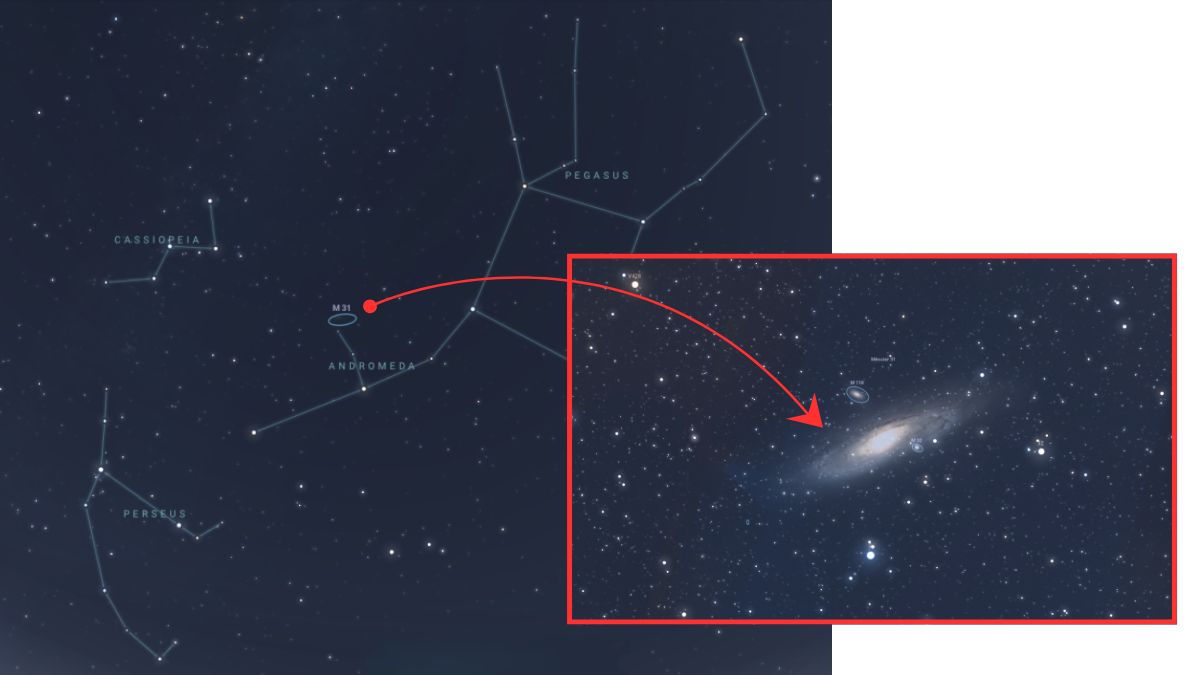

Science & Space Desk | A new astronomical study based on data collected by NASA’s Hubble Space Telescope has revealed that the Andromeda Galaxy (M31), the nearest major galaxy to the Milky Way, has been experiencing a steady decline in the rate of star formation over the past 500 million years. The findings provide valuable insights into the long-term evolution of one of the universe’s most closely studied galaxies.
The research, published in The Astrophysical Journal, analyzed approximately 200 million individual stars, making it one of the most comprehensive studies ever conducted on Andromeda’s stellar population.
Star Formation Has Been Declining for Hundreds of Millions of Years
According to the study, the production of new stars in the Andromeda Galaxy has steadily decreased during the last 500 million years, with the decline becoming even more pronounced over the past 40 million years.
Astronomers measure star formation rates by calculating how much gas and interstellar dust are converted into new stars each year.
Researchers found that:
- Around 500 million years ago, Andromeda was producing nearly one solar mass of new stars per year.
- By approximately 40 million years ago, that rate had dropped to about half a solar mass annually.
- Today, the galaxy produces only around one-fifth of a solar mass of new stars each year, indicating a significant slowdown in stellar birth.
Massive Survey of 200 Million Stars
The research team examined nearly 200 million stars using observations captured by the Hubble Space Telescope.
Scientists studied the colors, brightness, and distribution of stars to reconstruct the galaxy’s star formation history.
Massive, newly formed stars typically appear blue because they are hotter and have relatively short lifespans. In contrast, older, lower-mass stars appear redder and survive much longer.
By comparing the distribution of blue and red stars across the galaxy, researchers were able to determine where and when new stars had formed over hundreds of millions of years.
Star Formation Concentrated in a Giant Ring
The study found that most recent star formation in Andromeda has been concentrated within a ring-shaped region located approximately 32,000 light-years from the galaxy’s center.
This same region also showed the most noticeable decline in stellar production, suggesting that the slowdown is widespread rather than limited to isolated areas.
Not Caused by a Lack of Raw Material
Interestingly, researchers concluded that the decline does not appear to be caused by a shortage of gas or dust, the essential ingredients required to create new stars.
Instead, the findings suggest that the slowdown may represent a natural cooling phase following an earlier period of intense star-forming activity.
Previous studies had indicated that Andromeda experienced a significant burst of star formation roughly 2 billion years ago, likely triggered by a collision or merger with another galaxy.
The current decline is believed to be part of the galaxy’s long-term evolutionary process after that highly active period.
Scientists Investigate the Role of Satellite Galaxy M32
Researchers also explored whether Messier 32 (M32)—a small satellite galaxy located approximately 16,000 light-years from Andromeda—might have influenced the recent decline in star formation.
Although areas surrounding M32 showed signs of a sharper reduction in stellar activity than other regions, the survey did not find conclusive evidence directly linking the satellite galaxy to the overall slowdown.
Further observations will be required to better understand any possible interaction between the two galaxies.
Future Research Planned
The research team intends to combine Hubble Space Telescope observations with data collected from ground-based observatories to reconstruct Andromeda’s evolutionary history in greater detail.
Scientists hope these combined observations will provide deeper insights into how large spiral galaxies evolve over billions of years and may also improve understanding of the future evolution of our own Milky Way Galaxy.
How Far Is the Andromeda Galaxy from Earth?
The Andromeda Galaxy is located approximately 2.5 million light-years from Earth, making it the closest major spiral galaxy to the Milky Way.
To put this distance into perspective:
- Light travels at approximately 300,000 kilometers per second.
- Even traveling at the speed of light, it would take 2.5 million years to reach Andromeda from Earth.
Although many smaller dwarf galaxies are located closer to the Milky Way, Andromeda remains the nearest large galaxy, making it an ideal laboratory for astronomers studying galactic evolution.
Visible Without a Telescope
Despite its enormous distance, Andromeda is one of the few galaxies that can be seen with the naked eye under dark, clear skies, appearing as a faint, elongated patch of light.
Its relative proximity allows astronomers to study a galaxy remarkably similar to our own, offering valuable clues about the past, present, and future evolution of large spiral galaxies.
Scientific Significance
The latest findings provide important evidence that star formation in Andromeda is gradually slowing, not because the galaxy has exhausted its resources, but likely as part of its natural evolutionary cycle following an earlier period of heightened activity.
The study enhances scientists’ understanding of galaxy evolution, stellar life cycles, and the processes that govern how galaxies change over billions of years. As one of the Milky Way’s closest cosmic neighbors, Andromeda continues to serve as a crucial window into the history and future of spiral galaxies across the universe.