

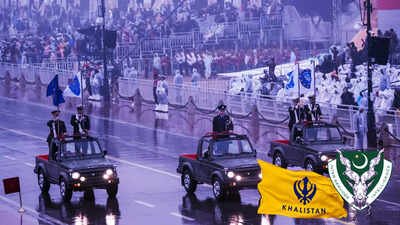

New Delhi: India’s 77th Republic Day celebrations are set to mark a significant moment in India–European Union relations, but the growing proximity between New Delhi and Brussels has reportedly unsettled Khalistani groups and Pakistan’s intelligence agency, the Inter-Services Intelligence (ISI).
According to a report by CNN-News18, the participation of a European Union military contingent in the Republic Day parade at Kartavya Path—alongside Indian armed forces—has caused concern among anti-India elements operating abroad. This year’s event will also see top EU leadership in attendance, signaling a deepening strategic partnership between India and the European bloc.
European Council President António Luís Santos da Costa and European Commission President Ursula von der Leyen will attend the parade as chief guests. A day later, India and the EU are expected to hold a high-level summit, where an announcement related to the long-pending Free Trade Agreement (FTA) is anticipated.
Security sources cited in the report say Khalistani organizations view these developments as a major setback. These groups had reportedly hoped that certain European countries would continue to provide space for narratives critical of India. Instead, closer India–EU engagement is being seen as a sign of growing international confidence in India’s global role and internal security concerns.
The report further claims that European diplomats visiting India have been briefed by Indian officials on alleged links between Khalistani groups and violent extremist networks. Officials believe such discussions are not routine diplomatic exchanges and are strategically timed amid expanding defense, trade, and security cooperation between India and the EU.
Analysts say the symbolic presence of EU troops at the Republic Day parade underscores the evolution of India–Europe ties from economic cooperation to broader strategic alignment. Even non-EU European countries such as Norway have publicly welcomed stronger India–EU relations, calling them beneficial for the wider European region.
Sources suggest there is increasing awareness within European institutions that extremist elements operating under separatist banners could pose long-term internal security risks within Europe itself. This perception, if it gains traction, could limit the operational space for such groups on the continent.
As India and the European Union move toward closer collaboration, observers note that the shifting geopolitical landscape is prompting anxiety among groups opposed to New Delhi’s growing international partnerships.