


Tokyo:
Vietnamese migrant workers in Japan are increasingly facing uncertainty as the government moves forward with a stricter crackdown on illegal employment, amid rising public resentment and labor market pressures.
Minh, a Vietnamese worker who arrived in Japan in 2015 under the Technical Intern Training Program (TITP), represents thousands caught in this difficult situation. For nearly a decade, he performed physically demanding jobs such as ship sandblasting and steel welding—work that has helped support Japan’s aging economy. However, after overstaying his visa, he now risks detention and deportation under Prime Minister Sanae Takaichi’s proposed tougher immigration policies.
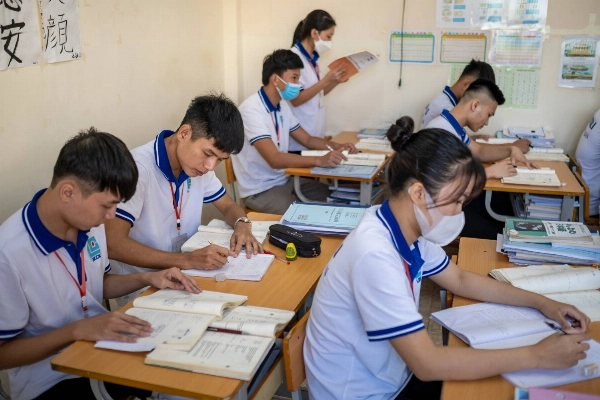
The TITP was introduced to allow workers from developing countries to gain skills in Japan, but critics argue it has become a source of cheap labor. Many interns arrive burdened with heavy recruitment debts and limited workplace protections, leaving some to abandon their placements and seek undocumented work.
According to official data, Japan hosted around 450,000 technical interns as of June last year, nearly half of them Vietnamese. Vietnam now accounts for about one-quarter of Japan’s 2.3 million foreign workers, a ninefold increase over the past decade.
While public concern has grown over crimes involving foreigners, police statistics show that non-Japanese accounted for only 5.5% of arrests in 2024. However, Vietnamese nationals made up over 30% of arrests among non-permanent foreign residents, largely reflecting their growing population in the workforce.
Experts and advocacy groups argue that economic stress and rigid labor rules contribute to these outcomes. Interns are often unable to change employers even in cases of abuse, low pay, or poor living conditions. Around 6,500 trainees reportedly disappeared from their workplaces last year, some turning to informal job networks or, in extreme cases, criminal activity.
Japan plans to replace the TITP with a new system by 2027, allowing greater job mobility but requiring higher Japanese language proficiency. However, specialists warn that Japan’s weakening currency and competition from countries like South Korea may make it harder to attract skilled workers.
Community leaders emphasize that most Vietnamese interns contribute positively to Japanese society. “It is painful to see how one negative incident can damage the image of an entire community,” said a Vietnamese religious worker who shelters migrants in distress.
As Japan balances immigration control with labor shortages, the future of thousands of foreign workers remains uncertain—raising broader questions about fairness, integration, and the sustainability of its workforce policies.