
Islamabad/Washington: Pakistan’s most powerful military chief, Field Marshal Asim Munir, is facing a critical test of his newly consolidated authority as the United States presses Islamabad to contribute troops to a proposed Gaza stabilisation force, a move that analysts warn could trigger serious domestic backlash.
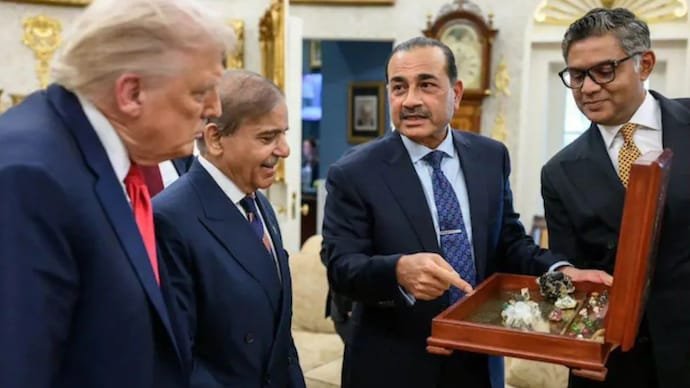
Munir, who now holds the position of Pakistan’s chief of defence forces, is expected to travel to Washington in the coming weeks to meet US President Donald Trump. According to sources cited by Reuters, this would be his third meeting with Trump in the past six months, with discussions likely to centre on the proposed Gaza stabilisation mission.
The initiative forms part of Trump’s 20-point Gaza plan, which calls for a multinational force drawn largely from Muslim-majority countries to oversee a transition period in Gaza. The force would be tasked with maintaining stability, facilitating reconstruction, and supporting economic recovery in the Palestinian territory, which has been devastated by more than two years of Israeli military bombardment.
However, the proposal has raised concerns within Pakistan and across the Muslim world. Analysts say deploying Pakistani troops to Gaza could expose Islamabad to political risks at home, where public sentiment is strongly pro-Palestinian and deeply critical of Israel. There are also fears that participation in a mission aimed at demilitarising Hamas could draw Pakistani forces directly into the conflict.
Several countries are reportedly wary of joining the force, concerned that it could escalate tensions and provoke domestic unrest. For Pakistan, the decision carries added sensitivity given its historical stance on Palestine and its internal political dynamics.
Asim Munir’s upcoming talks in Washington are therefore being closely watched, with observers seeing them as a defining moment for Pakistan’s foreign and security policy, as well as for Munir’s leadership at the peak of his military influence.