
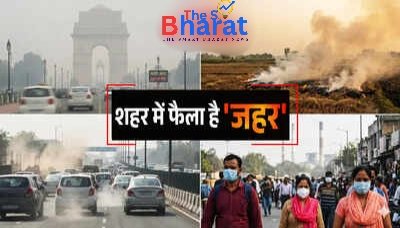
New Delhi: The worsening air pollution in Delhi-NCR has once again pushed the region into the spotlight, triggering serious concern among citizens, medical experts, and the country’s highest constitutional authorities. With the Air Quality Index (AQI) frequently touching “severe” and “hazardous” levels, a troubling question is being increasingly asked: how long can people continue to call Delhi their home when even breathing has become a struggle?
The Supreme Court has repeatedly expressed concern over the deteriorating air quality in the national capital, pulling up authorities over inadequate implementation of pollution-control measures. Medical institutions such as AIIMS have also warned that prolonged exposure to toxic air is leading to a sharp rise in respiratory illnesses, heart problems, and other long-term health complications, especially among children and the elderly.
Amid this backdrop, a recent viral post on Reddit has reignited public debate. Titled “Delhi-NCR is finished, there’s no point defending it anymore”, the post does not rely on official data or dramatic claims but instead presents a deeply personal assessment of life in the region. The author compares living conditions in Delhi-NCR with other Indian cities, highlighting pollution, safety concerns, high living costs, and declining quality of life as major reasons why many residents are considering leaving.
The post struck a chord with thousands of users, many of whom shared similar experiences—chronic coughs, eye irritation, dependence on air purifiers, and the mental stress of raising families in an environment filled with smog for months every year. Several users questioned whether career opportunities alone are enough to justify staying in a city where stepping outside can feel like inhaling poison.
Experts point out that Delhi-NCR’s pollution crisis is the result of multiple factors, including vehicular emissions, construction dust, industrial pollution, stubble burning in neighboring states, and unfavorable weather conditions during winter. Despite measures such as the Graded Response Action Plan (GRAP), restrictions on construction, and promotion of electric vehicles, the impact on ground remains limited.
Environmentalists warn that without sustained, long-term policy action and coordination between the Centre and states, the situation may worsen further. “This is no longer a seasonal problem. It has become a public health emergency,” said an environmental health expert, adding that migration from the city due to pollution could become a real trend if conditions do not improve.
As Delhi-NCR continues to choke under toxic air, the growing public discourse—both online and offline—reflects a deeper sense of frustration and helplessness. For many residents, the debate is no longer just about AQI numbers, but about the fundamental right to breathe clean air and live a healthy life.