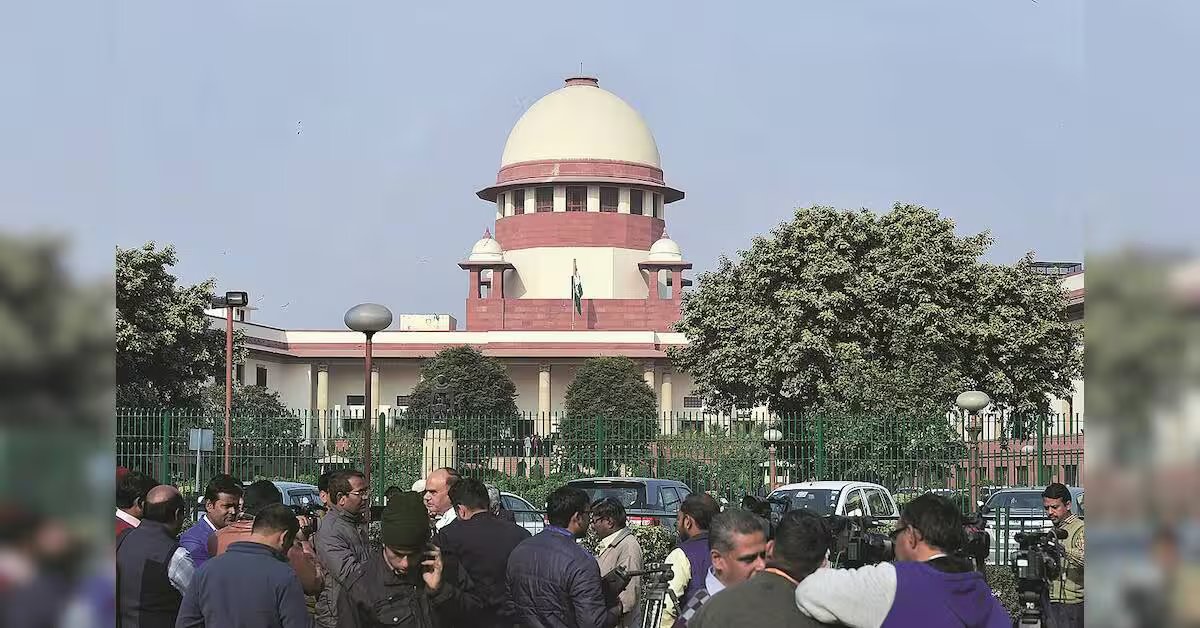

The Supreme Court on Friday dismissed the Karnataka government’s appeal against a Karnataka High Court judgment permitting motorcycle owners and aggregators to operate bike-taxi services in the state, paving the way for their continued operation.
A Bench of Justices Satish Chandra Sharma and N Kotiswar Singh upheld the High Court’s January 23, 2026, judgment, which had directed the state authorities to consider applications for registering motorcycles as transport vehicles and issuing permits for their use as bike taxis.
During the pronouncement of the verdict, Justice Sharma recalled an interaction with young women who had visited his office and used bike taxis to commute.
“I asked them, how do you come to my office? They said on a motorbike because they do not have the money to hire a cab. I asked them, why don’t you take an auto? They said, ‘Sir, it is five times (the fare)’,” the judge said.
The dispute arose after a single-judge Bench of the Karnataka High Court ordered a halt to bike-taxi services until the state government formulated a policy regulating their operations.
The order was challenged by aggregators Ola, Uber and Rapido, along with motorcycle owners and the Bike Taxi Welfare Association.
On January 23, a Division Bench comprising then Chief Justice Vibhu Bakhru and Justice C M Joshi allowed their appeals and lifted the restrictions. It held that motorcycles could be registered as transport vehicles and operated as contract carriages. The state government could prescribe regulatory conditions for their operation but could not deny permits solely on the ground that the vehicles were motorcycles.
The Karnataka government subsequently moved the Supreme Court, citing concerns over passenger safety, insurance coverage and the absence of adequate regulatory safeguards.
Five associations representing auto and taxi drivers also challenged the High Court’s decision, arguing that allowing bike taxis without imposing comparable regulatory obligations would put existing transport operators at a disadvantage.
During the hearings, the Supreme Court questioned the state’s objections, including its concerns over traffic congestion. It observed that motorcycles occupied less road space than cars and also highlighted the affordability of bike-taxi services.
The state government argued that motorcycles and motor cabs were distinct categories under the Motor Vehicles Act and that the existing aggregator rules did not specifically provide for bike taxis. It also contended that aggregators had no automatic right to operate such services, relying on a 2019 expert committee report that examined safety, congestion and pollution-related concerns.
Karnataka told the court that it was willing to consider allowing bike taxis in other parts of the state but remained opposed to their operation in Bengaluru.
The aggregators, however, submitted that nearly 4 lakh passengers had benefited from bike-taxi services in Karnataka. They relied on an earlier High Court ruling that had not been challenged and government notifications issued in 2004 and 2024.
In response to a query from the Bench, the Centre also confirmed that motorcycles could be used as taxis under its notifications.
After considering the submissions, the Supreme Court dismissed the state’s appeal, leaving the High Court’s directions in place.
Reacting to the verdict, Pavan Guntupalli, co-founder of Rapido, said, “We welcome today’s decision by the Hon’ble Supreme Court. It brings important clarity to the bike taxi category in Karnataka and marks a landmark moment for the sector in India.”
In a press release, he stated that over the years, bike taxis have demonstrated their value by helping commuters navigate congested cities, strengthening first- and last-mile connectivity, and creating flexible earning opportunities for captains.
“The verdict recognises the role the category already plays on the ground and provides a stronger foundation for its continued growth and integration into the mobility ecosystem,” he said.
He emphasised that for Rapido, the verdict is more than a legal outcome.
“It is an affirmation of something we have consistently believed in: that India needs mobility solutions designed around the way people actually travel,” he said.
“Two-wheelers are among the most widely owned and accessible mobility assets in the country, and enabling people to use them productively can create meaningful value for commuters, captains and cities alike. We look forward to working with the Government of Karnataka to take the category into its next phase, safe, responsible, regulated and at scale,” he added.