
China on Tuesday strongly criticised the United States for imposing fresh restrictions on advanced semiconductor exports to five countries, accusing Washington of using national security concerns to undermine Chinese technology companies and disrupt global supply chains.
The criticism came hours before US President Donald Trump was scheduled to arrive in Shenzhen for the 33rd Asia-Pacific Economic Cooperation (APEC) Economic Leaders’ Meeting, beginning Wednesday.
The US Commerce Department on Monday issued an interim final rule titled “Addressing Remote Access to Advanced Semiconductors”, requiring licences for exports of advanced chips to Singapore, Thailand, Malaysia, Indonesia and Brazil.
Washington identified the five countries as presenting a “higher-than-normal risk” of semiconductor diversion to China, reflecting its concerns that advanced chips could reach Chinese entities through third countries despite existing export controls.
𝐁𝐞𝐢𝐣𝐢𝐧𝐠 𝐚𝐜𝐜𝐮𝐬𝐞𝐬 𝐔𝐒 𝐨𝐟 𝐜𝐨𝐞𝐫𝐜𝐢𝐨𝐧
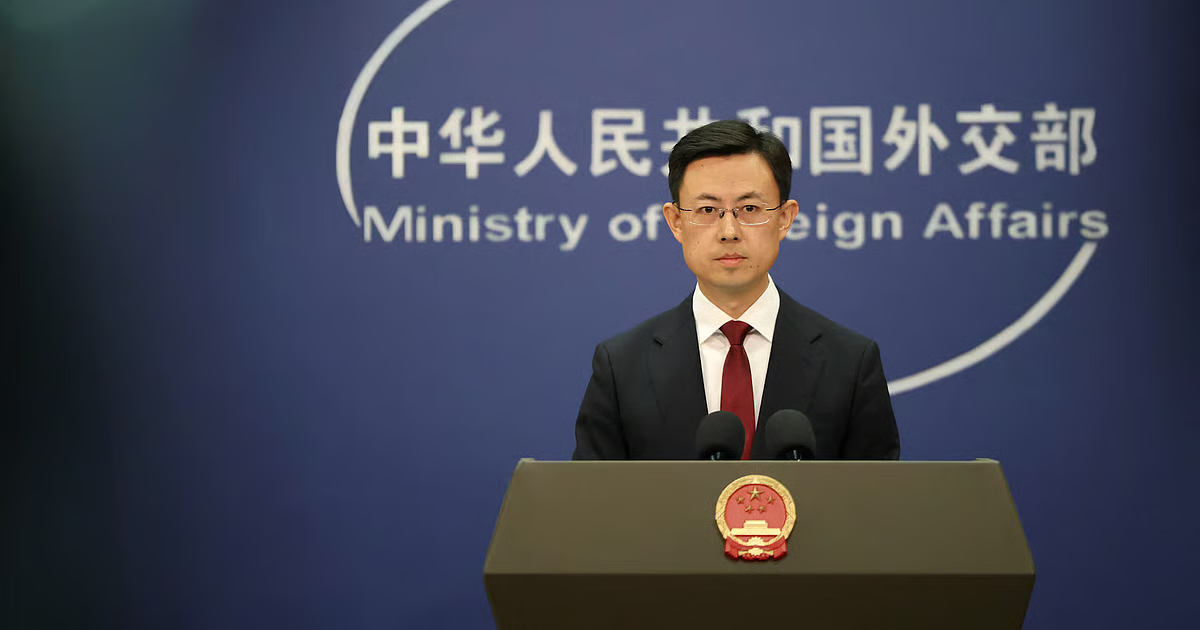
Responding to the restrictions, Chinese Foreign Ministry spokesperson Guo Jiakun accused Washington of excessively invoking national security to interfere with legitimate international trade and technological cooperation.
Guo said the latest measures represented another attempt by the United States to target China’s high-technology industry through export controls.
“Such typical economic coercion and long-arm jurisdiction run counter to the common understandings between the two countries, harm the legitimate rights and interests of Chinese companies, and disrupt global supply chains,” he said at a regular media briefing.
The spokesperson warned that Beijing would take necessary steps to protect its interests.
“China will do what is necessary to firmly safeguard its legitimate and lawful rights and interests,” Guo said.
The latest dispute has added to longstanding tensions between Washington and Beijing over access to advanced semiconductors and technologies considered strategically important for artificial intelligence and other high-performance computing applications.
𝐀𝐏𝐄𝐂 𝐬𝐮𝐦𝐦𝐢𝐭 𝐢𝐧 𝐟𝐨𝐜𝐮𝐬
The diplomatic exchange came ahead of Trump’s arrival in Shenzhen, which is hosting the two-day APEC Economic Leaders’ Meeting.
The summit brings together leaders from 21 member economies to discuss regional economic cooperation, trade and other issues affecting the Asia-Pacific.
According to the Chinese Foreign Ministry, the presidents of China, the United States and Russia are scheduled to hold a trilateral meeting on Thursday.
The proposed discussions are expected to focus on safeguarding international peace and promoting strategic stability in relations among major powers.
The planned meeting assumes significance against the backdrop of continuing disagreements over technology restrictions, trade policies and regional security.
𝐐𝐮𝐚𝐝 𝐦𝐞𝐞𝐭𝐢𝐧𝐠 𝐢𝐧 𝐌𝐚𝐧𝐢𝐥𝐚
Trump is scheduled to travel to Shenzhen from Manila after participating in the ASEAN Summit and a meeting of the Quadrilateral Security Dialogue, commonly known as the Quad.
Prime Minister Narendra Modi attended the Quad meeting alongside Australian Prime Minister Anthony Albanese and Japanese Prime Minister Sanae Takaichi.
China has consistently criticised the grouping, which also includes the United States, arguing that exclusive strategic arrangements risk encouraging bloc confrontation in the Indo-Pacific.
Beijing has maintained that regional cooperation should remain inclusive rather than be directed against particular countries.
The latest semiconductor restrictions have added another point of friction to US-China relations as both governments prepare for high-level diplomatic engagement.
The dispute also highlights the competing priorities of the two countries, with Washington seeking tighter controls over access to advanced computing technologies and Beijing opposing measures it considers discriminatory.
The outcome of the upcoming meetings will be closely watched amid unresolved disagreements over technology, trade and strategic security.