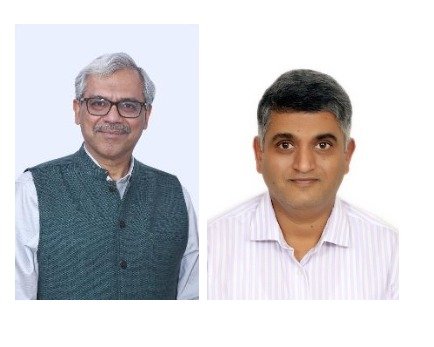

By Dr. Rajiv Bahl and Dr. Anup Anvikar
Dr. Rajiv Bahl is Secretary, Department of Health Research and Director General, ICMR. Dr. Anup Anvikar is Additional Director General, ICMR.
Fifteen years ago, India recorded more than 1,000 malaria deaths every year. In 2025, the number of reported deaths was in double digits — a decline of more than 90 per cent. Between 2015 and 2025 alone, both malaria cases and deaths fell by nearly 80 per cent, and the number of high-burden districts dropped from 155 to just 33. In 160 districts, not a single indigenous case was recorded between 2022 and 2025. India’s goal is now clear: to achieve zero indigenous cases by 2027 and complete elimination by 2030.
Yet experience shows that the final stage is the hardest, and this is precisely where complacency can prove most dangerous. India learnt this lesson the hard way. The ICMR-National Institute of Malaria Research (ICMR-NIMR), which enters its 50th year in 2026, was born out of that bitter experience.
A Lesson Born of Resurgence
At the time of Independence, malaria was widespread across the country. Nearly 75 million cases and 8 lakh deaths occurred every year. The National Malaria Eradication Programme, launched in 1958, relied on DDT spraying and chloroquine. By 1965, cases had fallen to about one lakh and no deaths were reported. Eradication seemed within reach.
Then malaria returned. Mosquitoes developed resistance to DDT, parasites began surviving chloroquine, and as the disease declined, funding and surveillance were reduced. By 1976, cases had surged again to 6.4 million. The resurgence proved that insecticides and drugs alone were not enough. India needed its own science on mosquitoes, parasites, and the people at risk.
In 1977, the government established the Malaria Research Centre under the Indian Council of Medical Research (ICMR) in Delhi. It was later upgraded to a national institute and renamed ICMR-NIMR in 2005.
Fifty Years of Answers
Malaria is caused by a parasite, but it reaches humans only through the bite of a female Anopheles mosquito. The Institute therefore began by studying the vector: where it breeds, feeds, rests, and bites. One of its most important findings was that mosquitoes that look alike can belong to different species. Some prefer human blood and efficiently transmit malaria; others mainly feed on cattle and pose far less risk. Understanding these differences allowed control efforts to be focused where transmission actually occurs.
Over five decades, the Institute has mapped Anopheles species across the country and tracked their insecticide resistance. Field projects showed that communities can reduce malaria through environmental management and the use of larvivorous fish. Drug-efficacy monitoring provided the evidence that led India to shift from chloroquine to artemisinin-based combination therapy (ACT). The Institute tested bed nets and rapid diagnostic tests (RDTs) under real field conditions before they were scaled up nationally.
Since 2013, the Comprehensive Case Management Project (CCMP), implemented with the Odisha government in four districts, demonstrated that universal testing, complete treatment, and stronger surveillance can sharply reduce cases even in remote areas. Odisha incorporated these lessons into its Daman programme for hard-to-reach regions, contributing to a major statewide decline that also improved national figures.
From mosquito to parasite, laboratory to field, and microscope to genomics and artificial intelligence, every discovery has brought India closer to its goal. Fifty years ago, the challenge was to understand malaria. Today, the challenge is to eliminate it completely.
Why the Last Mile Is the Hardest
India is closer to the goal than ever before — and the risk is also highest. As cases fall, it becomes easy to assume the job is done. It is not. Just 33 districts across nine states and Union Territories still account for 64 per cent of all cases and 54 per cent of deaths. The remaining cases hide in remote forest villages or in people with few or no symptoms. Parasites and mosquitoes continue to adapt.
Science alone will not close the gap. Understanding how remote communities perceive fever, when they seek care, and whether they adopt preventive measures is equally essential. To finish the job, research and development must deliver results in five priority areas over the next decade.
Five Priorities for the Next Decade
First, continuous surveillance of malaria transmission factors under a changing climate is essential. Rising temperatures and shifting rainfall patterns are altering mosquito breeding sites, the speed of parasite development inside mosquitoes, and the length of the transmission season. Malaria could return to areas where it has been eliminated or move into higher altitudes. Invasive species such as Anopheles stephensi, which breeds in urban water storage, pose a new threat. Continuous entomological surveillance linked to climate data and forecasting models must provide early warning of the next outbreak.
Second, prevention measures must be sustained and strengthened. Long-lasting insecticidal nets and indoor residual spraying have been central to India’s success. However, most nets currently used in India rely on a single class of insecticides, and resistance is emerging. Research must test and introduce new insecticides and next-generation nets. Biological methods such as larvivorous fish and bacterial larvicides also need expansion. Above all, the tools must be ones that people actually use.
Third, diagnosis must keep pace with falling case numbers. Rapid diagnostic tests have made reliable diagnosis possible even in villages without laboratories. But as cases decline, remaining infections become fewer, milder, and harder to detect. In some areas, a small proportion of the deadliest parasite, Plasmodium falciparum, carries genetic changes that allow it to escape the protein detected by most RDTs. Continuous monitoring will ensure the accuracy of current tests, while research must focus on more sensitive and affordable diagnostics suited to a low-transmission era. Microscopy remains the gold standard but requires good equipment and trained technicians. Artificial intelligence-assisted and advanced microscopy can make diagnosis faster, more accurate, and less dependent on scarce expertise.
Fourth, new drugs must be ready before resistance spreads. Chloroquine, once the mainstay of treatment, no longer works against parasites in large parts of India. Artemisinin-based combination therapies still work well here, but partial resistance has already appeared in other parts of Asia and Africa. Scientists must continuously monitor drug efficacy across the country and move new antimalarial candidates from the laboratory into clinical trials. Shorter and safer treatments for Plasmodium vivax are equally urgent, as this parasite can cause relapses months after the initial infection.
Finally, prevention is always better than cure. India needs its own malaria vaccines. ICMR has developed Adfalciparum, India’s first indigenous malaria vaccine candidate, which is currently being evaluated for safety and efficacy. Future vaccines must be effective against the range of parasites found in India and should ideally include transmission-blocking vaccines that protect entire communities by preventing the parasite from spreading from humans to mosquitoes.
For Everyone, Everywhere
Behind every discovery lies a simple purpose: saving lives. The work continues towards a day when no family in the country loses a child to a mosquito bite, suffers loss of income, or sees a child’s education disrupted because of malaria. That day is no longer distant. India has come close before and failed to finish the job. This time, the resolve is firm: it will not happen again.