


European leaders on Monday strongly dismissed the possibility of accepting any Russia-Ukraine peace deal negotiated without the direct involvement of Ukraine and European nations, amid growing diplomatic activity around a proposed US-backed peace framework.
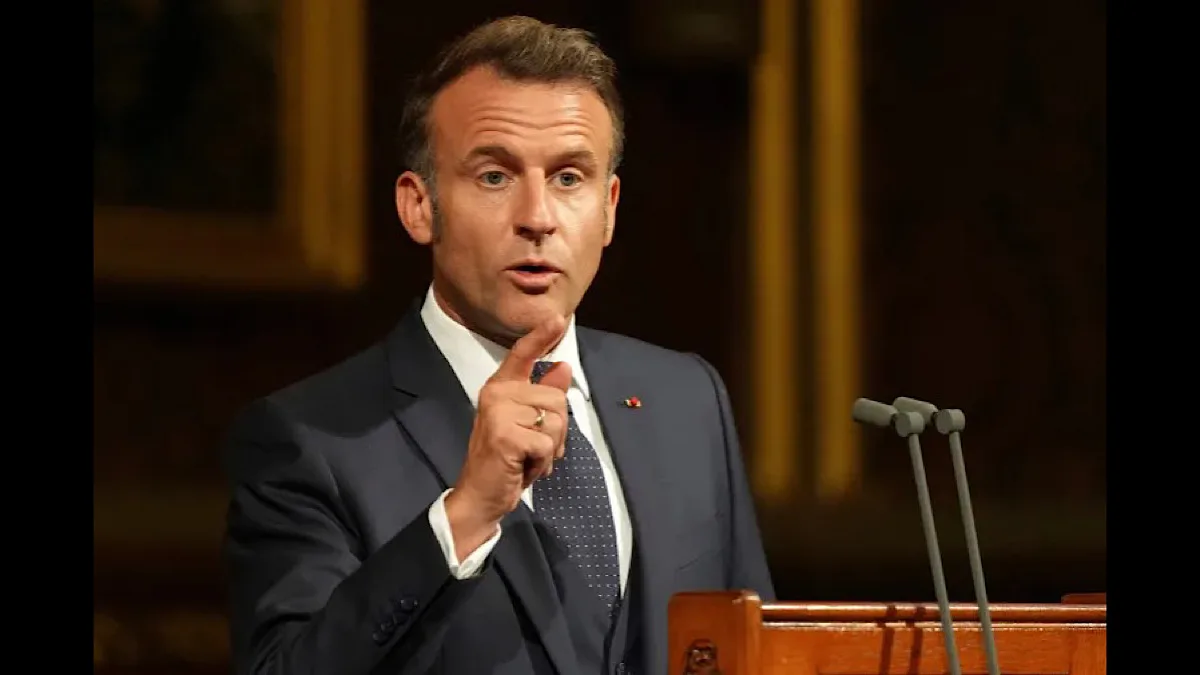
Speaking in Paris alongside visiting Ukrainian President Volodymyr Zelensky, French President Emmanuel Macron stated that any agreement to end the conflict must be negotiated “with Ukrainians and Europeans, not without them.” He stressed that there is “no finalised peace plan as such today”, cautioning against attempts to bypass Ukraine in talks.
Macron added that discussions on sensitive matters — including the use of frozen Russian assets, long-term security guarantees and Ukraine’s bid for European Union membership — “can only be finalised with the Europeans around the table.”
Ukraine seeks a ‘dignified’ end to war
President Zelensky reiterated Kyiv’s position that the war must conclude on fair terms.
Ukraine seeks to end the conflict “in a dignified manner,” he said, while acknowledging that “the territorial issue will be the most difficult” aspect of future negotiations.
According to the Élysée Palace, Macron and Zelensky held additional talks later in the day with several European leaders as well as with US and Ukrainian negotiators.
Germany warns against “dictated peace”
German Chancellor Friedrich Merz also rejected any attempt to impose terms on Kyiv from outside Europe.
“No decision about Ukraine and Europe without Ukrainians and without Europeans,” Merz said after meeting Polish Prime Minister Donald Tusk in Berlin.
Tusk echoed the sentiment and reaffirmed Warsaw’s continued support for Kyiv, noting that Poland and Germany are working together to strengthen Europe’s security architecture.
Baltic concerns over exclusion from talks
Latvian President Edgars Rinkēvičs also insisted that Europe must have a seat at the negotiating table. Discussing a potential peace agreement during an interview on Latvian Radio’s Krustpunkta programme, he said that Western countries broadly agree on three guiding principles:
- the territorial integrity of Ukraine,
- its sovereignty, and
- Europe’s security interests.
He added that foreign policy officials across Latvia, the Nordic-Baltic region, the EU, and most NATO member states share this stance.
US-backed peace proposal under discussion
The diplomatic push follows the unveiling of a 28-point US peace proposal two weeks ago. Representatives from the US, Ukraine and several European nations met in Geneva on November 23 to discuss the document.
A day earlier, US Secretary of State Marco Rubio and US special envoy Steve Witkoff held talks in Hallandale Beach, Florida with a Ukrainian delegation.
Meanwhile, the Kremlin confirmed that Russian President Vladimir Putin will meet US envoy Steve Witkoff in Moscow on Tuesday to discuss prospects of ending the conflict.
Diplomacy intensifies — but major gaps remain
While diplomatic exchanges are accelerating, divisions remain significant over Ukraine’s territorial boundaries, future military security, and the role of Western allies in shaping a settlement.
For now, Europe’s message remains firm: there will be no peace deal for Ukraine negotiated over the heads of Ukrainians and Europeans.