


Cyber Awareness Campaign Organised at Bilaspur PCS Coaching Institute; Students Advised to Adopt Safe Digital Practices
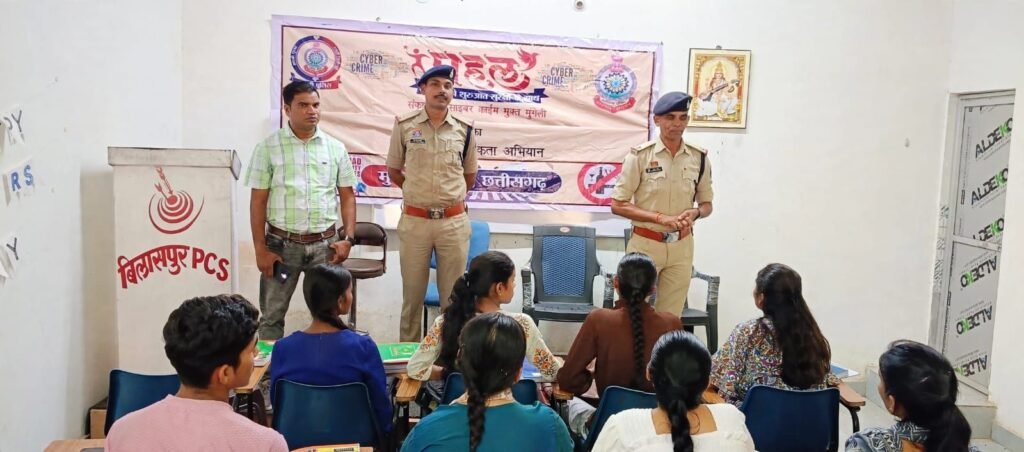
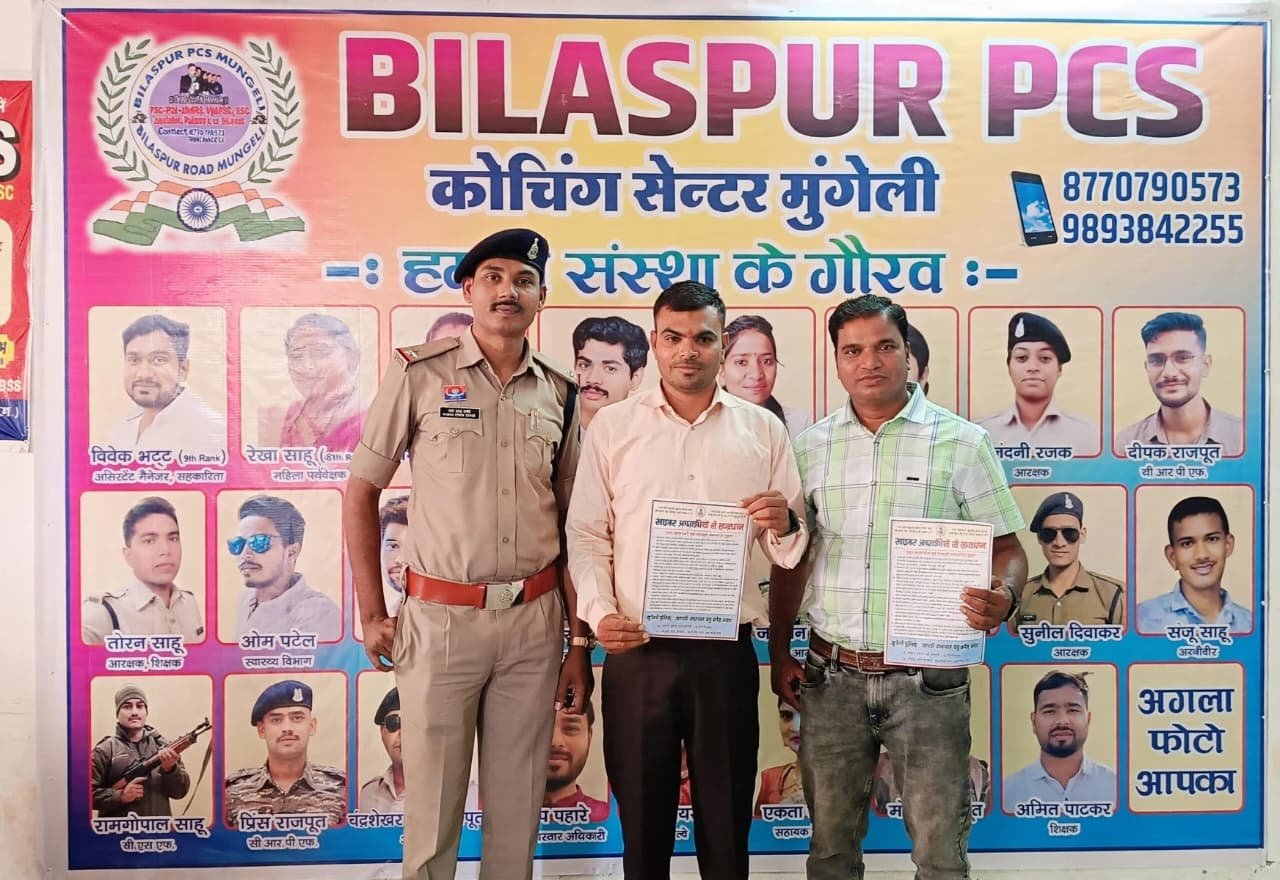
Mungeli: In the digital age, the use of the internet, mobile phones and social media has increased significantly. Alongside these developments, cybercrime and online fraud have also emerged as major challenges. With the objective of preventing cybercrime and promoting digital safety among citizens, the police are conducting special awareness campaigns. As part of this initiative, a cyber awareness programme was organised under the ‘Pahal’ programme at Bilaspur PCS Coaching Institute, where students preparing for competitive examinations were educated about cyber threats and essential measures to stay safe online.
The programme was organised under the direction of Senior Superintendent of Police Bhojram Patel and the guidance of District Panchayat Chief Executive Officer Gokul Ram Rawate. During the session, students were informed about the changing methods adopted by cybercriminals to deceive people and steal their money or confidential information. The importance of awareness, vigilance and responsible internet usage was emphasised as the first line of defence against cyber fraud.
Students Educated About Fake Links and Suspicious Calls
During the awareness campaign, students were given detailed information about various forms of online fraud. They were advised not to trust calls from unknown numbers, suspicious messages, fraudulent links or offers that appear too good to be true without proper verification.
The students were also informed that cybercriminals often impersonate bank officials, government representatives or employees of reputed organisations to obtain confidential information. They were specifically cautioned against sharing one-time passwords (OTPs), ATM details, banking credentials, passwords and other sensitive information with unknown individuals.
Officials stressed that suspicious links should never be opened without verification and that social media platforms must be used responsibly and cautiously.
Strong Passwords and Digital Awareness Key to Online Safety
The programme highlighted the importance of adopting safe digital practices in everyday life. Students were advised to use strong and unique passwords, review the privacy settings of their social media accounts and ensure the responsible use of mobile phones and internet services.
They were also made aware that cybercriminals frequently exploit people’s fear, greed or haste to carry out fraudulent transactions. Students were therefore advised to verify requests carefully before making online payments and to report suspicious activities promptly.
The awareness session was particularly relevant for students preparing for competitive examinations, as they regularly use digital platforms for applications, online payments, educational resources and communication. By remaining vigilant, students can protect themselves and also help spread awareness among their families and communities.
Helpline 1930 and Official Portal Information Shared
The students were also informed about the steps to take in case they become victims of cyber fraud. They were advised to contact the National Cyber Crime Helpline at 1930 in cases of financial cyber fraud and register complaints through the official portal, www.cybercrime.gov.in.
The importance of reporting incidents without delay was highlighted, as timely complaints can help the concerned authorities take appropriate action. Students were also advised to preserve transaction messages, screenshots and other relevant evidence related to fraudulent activities.
‘Pahal’ Aims to Build a Cyber-Aware Generation
The primary objective of the ‘Pahal’ programme was to make students more aware of cybercrime and encourage them to adopt safe digital habits. The campaign conveyed the message that cyber safety is not merely the responsibility of the police or any single institution; rather, it is a shared responsibility of every internet user.
Through such initiatives, students can become more informed digital citizens, recognise potential online threats and contribute to preventing cybercrime by spreading awareness throughout society.
The programme was attended by Sub-Inspector Naveen Jangde, Assistant Sub-Inspector Madhukar Ratre, Babita Shrivas and other members of the cyber team. Teachers from the coaching institute, including Amit Kumar, Amit Patel and Anamika Vaishnav, were also present.
The session concluded with an emphasis on remaining alert against cyber threats and extending the message of digital safety to family members and the wider community.