


Mumbai, November 24: Shares of Hindustan Aeronautics Limited (HAL) plunged sharply on Monday after a Tejas fighter jet crashed during a demonstration at the Dubai Air Show 2025, triggering concerns among investors. The PSU defence stock fell 8.48% to ₹4,205.25 on the BSE at open, while on the NSE, the stock declined 4.13% to ₹4,405.
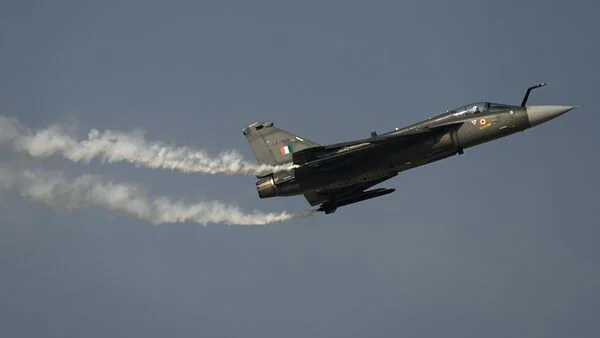
The Tejas aircraft, developed by HAL for the Indian Air Force (IAF), went down during an aerobatic display at low altitude. Pilot Wing Commander Namansh Syal tragically lost his life in the crash. The IAF has constituted a Court of Inquiry to determine the cause of the incident.
Crash Impact Seen as Short-Term Market Reaction
Despite the sharp fall, analysts emphasize that the accident does not signal structural flaws in the Tejas programme. They expect near-term volatility, but remain optimistic about HAL’s long-term trajectory.
“An incident like this doesn’t change the long-term trajectory, but it does introduce short-term reputational risk when valuations are rich,”
said Harshal Dasani, Business Head, INVasset PMS.
According to Dasani, the government has clarified that previous concerns regarding fuel leakage were unrelated, but the crash has come at a time when market expectations from HAL were elevated.
He added that HAL entered this phase with one of the strongest order books in its history, including the recent mega order for 97 Tejas units along with rising demand for helicopters and aero engines. However, the stock had been “priced for perfection,” leading to sharper profit-booking after the accident.
Crash Not Indicative of Systemic Failure, Say Analysts
Brokerage firms caution investors not to overinterpret the event, noting that even advanced global fighter jet platforms, including the F-35, have experienced accidents.
“This is not alarming — it is the reality of cutting-edge military aviation. HAL’s accident ratio remains among the lowest in modern fighters,”
said analysts at Choice Broking.
However, sentiment toward exports may take a temporary hit, analysts say. They expect the domestic focus — especially the scale-up of Tejas Mk1A production — to continue driving growth in the near to medium term.
Strong Order Book Continues to Support Long-Term Outlook
HAL holds an order backlog over 7.1x its FY25 revenue, offering an extended visibility of future earnings and production.
Choice Broking believes that HAL’s long-term fundamentals remain robust, supported by strong execution and its central role in India’s defence modernisation drive.
Should You Buy or Sell HAL Shares?
Despite near-term uncertainty, Choice Broking has maintained its ‘Buy’ rating, assigning a target price of ₹5,570 per share, valuing the stock at 35x FY27/28E average EPS.
HAL Share Price Performance Snapshot
Timeframe Return 1 month –7% 6 months –10% 1 year +8% 2 years +100% 5 years +1,026% (multibagger)
At 9:30 AM, HAL shares were trading 2.81% lower at ₹4,465.70 on the BSE, reducing the early-morning losses.
Bottom Line
Analysts view the recent crash as a sentiment setback, not a structural threat to HAL’s growth outlook. While volatility may persist in the short term, the long-term India defence story — and HAL’s role in it — remains firmly intact, according to brokerages.