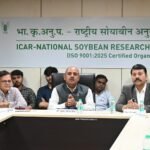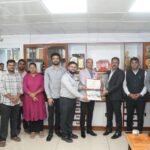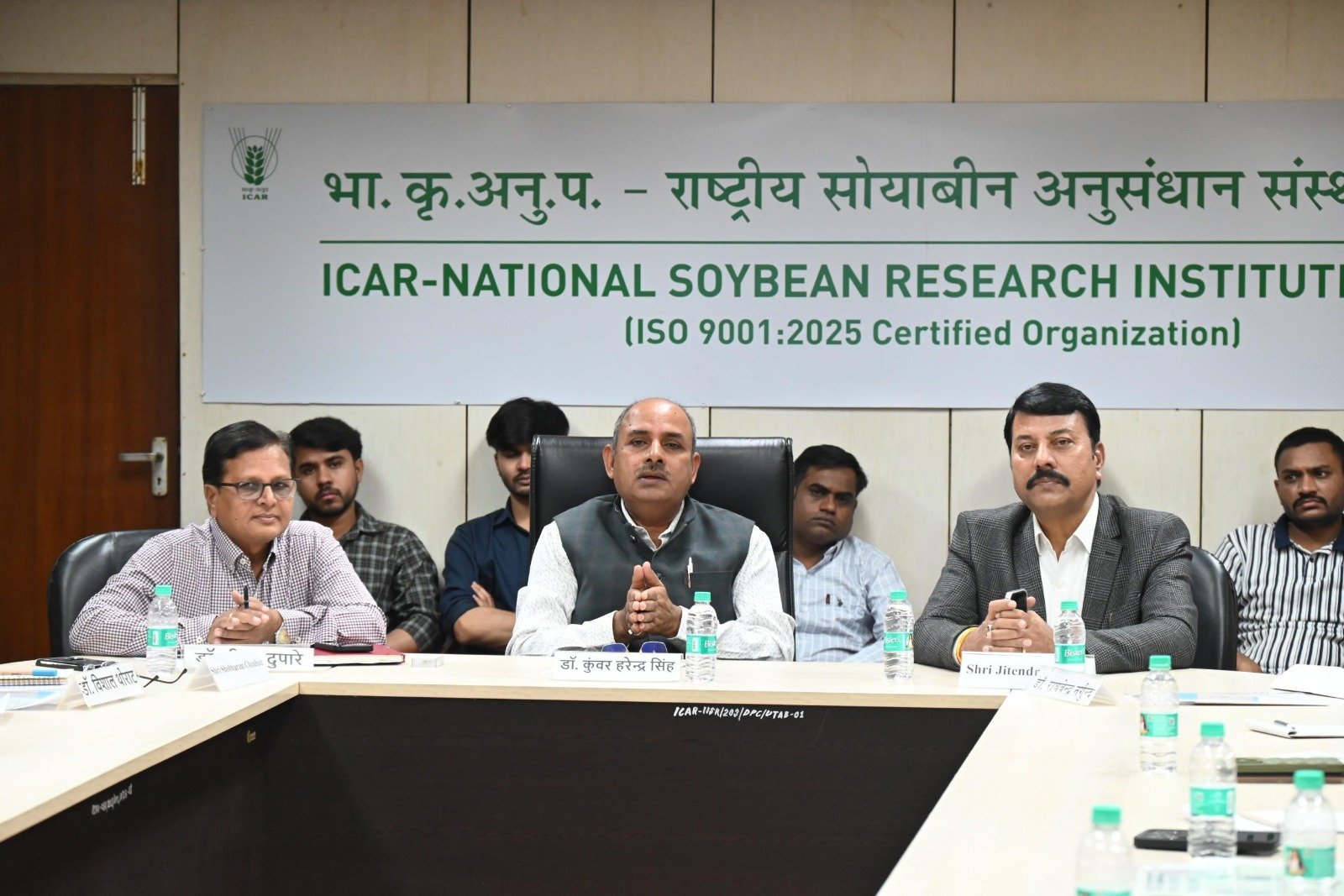

Indore : A three-day training programme on “Technologies for Production, Processing and Value Addition in Soybean and Wheat” concluded successfully today at the ICAR–National Soybean Research Institute (ICAR-NSRI), Indore. The programme, held from November 18 to 20, 2026, was attended by 36 agricultural officers representing 18 districts of Madhya Pradesh under a state government-sponsored project.
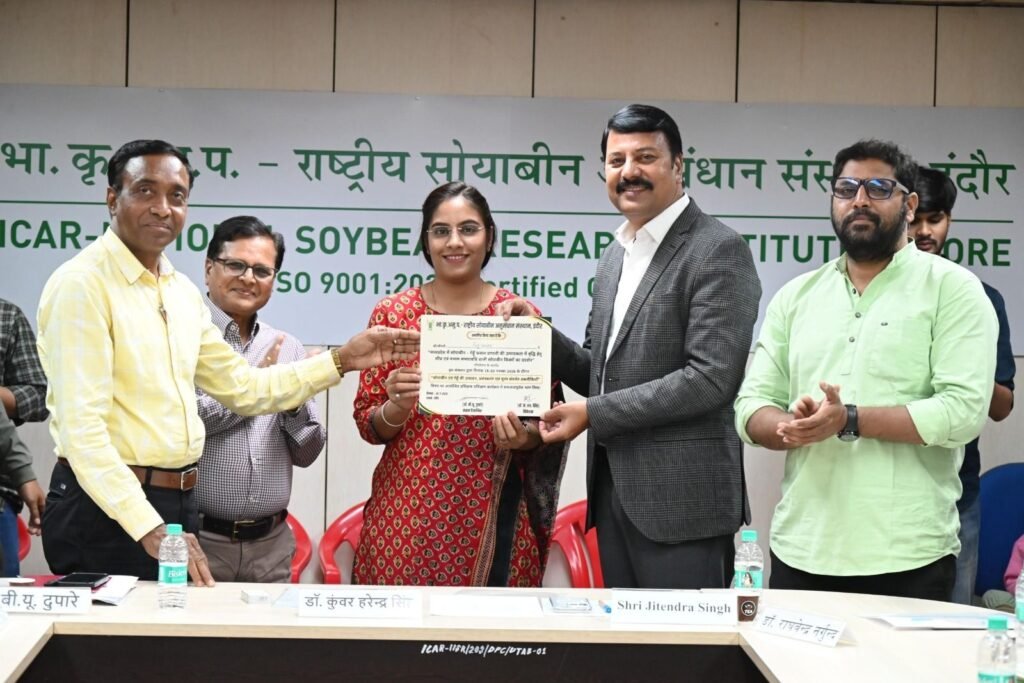
The training aimed to enhance the technical knowledge and capacity of agricultural officers so that they can effectively disseminate improved technologies to farmers for increasing the productivity of the soybean–wheat cropping system. It was organised under the project titled “Demonstration of Early- and Medium-Duration Soybean Varieties for Enhancing Productivity of the Soybean–Wheat Cropping System in Madhya Pradesh”, funded by the Department of Farmer Welfare and Agriculture Development, Government of Madhya Pradesh.
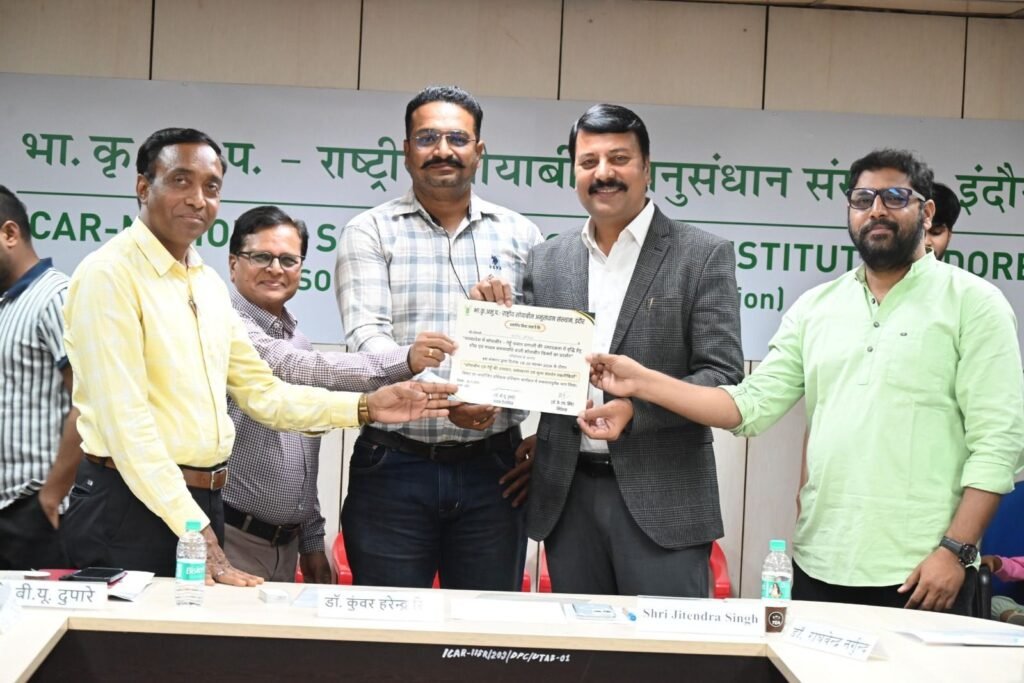
ICAR-NSRI, Indore, in collaboration with the Government of Madhya Pradesh, has been implementing this project for the past three years across 18 districts of the Malwa and Nimar regions and other parts of the state. Under the project, 180 demonstration plots of improved soybean varieties were laid out on farmers’ fields during each Kharif season, while another 180 demonstration plots of improved wheat varieties were conducted during the Rabi season every year. In total, 1,080 demonstration plots — comprising 540 soybean and 540 wheat demonstrations — were established over the three-year period.
The soybean demonstrations primarily featured early-duration varieties such as NRC 130, NRC 131 and NRC 150, along with medium-duration varieties including JS 21-72, NRC 142, JS 20-69 and RVS 2024. During the subsequent Rabi seasons, improved wheat varieties developed by the Regional Wheat Research Centre, Indore, were also demonstrated on farmers’ fields.
Research findings and demonstration data generated over the past three years have revealed that cultivation of medium-duration soybean varieties maturing in 100–105 days, as compared to early-duration varieties, can provide an additional yield of approximately 2–4 quintals per hectare. Importantly, the cultivation of these medium-duration varieties does not adversely affect the timely sowing of wheat during the Rabi season or its productivity. These findings highlight the considerable potential of suitable medium-duration soybean varieties in enhancing the overall productivity and profitability of the soybean–wheat cropping system.
During the three-day programme, subject-matter experts conducted several technical sessions covering improved soybean varieties, scientific crop production practices, weed management, insect-pest and disease management, utilisation of social and digital media for technology dissemination, and economic analysis of soybean cultivation. Special emphasis was also placed on soybean processing and value addition. Live demonstrations of various soybean-based food products — including soy milk, soy paneer (tofu), soy cookies and soy namkeen — were organised to familiarise participants with processing techniques and entrepreneurial opportunities.
A review meeting of the project was held on the concluding day. Shri Jitendra Kumar Singh, Joint Director of Agriculture, Indore Division, attended as a special invitee, along with Shri Shobharam Chauhan, Principal of the Agricultural Extension Training Centre, Indore. Agricultural officers from all 18 districts shared their experiences, achievements and suggestions regarding the demonstrations and discussed the future course of action for wider dissemination of improved varieties and technologies.
Addressing the participants during the concluding session, Dr. K. H. Singh, Director, ICAR-NSRI, Indore, urged farmers and agricultural officers to give due preference not only to early-duration soybean varieties but also to suitable medium-duration improved varieties in the soybean–wheat cropping system. He emphasised that several new and improved soybean varieties developed in recent years possess resistance to major insect pests and diseases and have the potential to deliver better yields even under adverse weather conditions. He stressed the need for wider dissemination and adoption of these varieties and improved production technologies among farmers.
Dr. B. U. Dupare, Course Director of the training programme, expressed gratitude to all experts, participants, senior officials of the Department of Agriculture, Government of Madhya Pradesh, and the Deputy Directors of Agriculture and their teams from the 18 participating districts. He informed that efforts are being considered to incorporate a seed production technology component in the next phase of the project. A detailed proposal in this regard will soon be submitted to the Government of Madhya Pradesh to facilitate the availability of quality seeds of improved soybean varieties to farmers.
The programme concluded with the participants reaffirming their commitment to disseminate the technical knowledge and improved agricultural practices acquired during the training to farmers in their respective districts.