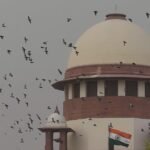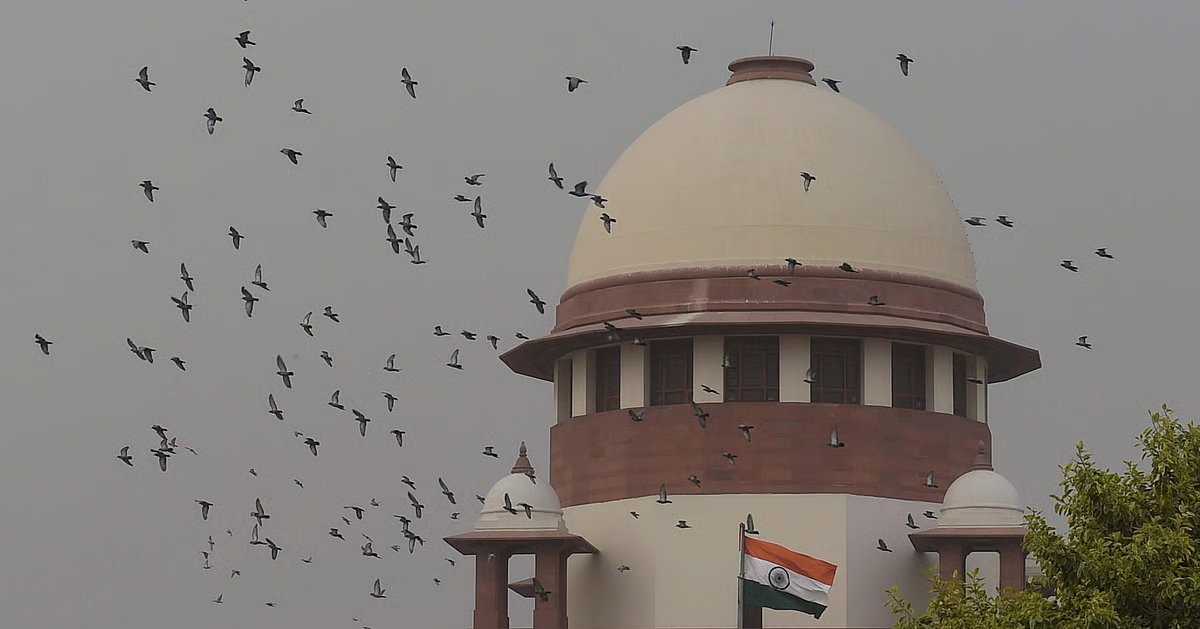

The Supreme Court on Wednesday, November 25, declined to initiate contempt proceedings on its own against the Tamil Nadu government over the failure to light the traditional Karthigai Deepam lamp at a disputed stone pillar atop Thiruparankundram hill near Madurai. The court, however, asked the petitioners to file a formal application and said it would pass appropriate orders after examining the matter.
The development came a day after the ceremonial lamp was lit at the customary Deepa Mandapam near the Ucchipillaiyar temple instead of the Deepathoon, the stone pillar at the centre of the dispute. The Madurai district collector submitted a status report to the Supreme Court, acknowledging that the lamp could not be lit at the location specified in the court’s November 20 order.
A bench comprising Justices Aravind Kumar and Vipul M Pancholi was hearing an urgent mention by the original petitioners, Rama Ravikumar and others, who accused the state authorities of deliberately circumventing the court’s directions.
Petitioners allege deliberate violation of Supreme Court order
Senior Advocate Guru Krishnakumar, appearing for the petitioners who had sought permission to light the lamp at the Deepathoon, described the failure to implement the order as unfortunate and alleged a deliberate attempt to bypass the Supreme Court’s directions.
He also questioned the timing of the district collector’s attempt to place the status report before the bench, describing it as an anticipatory move in response to the alleged breach.
Krishnakumar told the court that a statement had been issued in the name of the temple’s Board of Trustees claiming that the ceremonial lamp should be lit at the Ucchipillaiyar temple because established customs and practices did not permit the ritual at the Deepathoon.
However, he alleged that the temple’s sthanikars, or traditional priests, had denied issuing such a statement.
“This is a deliberate attempt to non-comply with the order. They have succeeded by stratagems and devices. This is a complete infraction of the rule of law. They kept telling the high court till the last minute that they will comply with the order. They refused to comply,” the senior advocate submitted.
He urged the Supreme Court to direct the authorities to carry the flame, which was still burning at the Ucchipillaiyar mandapam, to the Deepathoon and light the ceremonial lamp there, arguing that compliance with judicial orders was essential to upholding the rule of law.
Another counsel representing the petitioners alleged that the temple’s Board of Trustees had been used as a means to circumvent the Supreme Court’s directions and indicated that they would file a contempt petition.
The bench expressed its disinclination to take suo motu cognisance of the alleged violation and asked the parties to submit the necessary applications. It said it would consider the allegations and pass appropriate orders after examining the formal pleas.
Collector says administration made arrangements, blames temple board
Appearing for the Madurai district collector, Senior Advocate Gopal Sankaranarayanan told the bench that the administration had taken all the steps required to implement the Supreme Court’s November 20 order.
“As the Collector, I have traced out all the steps I was supposed to comply with,” he told the court while referring to the status report.
In his report, Madurai District Collector Nishant Krishna said the administration had made arrangements for lighting the lamp at the Deepathoon but could not proceed because the temple’s Board of Trustees did not authorise a team to carry out the exercise.
According to the administration, the temple was approached in writing and reminded to nominate or authorise a team for the ceremony. However, the necessary approval was not granted until the last moment.
The collector maintained that the district administration had acted in good faith and made every effort to secure the temple authorities’ cooperation. He also tendered an unconditional apology for the lamp not being lit at the designated pillar, while denying any wilful or deliberate disobedience of the Supreme Court’s directions.
The status report stated that the Board of Trustees eventually resolved to follow the established practice of lighting the Karthigai Mahadeepam at its customary location near the Ucchipillaiyar temple.
The state government maintained that the district administration and police could not independently carry out the exercise without the temple administration’s authorisation.
What did the Supreme Court order on November 20?
The latest developments stem from the Supreme Court’s November 20 interim order permitting the lighting of the Karthigai Deepam at the disputed Deepathoon on November 24 as a one-time arrangement.
The bench had allowed a restricted team authorised by the Arulmigu Subramaniya Swamy Temple administration, along with government officials, to carry out the ceremony at the stone pillar atop Thiruparankundram hill.
The Madurai district collector was appointed as the nodal officer to coordinate and supervise the arrangements. The court also directed the administration to determine the composition and size of the team in consultation with the temple executive officer, the Archaeological Survey of India and the Madurai commissioner of police.
The order specified that the team should leave the location immediately after the ceremony. It also prohibited the construction of any permanent structures, excavation or structural alterations at the site.
The court further clarified that the arrangement was a one-time interim measure and would not amount to a final determination of the customary rights claimed over the disputed location. It also directed that the religious activities of the nearby dargah and mosque should not be disturbed.
The collector was instructed to submit a compliance report within three days of the festival.
Madras High Court had also directed compliance
The controversy intensified on November 24 after the Madurai Bench of the Madras High Court took up fresh petitions concerning the implementation of the Supreme Court’s directions.
The petitions were filed amid concerns that the apex court’s order might not be followed. The district administration had issued prohibitory orders under Section 163 of the Bharatiya Nagarik Suraksha Sanhita (BNSS) on November 23, citing concerns over unauthorised persons accessing the hill.
The collector subsequently appeared before the high court and clarified that the restrictions were intended to prevent unauthorised entry and would not apply to activities undertaken to implement the Supreme Court’s order.
The high court directed the district administration to ensure compliance, making it clear that the pendency of a review petition filed by the Tamil Nadu government could not be cited as a reason for not following the apex court’s directions.
Despite the assurances, the ceremonial lamp was lit at the customary Deepa Mandapam near the Ucchipillaiyar temple, while the Deepathoon remained unlit.
The Supreme Court has also listed the main challenge concerning the Madras High Court’s earlier ruling for final hearing in January 2027.
BJP, Hindu groups protest over failure to light lamp
The failure to light the ceremonial lamp at the disputed pillar triggered protests by the Bharatiya Janata Party and various Hindu organisations against the district administration and the Tamil Nadu government.
The groups accused the authorities of failing to honour the Supreme Court’s directions and announced that they would file a contempt petition seeking action over the alleged non-compliance.
Meanwhile, Tamil Nadu minister CTR Nirmalkumar said the Karthigai Mahadeepam had been lit at the Deepa Mandapam near the Ucchipillaiyar temple, located directly above the head of the presiding deity at Thiruparankundram.
The dispute over the Deepathoon has become a significant religious and legal controversy, with competing claims over customary practices and the right to perform the ceremonial ritual at the hilltop location. The Supreme Court is now expected to examine the allegations of non-compliance and the district administration’s explanation through the formal proceedings.