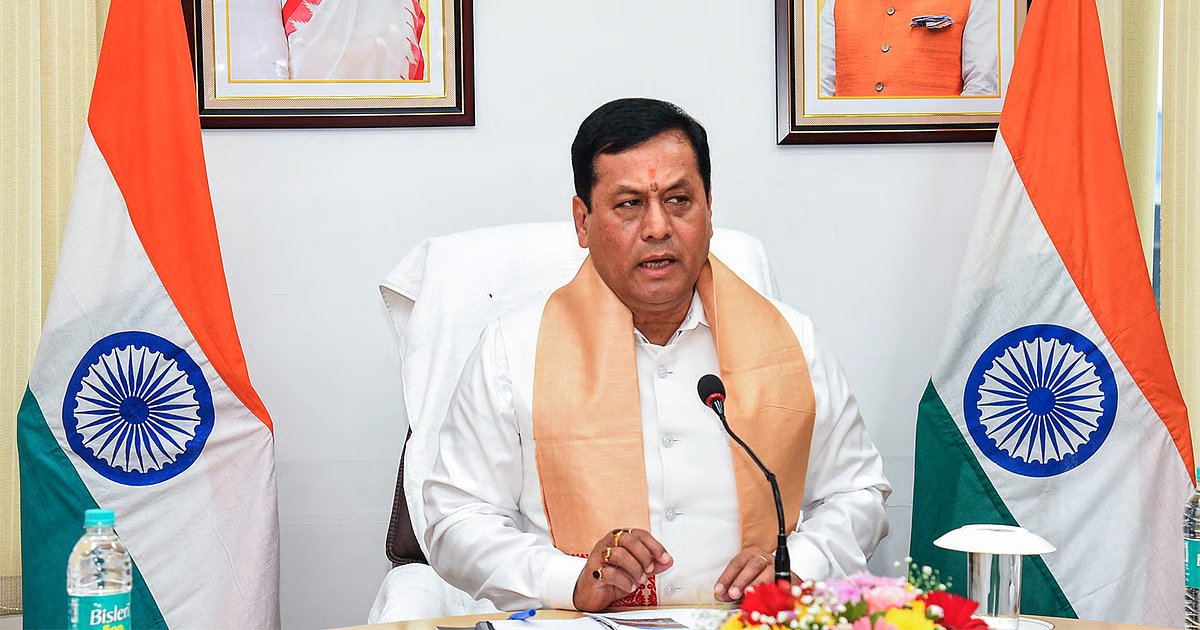

Union Minister of Ports, Shipping and Waterways Sarbananda Sonowal on Thursday condemned repeated attacks on commercial vessels, particularly those carrying Indian seafarers, and directed authorities to strengthen maritime security measures as the government monitors nine India-flagged or Indian-interest vessels west of the Strait of Hormuz.
Reviewing the maritime security situation, Sonowal instructed the Directorate General of Maritime Administration (DGMA) and other concerned officials to intensify surveillance of high-risk waters, issue timely security advisories and maintain regular communication with shipping companies and vessel operators.
The minister said attacks on merchant vessels posed serious threats to the safety of seafarers, disrupted international maritime trade and undermined global supply chains.
𝐒𝐞𝐜𝐮𝐫𝐢𝐭𝐲 𝐦𝐞𝐚𝐬𝐮𝐫𝐞𝐬 𝐬𝐭𝐫𝐞𝐧𝐠𝐭𝐡𝐞𝐧𝐞𝐝
Sonowal directed maritime authorities to closely monitor developments in vulnerable shipping corridors and ensure that Indian seafarers received timely information about potential threats and necessary precautions.
He emphasised that the safety and welfare of Indian maritime personnel remained the government’s highest priority.
The minister also called for closer coordination with the Ministry of External Affairs (MEA), Indian diplomatic missions, maritime stakeholders and relevant international agencies.
He said such coordination was necessary to ensure prompt assistance and an effective response whenever Indian-flagged vessels or Indian crew members faced security incidents overseas.
Sonowal stressed that freedom of navigation and uninterrupted movement of merchant ships through international waters were fundamental principles of international maritime law.
He said secure shipping routes were essential for maintaining global trade, economic growth and energy security.
𝐍𝐢𝐧𝐞 𝐈𝐧𝐝𝐢𝐚𝐧-𝐢𝐧𝐭𝐞𝐫𝐞𝐬𝐭 𝐯𝐞𝐬𝐬𝐞𝐥𝐬 𝐦𝐨𝐧𝐢𝐭𝐨𝐫𝐞𝐝
According to the Shipping Ministry, nine India-flagged or Indian-interest vessels are currently being monitored in the Persian Gulf region west of the Strait of Hormuz.
The ministry reported that India-flagged vessels and ships carrying India-bound cargo had completed 86 transits through the strategically important waterway.
The Strait of Hormuz is a major international maritime passage connecting the Persian Gulf with the Gulf of Oman and serves as an important route for global energy shipments.
The ministry’s E-Navik seafarer tracking module is monitoring more than 800 vessels in the Persian Gulf, west of the strait, and over 200 vessels in the Gulf of Oman, east of the strait.
The tracking mechanism is intended to strengthen oversight of shipping movements and support the safety of Indian seafarers operating in sensitive maritime regions.
𝐂𝐨𝐦𝐩𝐞𝐧𝐬𝐚𝐭𝐢𝐨𝐧 𝐟𝐨𝐫 𝐯𝐢𝐜𝐭𝐢𝐦𝐬 𝐫𝐞𝐯𝐢𝐞𝐰𝐞𝐝
During the review, Sonowal also examined the status of compensation for victims of maritime security incidents.
He directed the Director General of Shipping to personally brief him on the progress of compensation-related matters.
The minister sought details of measures being taken to ensure timely assistance to the next of kin of affected seafarers.
Officials were instructed to maintain coordination with the relevant authorities to facilitate support for families affected by attacks on commercial vessels.
𝐅𝐫𝐞𝐞𝐝𝐨𝐦 𝐨𝐟 𝐧𝐚𝐯𝐢𝐠𝐚𝐭𝐢𝐨𝐧 𝐬𝐭𝐫𝐞𝐬𝐬𝐞𝐝
Sonowal reiterated the government’s commitment to protecting Indian maritime interests and ensuring the safety of seafarers working aboard commercial vessels across international waters.
He said uninterrupted maritime movement was critical not only for international commerce but also for the economic stability and energy security of countries dependent on global shipping networks.
The minister directed officials to strengthen preventive measures, improve communication with vessel operators and enhance awareness among Indian crews about security risks.
He maintained that the government would continue working with diplomatic missions and international maritime agencies to safeguard Indian seafarers and uphold freedom of navigation in accordance with international law.