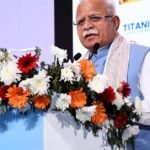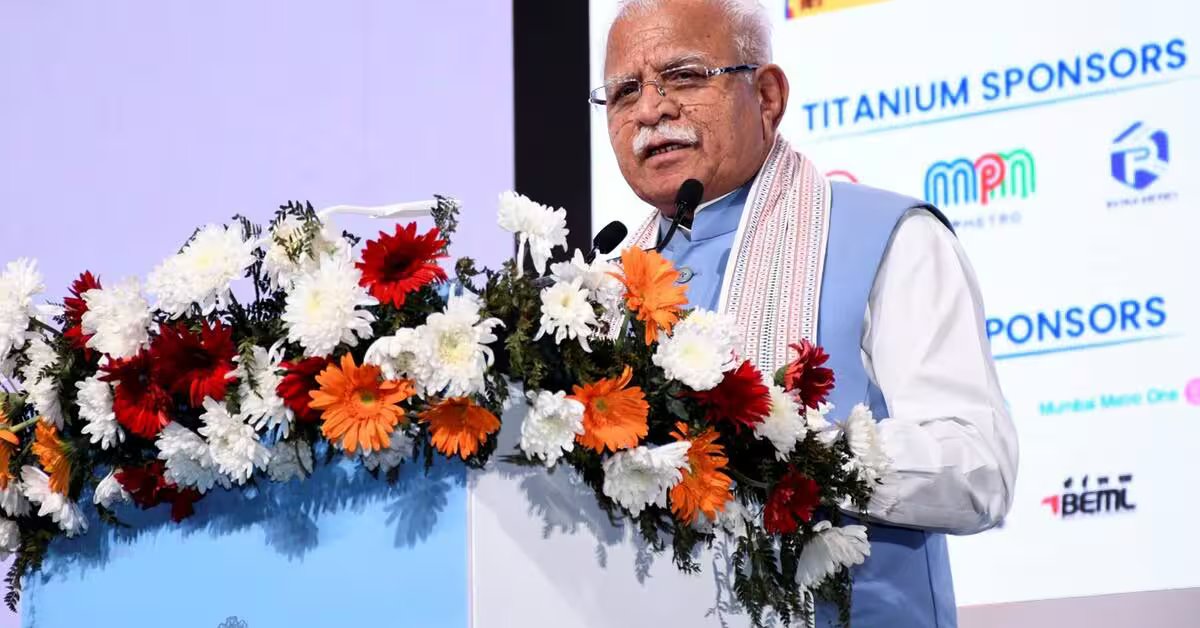

India’s power sector will need investments to the tune of ₹200 trillion until 2047 to achieve various targets, Union minister Manohar Lal said on Friday, and called for stock market listings of state-owned firms and participation from private players to raise funds.
Speaking at the Power Ministers’ Conference of States and Union Territories here, Lal emphasised the need for the Centre and states to work as a team to tackle challenges related to transmission of renewable energy.
The power minster also said that the total loss of discoms across the country has reached ₹7 trillion again, even after the central government absorbed about the same amount of losses in 2017 through UDAY (Ujjwal DISCOM Assurance Yojana), a financial package scheme for revival of power distribution companies (discoms).
“We absorbed about ₹7 trillion loss under the UDAY scheme in 2017. Losses of discoms of the entire nation have again reached ₹7 trillion,” he said.
He also pointed out that last year, all discoms together earned a profit of ₹2,600 crore.
Now the challenge is that we should not turn this profit into a loss again, he said and suggested the states to use these profits to set off losses incurred earlier.
“We need to ensure that the financial position of our DISCOMs is strengthened and necessary changes in policy, operations and regulation should facilitate the continuation of this turnaround,” he said.
About the investment opportunity in the power sector, he said, “There will be investment of ₹200 trillion to meet fixed targets in the power sector only by 2047, which is equal to five years’ budget of the government. We cannot do this investment alone. We need investments from the public and list our public sector firms as well as investment of private sector under the public-private partnership.” Prime Minister Narendra Modi has recently stated that 500 GW more renewable energy would be added in the next 10 years.
Today we have 300 GW of installed renewable energy capacity, he noted.
For expanding the power transmission network, the Centre and states would need to work as ‘Team India’, he said, as he highlighted the lack of transmission network, especially for renewable energy, and said there is problem or issues in evacuation of solar power.
It is not a good situation that there is huge generation of power but there is a lack of transmission network to evacuate that, he said.
He further said that the power demand will increase due to expanding data centre infrastructure and increased usage of electric vehicles.
There is a need to focus on storage for optimum use of solar and other renewable sources, he said and urged states to encourage use of solar energy for agriculture and generation of electricity through rooftop solar.
He also highlighted that there are shortcomings in tariff, coordination and regulation (of tariff) of renewable energy sources, saying the regulation should be such that the discoms should not suffer losses.
The minister invited suggestions to add energy storage capacities, advocated the use of advanced technologies like pre-paid smart meters and AI tools to improve delivery, and asked states to clear pending electricity bills of government establishments and official residences to set the precedent.
He also asked states to focus on nuclear power for clean source of energy for the future.
The two-day power conference began on Friday. The last such conference at the national level was held in 2024.
According to a power ministry statement, the conference will comprise interactions and in-depth discussions among the Ministry of Power, states and other stakeholders on key issues such as implementation of resource adequacy plans, including accelerated energy storage deployment; inter-state and intra-state transmission issues; financial viability of discoms, implementation of the Revamped Distribution Sector Scheme (RDSS), with emphasis on smart metering, feeder separation and household electrification; and issues related to nuclear sites.
Shripad Yesso Naik, Minister of State for Power, asked the participating states and UTs to share their experiences, including difficulties in implementation, regulatory issues and areas where further support or intervention from the central government may be required.
“Our collective focus should be on moving from policy formulation to effective execution, from infrastructure creation to measurable outcomes, and from individual interventions to an integrated and sustainable power sector”, Naik said.
Power Secretary Pankaj Agarwal noted that the core guidance received from the Prime Minister is to move beyond energy security toward true energy independence in service of Viksit Bharat@2047.
The past year has been one of record growth, he said, and noted that India’s installed capacity is now about 563 GW, and more than 55 per cent of it is non-fossil.
In the last 12 months, around 60 GW of capacity was added, 87 per cent of it from non-fossil sources, he said.
On November 28, the conference will have a joint session with the Forum of Regulators and State Electricity Regulatory Commissions (SERCs).