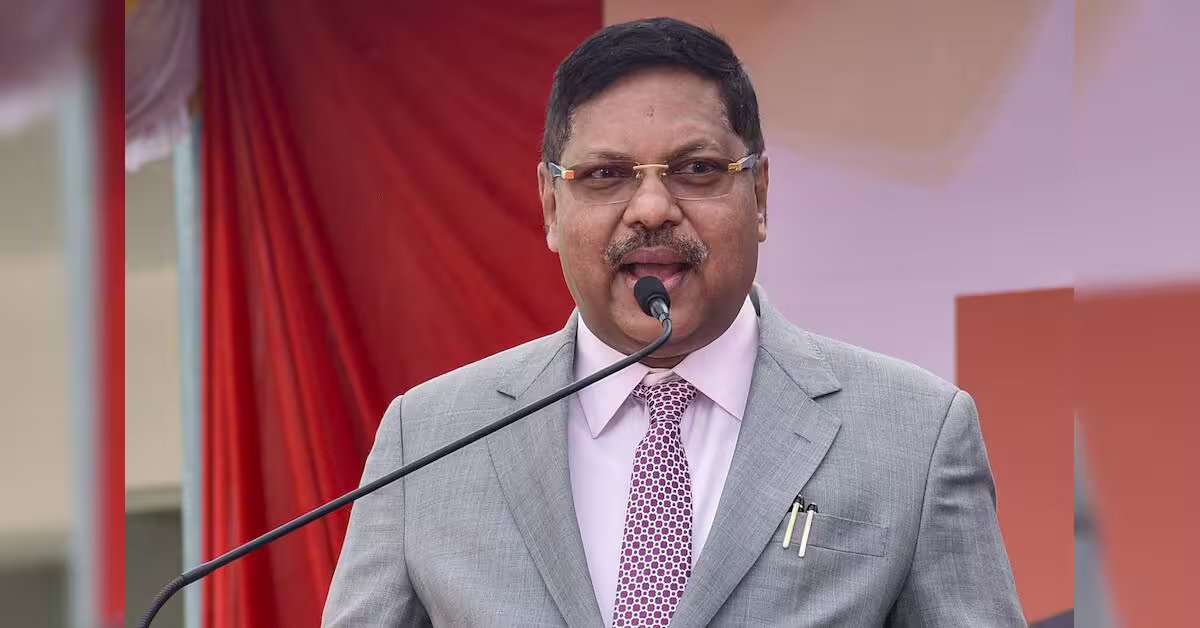

Former Chief Justice of India (CJI) B R Gavai has raised concerns over alleged community-based considerations in appointments and transfers of judges to constitutional courts, urging President Droupadi Murmu to intervene to uphold diversity, inclusivity, and merit in the judicial appointments process.
In a three-page letter dated November 27, Justice Gavai questioned the functioning of the Supreme Court Collegium, alleging that its recent recommendations appeared to favour members of a particular community at the expense of candidates from marginalised backgrounds.
Without identifying the community, the former CJI said a group accounting for less than 5 per cent of the country’s population now constitutes more than 40 per cent of the Supreme Court’s strength, with its representation having increased substantially in recent years.
While acknowledging that such disparities were not new, Gavai said the situation had become increasingly difficult to overlook.
He also expressed concern that candidates from Scheduled Castes, Scheduled Tribes, Other Backward Classes, and minorities, as well as women, were being overlooked when they did not belong to the community allegedly receiving preferential consideration.
Clarifying that he was not opposed to the representation of any section of society, Gavai said his efforts had consistently been directed towards maintaining a balance among different sections.
However, he alleged that recent developments suggested that recommendations were increasingly being influenced by considerations of appeasing a particular community.
The letter also questioned the rationale behind certain recommendations involving the transfer and elevation of high court chief justices.
Citing one instance, Justice Gavai referred to a chief justice who had previously been transferred twice to progressively smaller high courts but was subsequently recommended for appointment as the chief justice of a prominent high court. The recommendation, he alleged, appeared to have been made because of the judge’s community background. The transfer of another meritorious and hardworking chief justice to a smaller high court was allegedly intended to facilitate the move.
Gavai said such decisions were demoralising for the affected judges and could adversely impact judicial officers, particularly those belonging to marginalised sections.
He also questioned how a judge who had been repeatedly transferred on punitive grounds, without any apparent justification, could subsequently be recommended to head a significantly larger and more prominent high court.
In another instance, he referred to a judge who had been transferred from the parent high court on punitive considerations but was later appointed chief justice of a prominent high court.
The former CJI expressed disappointment that appointments and transfers were being made without adequate regard to diversity, inclusion, and merit, with other irrelevant considerations allegedly influencing decisions.
Invoking Article 124(2) of the Constitution, Gavai said the primacy accorded to Collegium recommendations did not absolve the President of constitutional responsibilities. He maintained that the executive remained an equal stakeholder in appointments and transfers of judges to constitutional courts.
Article 124(2) of the Constitution of India governs the appointment, tenure, and resignation of judges of the Supreme Court of India.
He urged President Murmu to intervene and ensure that the judiciary remained committed to equal representation, describing it as one of the fundamental pillars of Indian democracy.
Copies of the letter were also sent to Prime Minister Narendra Modi and Union Minister of State (Independent Charge) for Law and Justice Arjun Ram Meghwal.