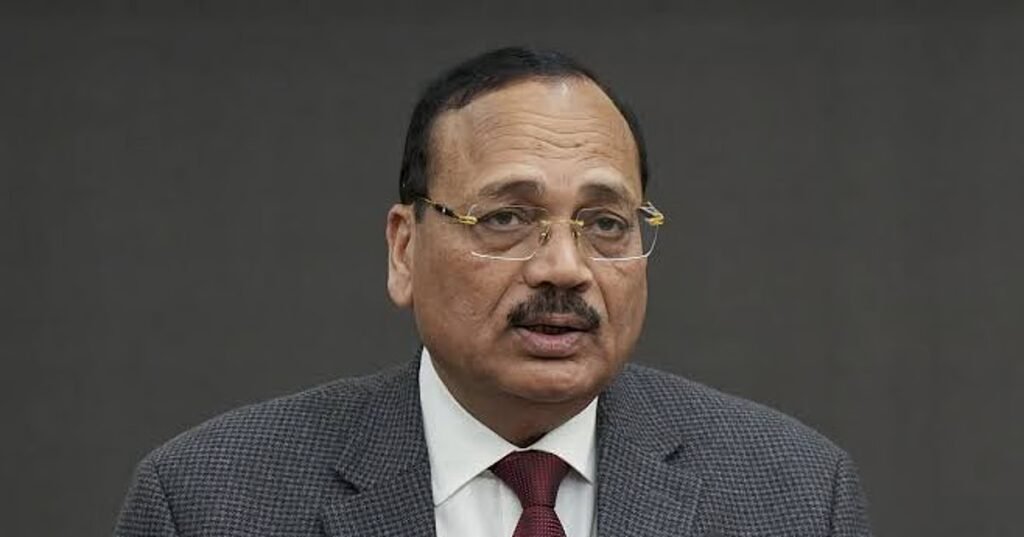

FSSAI’s enforcement actions against companies are not meant to spread panic but to ensure compliance with the law, the food quality watchdog’s chief Rajit Punhani said on Wednesday as he sought to send out a stern message for violators.
Urging the industry to fully comply with the law, he suggested that companies must set up in-house testing mechanisms to ensure high quality of their products.
The FSSAI’s Chief Executive Officer told Food Business Operators (FBOs) and e-commerce companies to ensure there are no misleading claims on the labels of their products and also no misleading advertisements.
His comments come against the backdrop of the Food Safety and Standards Authority of India (FSSAI) intensifying its crackdown on businesses and e-commerce platforms for lapses in legal compliance. Last week, the watchdog sanctioned prosecution against Bisleri International for alleged quality shortfalls in packaged drinking water.
“(There are a) few thoughts which might not make me very popular, but now, I have got into the habit of being unpopular amongst industry,” Punhani said in his opening remarks at an event organised by industry body CII and urged food businesses to be ethical.
He stressed that things are “not always (only) about legal and science-based evidences”.
Punhani stated that the young generation have much much higher expectations and are not willing to tolerate any casual approach.
“You know we have a very ‘chalta hai’ (casual) attitude. It’s okay if one sample out of 150 samples is found, exceeding the limits. What is the big deal?
“… why should we even fail in one sample? Why shouldn’t the industry…be perfect. Have their in-house quality testing,” he said.
While he did not take any names, the CEO’s remarks alluded to the recent enforcement actions, including against Bisleri and other prominent brands.
“Why did you put it on social media? Government is like after me…,” he said in a clear reference to industry players’ complaints about the enforcement actions being made public.
In his candid address, the FSSAI chief sought to underline the importance of self-regulation and fulfilling legal obligations rather than describing the requirements as a compliance burden.
FSSAI’s rules and regulations are at par with those prevailing in developed nations, Punhani said and added that food businesses, domestic or foreign, should be willing to adhere to them.
“It is not that compliances are more or less, we have the same. We have the same, basically, the same regulatory system. The rules are the same, but here it’s felt that it’s a compliance burden. While the same multinational company in Europe complies very willingly and very easily,” he said.
He asserted that the “compliance mindset” is not there.
There is always a general argument that inspections breed corruption, Punhani said, and added that he does not know whether it is right or wrong.
“I am told many times that I carry out lot of inspections…my argument is that if there is less number of inspections, does corruption decrease? I don’t know,” he said.
The FSSAI chief suggested that an evidence-based research could be carried out to understand whether more inspections lead to increased corruption.
Punhani said, “I don’t think the solution is to have less number of inspections or less regulations. So you will have to work out a solution… where the industry also ensures that compliance is 100 per cent.”
Stating that most of the big companies have a compliance cell, the FSSAI CEO said those cells should know if it is a misleading claim and a misleading advertisement.
“So the compliance cells should complain about the marketing people if they are, making a misleading claim”.
Citing an example, Punhani said a company imported an ingredient which was not approved.
“So we said obviously we can’t allow it. It’s not approved. We can’t allow it. In Europe, they would have quietly said, ‘okay, it’s not allowed. We will destroy it. Here, the consignment is still lying at the port, and they are still trying that somehow or the other it should be released,” he said.
Punhani emphasised that his criticism does not mean that things have not improved, but everyone should always aspire to be better.
Noting that consumers are the main stakeholder as far as the FSSAI is concerned, he said, “We are here to make sure that the food is not only safe but it’s wholesome. There are no misleading claims, and everything is as perfect as we would like it to be.”
Punhani also asked the industry to undertake research to reduce pesticide residue, micro plastics and antibiotics for improving quality.
He pitched for competition from foreign companies as it would enhance quality.
Perception is important, according to Punhani.
“It’s not that things are not good. Things are good. And it’s not that we’re trying to create panic. We are just trying to make people more and more aware to strive for perfection,” the CEO said.
“We engage with social media a lot. We also get criticised, but the thing is that if you engage, there is a danger. It is not easy to be there on social media. The kind of pressure that is there when you’re on social media because you have to be careful of each and everything.”
“People are just waiting for you to trip. Why did you mention this when it was not there in the final report of the test lab, why did you mention it? You know …when you are there on social media, you have to be much, much, much more careful. So there is a lot of pressure,” he observed.
So far this calendar year, the FSSAI has stepped up its enforcement drive against FBOs and e-commerce companies. It is also posting the actions taken against defaulters on social media platforms.
“When I first joined, in a meeting at Niti Aayog, I said that we need to have more in-house quality testing to ensure that 100 per cent is perfect. I was shouted down that it is a compliance burden,” the FSSAI CEO recalled.