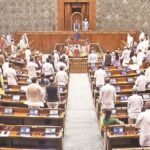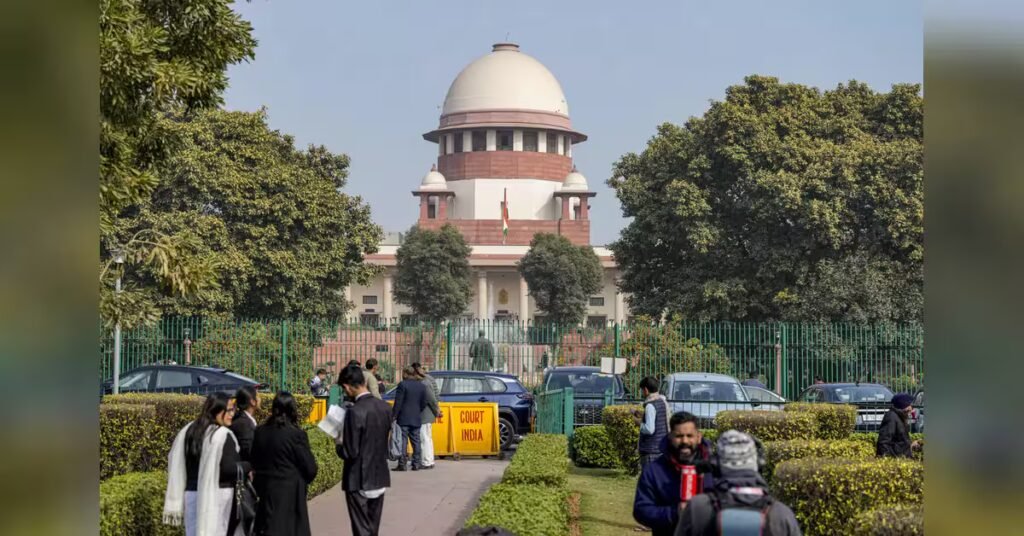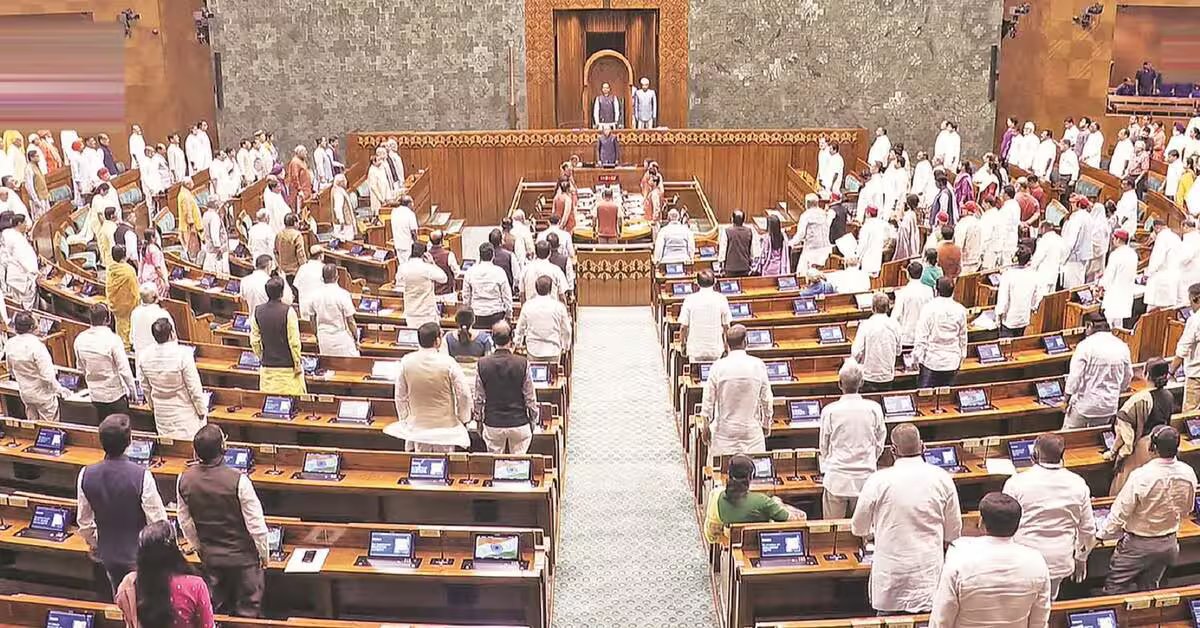

The Union government has called Parliament to reconvene from November 30 to transact essential government business, amid speculation over the introduction of the proposed Constitution (131st Amendment) Bill, 2026, linked to delimitation and the implementation of women’s reservation.
In a post on X on Thursday, Union Parliamentary Affairs Minister Kiren Rijiju said the government had requested the Lok Sabha Speaker and Rajya Sabha Chairman to reconvene the respective Houses. The Lok Sabha has been requested to meet on Monday, November 30, while the Rajya Sabha will reconvene on Wednesday, December 2. The sittings of both Houses may conclude on December 3.
The special sitting will be an extension of the Monsoon Session. Parliament was adjourned sine die on August 13 but has not yet been prorogued, which would formally end the session.
The government has not disclosed the specific legislative agenda for the three-day sitting. According to news agency PTI, the Union Cabinet is expected to meet on Friday and is likely to discuss the delimitation-linked women’s reservation proposal.
What is delimitation and what do the proposed Bills seek to change?
Delimitation is the process of redrawing the boundaries of Lok Sabha and State Assembly constituencies and allocating seats based on changes in population. In India, the exercise is carried out by an independent Delimitation Commission under constitutional provisions, including Articles 81, 82 and 170.
Its purpose is to keep the populations of constituencies broadly equal and update the allocation of seats reserved for Scheduled Castes (SCs) and Scheduled Tribes (STs).
The proposed Constitution Amendment Bill seeks to change provisions governing the composition of the House of the People and the allocation of seats among states and Union Territories (UTs). Its key proposals include:
Increase in Lok Sabha’s maximum strength
The Constitution currently provides for a maximum of 550 Lok Sabha members, comprising up to 530 members from states and up to 20 from Union Territories. The Constitution Amendment Bill proposes raising this ceiling to 850 members, with up to 815 members from states and up to 35 from Union Territories.
Delimitation based on population
The Constitution Amendment Bill proposes reverting to the principle of allocating Lok Sabha seats to states in proportion to their population.
Parliament to decide which Census is used
The Constitution provides for delimitation after every Census, with the exercise based on population figures from that Census. The Constitution Amendment Bill authorises Parliament to pass a law determining when delimitation will be undertaken and which Census will be used.
A separate piece of legislation, the Delimitation Bill, 2026, provides that the latest published Census available on the date the Delimitation Commission is constituted will be used for the exercise. This implies that the 2011 Census would be used for the next delimitation exercise.
Setting up of a Delimitation Commission
Under the Delimitation Bill, 2026, the Central government may constitute a Delimitation Commission from time to time by notification to readjust and reallocate seats in the Lok Sabha and State Legislative Assemblies. The Central government will also appoint the commission’s chairperson.
How could the proposed Bill fast-track women’s reservation?
The Constitution (106th Amendment) Act, 2023, also known as the Nari Shakti Vandan Adhiniyam, introduced reservation of one-third of seats in the Lok Sabha and State Assemblies for women.
However, the quota was linked to the first Census conducted after the commencement of the 2023 Act, followed by a delimitation exercise.
The proposed 131st Amendment Bill seeks to remove this requirement, allowing the 33 per cent reservation to take effect without waiting for a fresh Census. Instead, it links the implementation of the quota to a delimitation exercise based on the latest published Census figures, which are currently from the 2011 Census.
The proposed change is aimed at enabling women’s reservation in time for the 2029 Lok Sabha elections, rather than delaying its implementation until after the 2027 Census.
The Bill proposes changes to Article 334A, which governs the reservation of seats for women in the Lok Sabha and State Assemblies. Under the proposed provision, the reservation would come into force “after an exercise of delimitation is undertaken for this purpose”.
It further provides that “the seats reserved for women shall be allotted by rotation to different constituencies in a State or Union territory”. The reservation would remain in force for 15 years, unless extended by Parliament.
What happened when the legislation was previously put to a vote?
The proposed legislation failed to secure the required numbers during a special sitting of Parliament on April 17.
Of the 528 Lok Sabha members present and voting, 298 voted in favour of the Bill, while 230 opposed it. Under Article 368 of the Constitution, a constitutional amendment requires a special majority of at least two-thirds of members present and voting.
This meant the Bill needed 352 votes and fell short by 54.
In the current 543-member Lok Sabha, the two-thirds mark would be 362 if all members were present and voting. The ruling National Democratic Alliance (NDA), which has 320 members, would need support from Opposition parties to secure the required numbers.
What is the political arithmetic behind the Bill?
The political arithmetic has since changed, with 26 MPs moving out of the Opposition camp.
Twenty rebel Trinamool Congress MPs broke away and merged with the Nationalist Citizens Party of India (NCPI), pledging support to the NDA. Six Shiv Sena (UBT) MPs also joined the Eknath Shinde-led Shiv Sena.
Following its alliance with the BJP, the Shiromani Akali Dal’s (SAD’s) lone Lok Sabha MP is also expected to vote with the government.
According to a report by The Hindu, the YSR Congress is reportedly set to extend support to the government on the Bill with its four Lok Sabha MPs.
Why could the DMK and NCP (SP) prove crucial to the numbers game?
The Dravida Munnetra Kazhagam (DMK), with 22 Lok Sabha MPs, and the Nationalist Congress Party (Sharadchandra Pawar), with eight MPs, could play an important role in determining whether the government secures the numbers required to pass the legislation.
The DMK has maintained that it would consider supporting the proposed delimitation legislation if Tamil Nadu’s existing share of parliamentary representation is protected, irrespective of the increase in the total number of Lok Sabha seats.
“If the draft Bill clearly gives us an assurance of protecting our representation in Parliament, we may consider it,” a senior MP was quoted as saying by The New Indian Express.
The NCP (SP), meanwhile, has indicated that it will decide its position after examining the proposed legislation.
According to a Times of India report, party state president Shashikant Shinde said on Thursday that the party would take a call on the delimitation Bill after it was tabled in Parliament and its MPs had examined the provisions. He also played down speculation about differences within the party over the proposed legislation.
Separately, according to NDTV, NCP (SP) working president Supriya Sule said her party would review the proposed Delimitation Bill once it was formally introduced in Parliament and could support it if its provisions served the national interest.
Why is the Congress opposing the proposed delimitation legislation?
The Congress has opposed the proposed Delimitation Bill, 2026, with party leaders arguing that it is politically motivated, unilateral and threatens India’s federal structure. The party has also criticised the government for calling a special sitting at short notice without Question Hour or Zero Hour.
Congress leader Jairam Ramesh alleged that the gap since August had been used for “Operation Lotus” to gather the numbers needed to pass the legislation.