
Paddy procurement mega campaign in Chhattisgarh to begin from November 15 on Janjatiya Gaurav Diwas

Team News Riveting
Raipur, November 14
With the objective of honoring the hard work of farmers, ensuring better value for their produce, and securing economic prosperity, the Chief Minister Vishnu Deo Sai has introduced significant farmer-friendly provisions in the paddy procurement policy for the Kharif Marketing Year 2026–27.
Under the Krishak Unnati Yojana, a provision has been made to grant a uniform input assistance amount of Rs 13,839 per acre to eligible farmers. This will ensure that farmers who sell less paddy than the prescribed maximum limit still receive the full assistance amount according to their eligible land area (rakba). This arrangement will grant farmers the convenience of selling paddy in accordance with their actual yield and requirements.
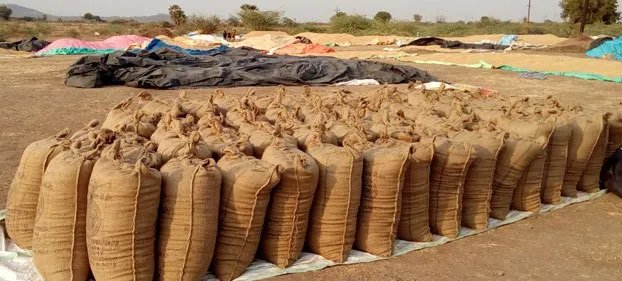
Paddy Procurement Mega Campaign is set to commence on November 15, coinciding with the birth anniversary of Bhagwan Birsa Munda and Janjatiya Gaurav Diwas. For the Kharif Marketing Year 2026–27, the state government has arranged for the procurement of a maximum of 21 quintals of paddy per acre from more than 2.75 million farmers across the state. A policy has been adopted to provide farmers with the benefit of Rs 3,100 per quintal through the Minimum Support Price (MSP) and Krishak Unnati Yojana assistance.
Under the new system, the calculation of the per-acre input assistance amount has been made clearer and more farmer-friendly. For example, if an eligible farmer has a registered paddy land area of one acre and sells only 15 quintals of paddy instead of the prescribed maximum limit of 21 quintals, they will still receive the full input assistance amount of Rs 13,839 according to their eligibility. Similarly, a farmer with two acres of eligible land will receive Rs 27,678, and a farmer with three acres will receive Rs 41,517. This will provide economic backing to farmers even in the event of lower production or selling less paddy than the prescribed limit.
For the Kharif Marketing Year 2026–27, the Minimum Support Price for Common Grade paddy has been fixed at Rs 2,441 per quintal. The difference between the state government’s fixed rate of Rs 3,100 per quintal and the MSP is Rs 659 per quintal. Based on a maximum of 21 quintals per acre, this amount totals Rs 13,839. The state government has designated this exact amount as uniform input assistance per acre, preventing eligible farmers from facing reductions in assistance based on the quantity of paddy sold.
Comprehensive preparations have been made for the paddy procurement mega campaign across the state. This year, arrangements have been put in place to procure paddy from farmers through 3,100 procurement centers.
Special focus is being laid on ensuring adequate gunny bags (bardana), electronic weighing equipment, safe storage and transportation of paddy, and other essential facilities for farmers. The objective of the state government is to make the procurement process smooth, systematic, and transparent so that farmers do not face unnecessary difficulties in selling their produce.
Tremendous enthusiasm is visible among farmers even before the commencement of paddy procurement. So far, 3,50,972 tokens have been registered in the state. Through the digital token system, farmers are being provided the facility to sell their paddy on a scheduled date. This will help with crowd management at procurement centers, save time, and maintain transparency in the procurement process.
The state government’s paddy procurement policy places special emphasis on farmer convenience, time-bound procurement, transparent administration, and economic security. The provision of uniform input assistance of Rs 13,839 per acre will be especially useful for farmers whose actual yield falls below the maximum procurement limit. This will offer farmers greater convenience and certainty of financial support regarding the sale of their produce.
The paddy procurement mega campaign starting from November 15 is a vital program linked to the economic prosperity of millions of farming families across the state. This initiative by the state government is expected to help provide farmers with better returns for their hard work, make farming more profitable, and strengthen Chhattisgarh’s agriculture-based rural economy.