

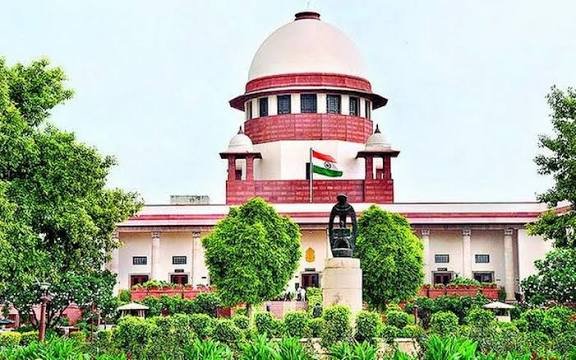

The Supreme Court has held that High Courts should not undertake a detailed or “roving” enquiry into the validity of the underlying debt while exercising their inherent powers under Section 482 of the Code of Criminal Procedure (CrPC) in cheque dishonour cases.
In a significant ruling, the apex court set aside a judgment of the Patna High Court which had quashed criminal proceedings initiated under Section 138 of the Negotiable Instruments Act, 1881. The Supreme Court clarified that at the stage of considering a petition under Section 482 CrPC, the High Court is only required to examine whether a prima facie case is made out on the basis of the complaint and the material placed on record.
The case arose from a complaint in which the Magistrate had taken cognizance and summoned the accused by an order dated September 27, 2013. Challenging this order, the accused approached the Patna High Court, which quashed the proceedings after examining the validity of the alleged debt.
Disagreeing with this approach, the Supreme Court observed that such an exercise was beyond the permissible scope of jurisdiction under Section 482 CrPC. The Court noted that, “If upon reading the complaint allegations and perusing the materials filed in support thereof, a prima facie case is made out, the High Court should not interfere at the threshold.”
Justice Manoj Misra, writing for the Bench, emphasized that questions relating to the existence or enforceability of debt are matters of trial and cannot be conclusively decided at the stage of quashing proceedings. He concluded that the essential ingredients of Section 138 of the Negotiable Instruments Act were prima facie satisfied in the present case.
Accordingly, the Supreme Court restored the criminal proceedings and reiterated that High Courts must exercise caution while invoking inherent powers, ensuring that legitimate prosecutions under the Negotiable Instruments Act are not prematurely stifled.
The ruling reinforces the settled legal position that defences available to the accused in cheque dishonour cases must ordinarily be tested during trial and not at the initial stage of proceedings.