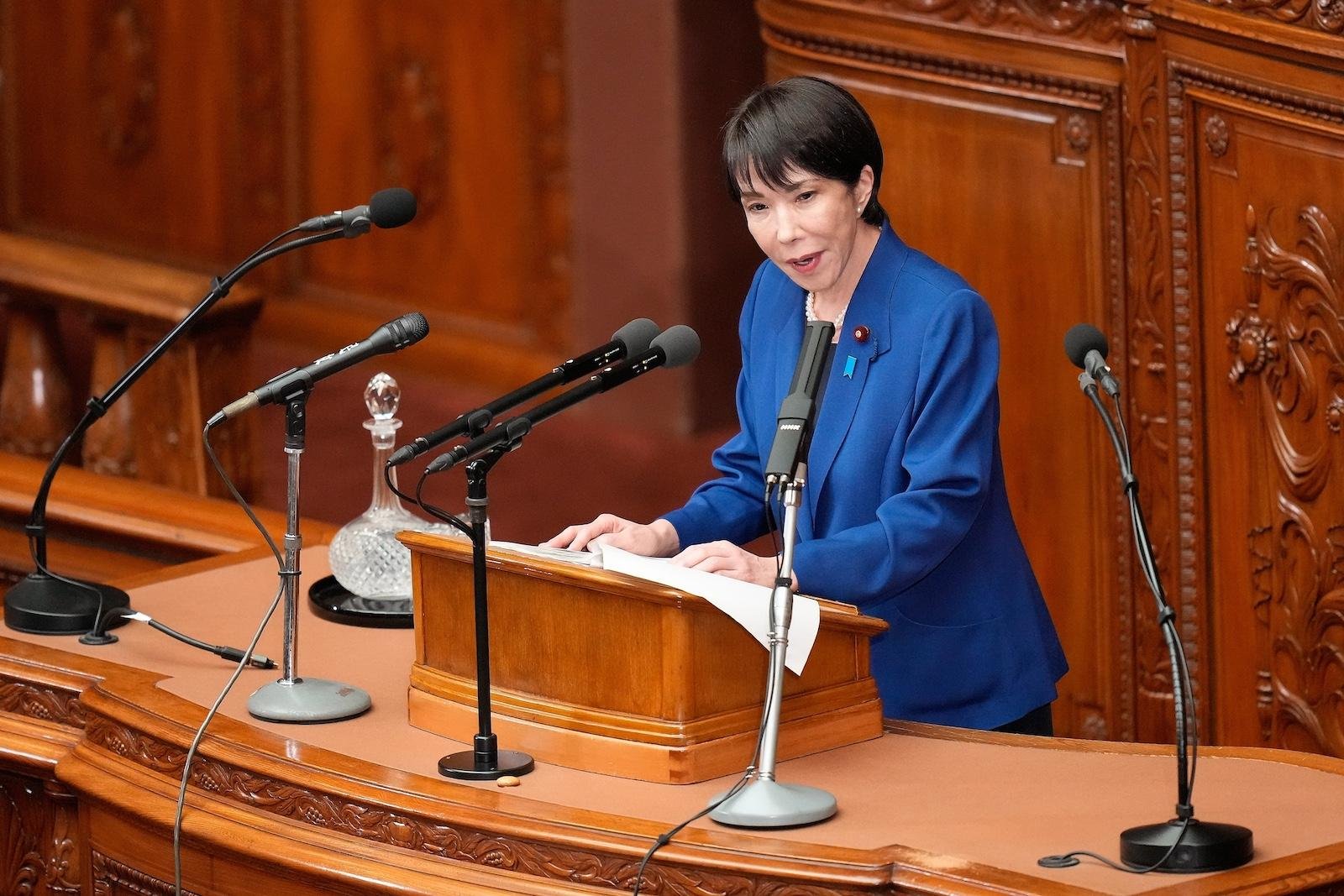
Tokyo: Japan’s new Prime Minister Sanae Takaichi on Friday pledged to accelerate the country’s defense expansion and complete an early revision of its national security strategy, citing growing threats from China, North Korea and Russia.
Delivering her first policy speech in parliament since taking office on Tuesday, Takaichi said Japan will reach its target of military spending worth 2% of GDP by March, three years ahead of the original 2027 goal. She also promised to update Japan’s security strategy by the end of 2026 — a move that breaks with the decade-long intervals of past reviews.
> “The free, open and stable international order we were accustomed to is being violently shaken amid historic shifts in power and intensifying geopolitical competition,” Takaichi said. “Japan must proactively push for the fundamental buildup of its defense capabilities.”
Takaichi, Japan’s first female prime minister, came to power following months of political uncertainty after the ruling coalition lost its majority in both houses of parliament.
Her hawkish stance and conservative views mark a rightward shift in Japan’s politics, particularly after her Liberal Democratic Party (LDP) formed a new alliance with the right-wing Japan Innovation Party, replacing its earlier partnership with the dovish Komeito.
Trump visit to test Japan-U.S. ties
Takaichi’s comments come just days before U.S. President Donald Trump’s visit to Tokyo (October 27–29), where she is expected to face pressure to increase defense spending further and buy more American-made weapons. The summit is seen as a key diplomatic test for the new leader, who said she aims to strengthen the Japan-U.S. alliance and build a personal rapport with Trump “based on trust.”
While emphasizing the need for a “constructive and stable” relationship with China, Takaichi acknowledged ongoing security concerns. Analysts warn her past visits to the controversial Yasukuni Shrine, seen by China and South Korea as a symbol of Japan’s wartime aggression, could strain relations with Beijing.
Domestic focus: inflation, wages, and immigration
At home, Takaichi faces the immediate challenge of tackling rising prices, stagnant wages, and winning back conservative support. She also addressed Japan’s severe labor shortages, saying the country needs foreign workers but must enforce strict compliance with immigration rules.
> “It is a fact that unlawful activity by some foreigners causes unease and a sense of unfairness among Japanese people,” she said, adding, “This is not xenophobia.”
Economic Security Minister Kimi Onoda has been tasked with tightening regulations on foreign nationals and examining potential restrictions on land purchases by foreigners — a move seen as catering to nationalist sentiments fueled by Japan’s far-right Sanseito party.
Despite the rhetoric, government data shows that crime rates among foreigners have declined, even as their numbers in Japan continue to rise.
A new direction for Japan
The early revision of Japan’s defense and security policy is expected to expand the military’s offensive capabilities, ease restrictions on arms exports, and increase overall defense spending. However, analysts note that Takaichi’s minority government will need opposition support to push through these plans.
Her administration’s success, observers say, will depend on whether she can balance her nationalist agenda with pragmatic diplomacy and much-needed domestic economic relief.