
150th anniversary debate turns heated as Congress and BJP clash over legacy and nationalism
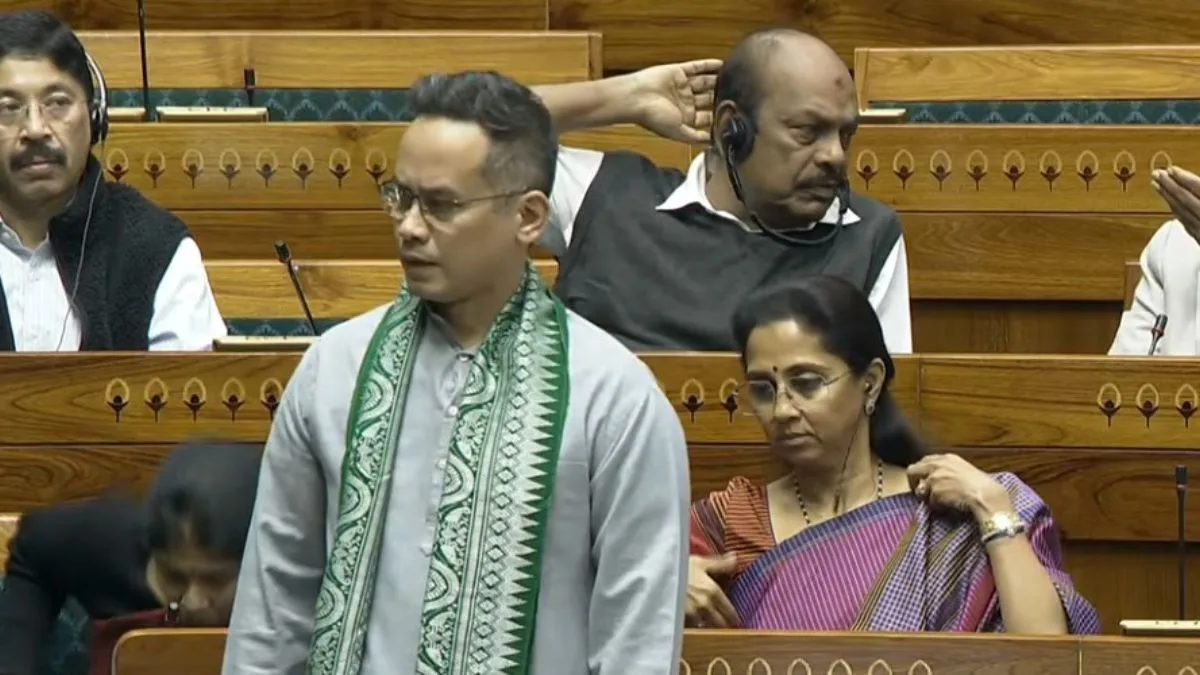
A special debate in the Lok Sabha on Monday, held to mark the 150th anniversary of the patriotic song Vande Mataram, turned into a political flashpoint as Congress Deputy Leader Gaurav Gogoi delivered a fierce rebuttal to Prime Minister Narendra Modi’s remarks on the Congress party.
Earlier in the day, Prime Minister Modi opened the discussion by alleging that the Congress “betrayed Vande Mataram in 1937,” and claimed those actions contributed to the communal divide that later led to India’s Partition.
Responding sharply, Gogoi accused the PM of attempting to “rewrite history” and politicize a unifying national symbol for narrow gains. “You cannot malign Nehru, you don’t understand Bengal, and you don’t understand the nation,” he declared in the House, defending the Congress legacy.
Congress’s Role in Freedom Movement at the Centre of Clash
Gogoi highlighted Congress’s historic role in turning Vande Mataram into a national rallying call:
- At the 1896 Congress session, Vande Mataram was sung publicly for the first time.
- In 1905, the song became the anthem of India’s Swadeshi and freedom movements.
The Congress leader hailed Jawaharlal Nehru and Maulana Abul Kalam Azad as protectors of the song’s inclusive spirit. In contrast, he questioned the ideological lineage of the ruling party, asking:
“Where were your political ancestors during the 1942 Quit India Movement?”
Broader Critique of the Government
Moving beyond the historical dispute, Gogoi launched a pointed criticism of the Modi government’s current record. He cited:
- The recent bomb explosion in Delhi
- The declining value of the rupee
- Escalating air pollution
- Border security tensions
“This government is afraid of questions, afraid of debates,” Gogoi asserted, alleging that democratic institutions — including the judiciary and the Election Commission — are being undermined.
He warned that growing monopolies and rising insecurity among voters reflect a governance model rooted not in unity, but in “modern-day divide and rule tactics.”
Emotional Closing Evokes Tagore
Gogoi concluded his speech by invoking Rabindranath Tagore’s landmark poem ‘Where the Mind is Without Fear’, reciting lines that called for a nation free from fear, division and authoritarianism. He framed the Opposition’s stand as a defense of India’s inclusive and pluralistic ideals.
Debate Signals Deeper Ideological Fault Lines
Monday’s Lok Sabha debate highlighted the widening political and historical tensions surrounding Vande Mataram. What was meant to be a commemorative occasion evolved into a fierce ideological confrontation, underscoring the ongoing battle over narratives of nationalism, history and identity.
As Parliament moves toward a decisive election year, the clash between Gogoi and Modi is likely to reverberate far beyond the anniversary — hinting at a broader contest over who defines India’s national legacy.