


Finance Minister says rising incomes, changing demographics and broader consumption will shape the next phase of economic growth; calls for higher private-sector investment in R&D
New Delhi: Finance Minister Nirmala Sitharaman has said that consumption will remain a key driver of India’s economic growth, with the next phase expected to be powered by rising wages, improving household incomes and greater purchasing capacity.
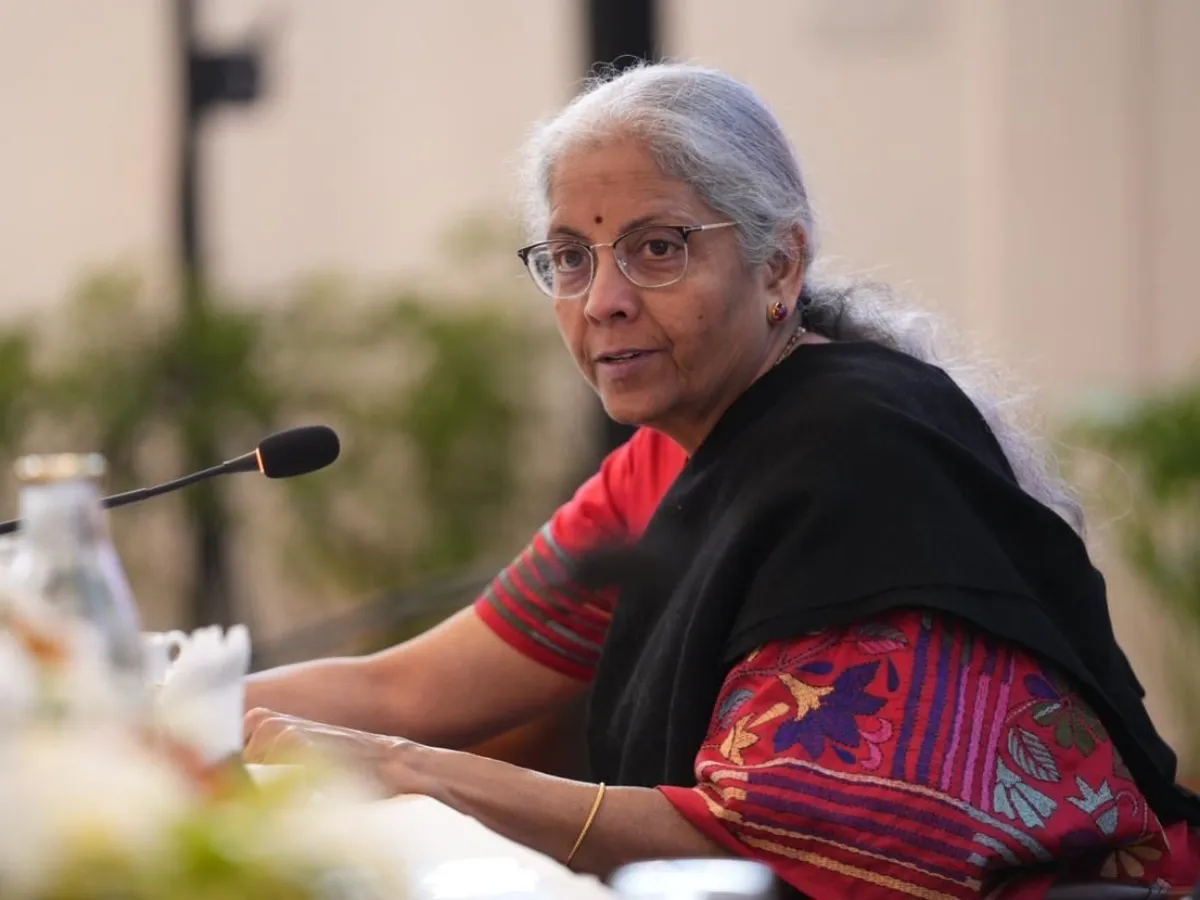
Speaking at the 53rd National Management Convention of the All India Management Association (AIMA), Sitharaman said India is at an important stage of its economic journey, where a growing section of the population is moving into income groups with greater capacity to spend on discretionary goods and services.
She said changing demographics would also reshape household consumption patterns. As life expectancy increases and the average age of the population rises, households are expected to allocate a larger share of their budgets to healthcare, durable consumer goods and quality services.
Companies urged to expand beyond urban premium consumers
Sitharaman cautioned Indian companies against building their consumption strategies solely around affluent consumers in urban and formal markets.
She said India’s consumption base extends across households dependent on agriculture, rural construction, transport and informal enterprises. Focusing primarily on premium products for urban consumers, she suggested, could limit the sustainability of broader economic growth.
Private consumption, which accounts for more than half of India’s GDP, grew by 7.2% in FY2026, according to the figures cited by the Finance Minister. During the same period, the government provided income-tax relief for annual incomes up to ₹12 lakh and reduced GST rates and slabs. India’s GDP growth for FY2026 was cited at 7.8%.
Sitharaman said tax measures and other reforms had created conditions to support economic expansion, but the private sector would also need to contribute by increasing investment in research and development and strengthening consumer and market confidence.
Focus on R&D, innovation and productivity
The Finance Minister called on Indian businesses to move beyond large-scale production and give greater attention to quality, innovation and productivity.
She pointed out that India’s gross expenditure on research and development is around 0.83% of GDP, compared with an OECD average of about 2.7%, 2.6% in China and 3.5% in the United States. She also said the private sector accounts for only about 36% of India’s total R&D spending, while its share exceeds 70% in several major developed economies.
Sitharaman urged companies to increase their R&D investments and strengthen India’s ability to develop products and technologies domestically.
“Our goal should be to move beyond ‘Made in India’ to ‘Imagined in India’,” she said, emphasising products that are not only manufactured in the country but are also conceptualised, designed and technologically developed in India before reaching global markets.
Growth must benefit workers and businesses
The Finance Minister’s comments came a day after Chief Economic Adviser V. Anantha Nageswaran highlighted the importance of ensuring that the benefits of economic growth are shared appropriately between workers and businesses.
According to a Business Standard report, Nageswaran said fairness should not be viewed as philanthropy but as a necessary condition for a healthy and sustainable market economy.
Preparing for a changing global economy
Sitharaman also called for management practices and educational curricula to evolve in response to emerging challenges, including geopolitical risks and disruptions in global supply chains.
She said the global economy is going through a period of uncertainty, with international trade and supply-chain structures changing simultaneously.
According to the Finance Minister, resilience should not mean a return to economic isolation. For India, she said, resilience means strengthening domestic capabilities, maintaining fiscal strength and expanding industrial scale so that global shocks do not derail national development.
From startups to sustainable businesses
Looking ahead to the next two decades, Sitharaman said India’s challenge would not simply be to create more startups. The country would also need to help existing startups grow into larger, professionally managed and sustainable businesses.
The emphasis, she said, should be on building companies capable of scaling up, creating productive employment and competing in global markets over the long term.