

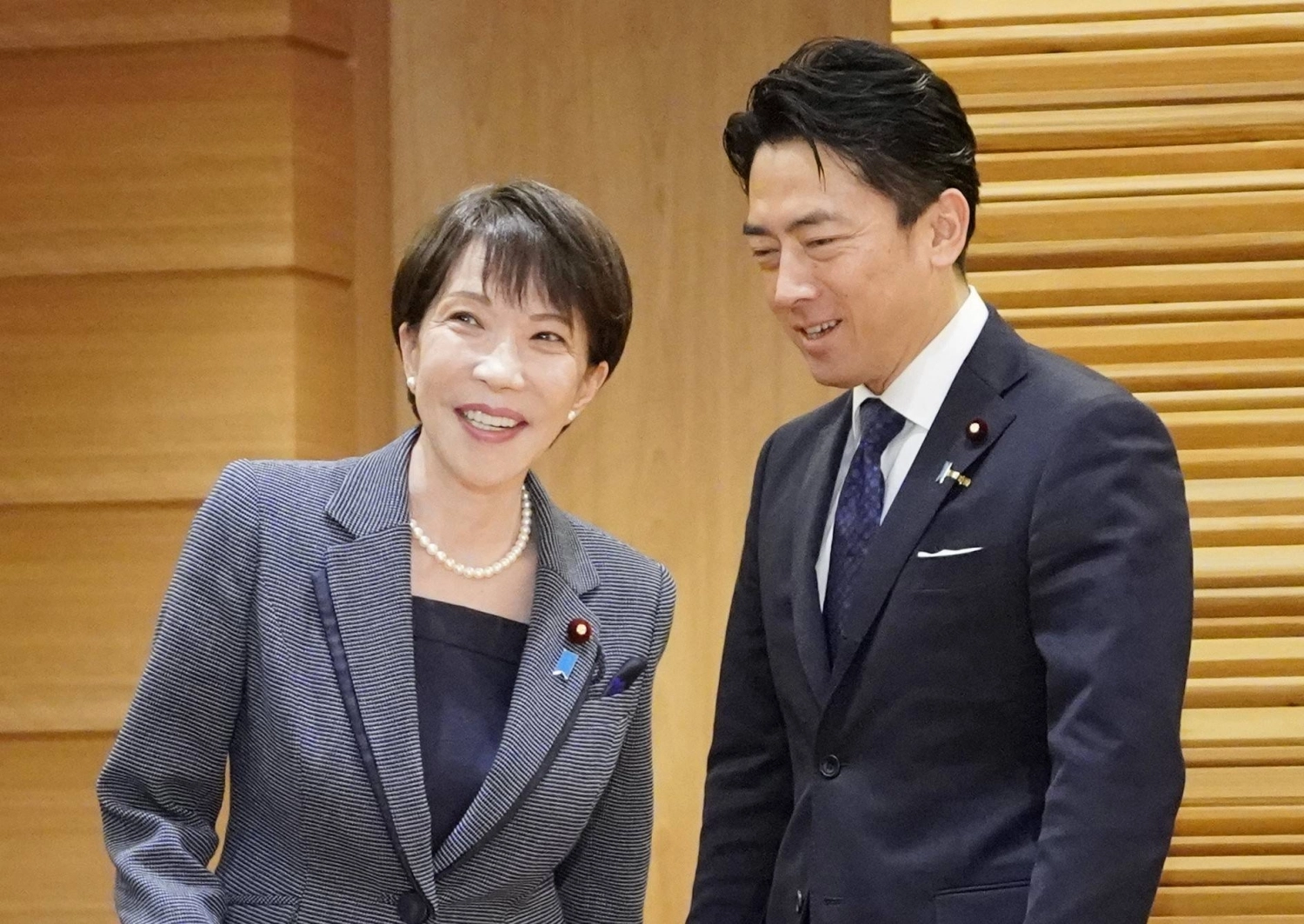

Tokyo: Japan’s Prime Minister Sanae Takaichi is expected to carry out her first Cabinet reshuffle next month, with one of the key decisions likely to involve the future of Defense Minister Shinjiro Koizumi.
Koizumi, the son of former Prime Minister Junichiro Koizumi, has had a relatively successful tenure as defense minister. He has maintained a strong public presence, avoided major political gaffes and represented Japan at important international security engagements.
However, his future in the defense portfolio remains uncertain as Takaichi prepares to reorganize her Cabinet amid growing dissatisfaction within the ruling Liberal Democratic Party (LDP).
Koizumi’s Future Remains Uncertain
At present, there is no clear indication whether Koizumi will continue as defense minister, move to another Cabinet position or leave the government altogether.
The upcoming reshuffle could therefore become an important moment for both Koizumi and Takaichi.
For the prime minister, the reshuffle offers an opportunity to respond to internal party concerns and strengthen her administration. For Koizumi, it could determine his immediate political trajectory.
A Strong Position Within the LDP
Despite the uncertainty surrounding his Cabinet position, Koizumi’s status as one of the LDP’s leading future contenders for prime minister remains strong.
He became defense minister after finishing a close second to Takaichi in the party’s leadership election.
Koizumi secured enough support to advance to the runoff against Takaichi, demonstrating the significant backing he continues to command within the ruling party.
The result also reinforced the perception that Koizumi remains a potential candidate for Japan’s top political position in the future.
Defense Portfolio Has Raised His Profile
Koizumi’s performance at the Defense Ministry has helped strengthen his national profile.
He has taken part in security discussions and represented Japan in international engagements at a time when the country’s defense and regional security policies remain major political issues.
His ability to maintain visibility without becoming embroiled in major controversies has been viewed as a positive during his time in office.
What Could Happen Next?
Several possibilities remain open ahead of the reshuffle.
Koizumi could remain defense minister, allowing him to continue working on Japan’s security agenda and further build his experience.
Alternatively, Takaichi could move him to another senior Cabinet position, potentially giving him broader administrative experience.
A third possibility is that he could leave the Cabinet, although such a move would not necessarily weaken his long-term position within the LDP.
Whatever decision Takaichi makes, Koizumi’s political career is unlikely to lose momentum.
His strong showing in the LDP leadership race, family political legacy and growing government experience mean he is expected to remain an important figure in the party’s future leadership calculations.
A Key Test for Takaichi
The decision over Koizumi’s future could therefore carry significance beyond the Cabinet reshuffle itself.
For Takaichi, it will be a test of how she balances Cabinet performance, party expectations and future leadership dynamics.
For Koizumi, meanwhile, the reshuffle could provide either another opportunity to strengthen his credentials or a new platform from which to prepare for another leadership bid.