


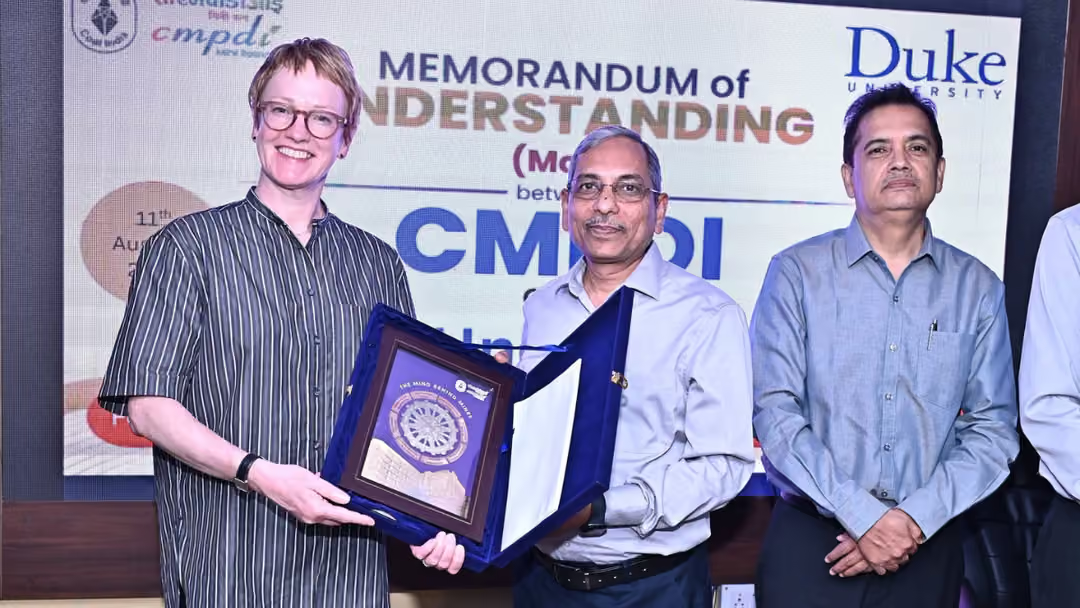

Partnership to focus on critical mineral recovery, sustainable mining, decarbonisation and advanced mineral technologies
Kolkata: Central Mine Planning & Design Institute Limited (CMPDI), a subsidiary of Coal India Limited, has signed a five-year Memorandum of Understanding (MoU) with Duke University, USA, to strengthen collaboration in critical minerals, sustainable mining and mineral recovery research.
The strategic partnership will combine CMPDI’s mining expertise in India with Duke University’s research capabilities in areas including mineral sciences, energy systems, environmental sustainability and advanced technologies.
Focus on Critical Mineral Recovery
A major component of the collaboration will be the assessment and potential recovery of critical minerals from coal and mining-related waste.
The research will explore the recovery of valuable minerals from materials such as:
- Overburden
- Coal rejects
- Fly ash
- Acid mine drainage
The partnership will particularly examine critical minerals including Rare Earth Elements (REEs), lithium and graphite.
The institutions will also work on advanced mineral testing, characterisation and recovery technologies aimed at improving the economic and environmental potential of mining-related resources.
Collaboration on Sustainable Mining
The MoU extends beyond critical mineral exploration and includes several areas related to sustainable and low-carbon mining.
The research agenda will cover:
- Low- and zero-carbon technologies
- Mine repurposing
- Post-mining land use
- Methane monitoring
- Decarbonisation
- Advanced mineral recovery
Duke University will contribute its expertise in scientific research, mineral characterisation and process optimisation, while CMPDI will provide field support, samples, technical data and coordination in India.
Strengthening India’s Critical Minerals Capabilities
The partnership could help CMPDI and the wider Coal India Group expand their technical capabilities beyond conventional coal-related consultancy and into emerging areas such as critical minerals, resource recovery and sustainable mining technologies.
Critical minerals such as rare earth elements, lithium and graphite are increasingly important for sectors including renewable energy, electric vehicles, advanced electronics, batteries and strategic industries.
Research into recovering these resources from mining waste could also support India’s efforts to improve resource efficiency and domestic mineral availability.
Five-Year Partnership Focused on Research and Knowledge Exchange
The five-year agreement is primarily focused on research collaboration, knowledge exchange and capacity building.
The MoU itself does not constitute a confirmed revenue contract or guarantee any direct financial gain for CMPDI. Its immediate objective is to create a framework for joint research, technical cooperation and development of new capabilities.
A Step Towards Sustainable Mining and New Mineral Technologies
The CMPDI-Duke University partnership represents a strategic move towards combining India’s mining expertise with global academic research capabilities.
As demand for critical minerals continues to grow, the collaboration could contribute to the development of new mineral recovery technologies, sustainable mining practices and low-carbon solutions, supporting India’s long-term energy, industrial and strategic requirements.