


Pottery, burial urns, beads, conch bangles and evidence of conch-cutting point to a potentially significant archaeological site near Thoothukudi
Thoothukudi: Scattered archaeological remains discovered across a vast stretch of land near Vellappatti, close to Pattinamurudhur in Tamil Nadu’s Thoothukudi district, are offering researchers intriguing clues about a period when the region may have been connected to a thriving maritime trade network.
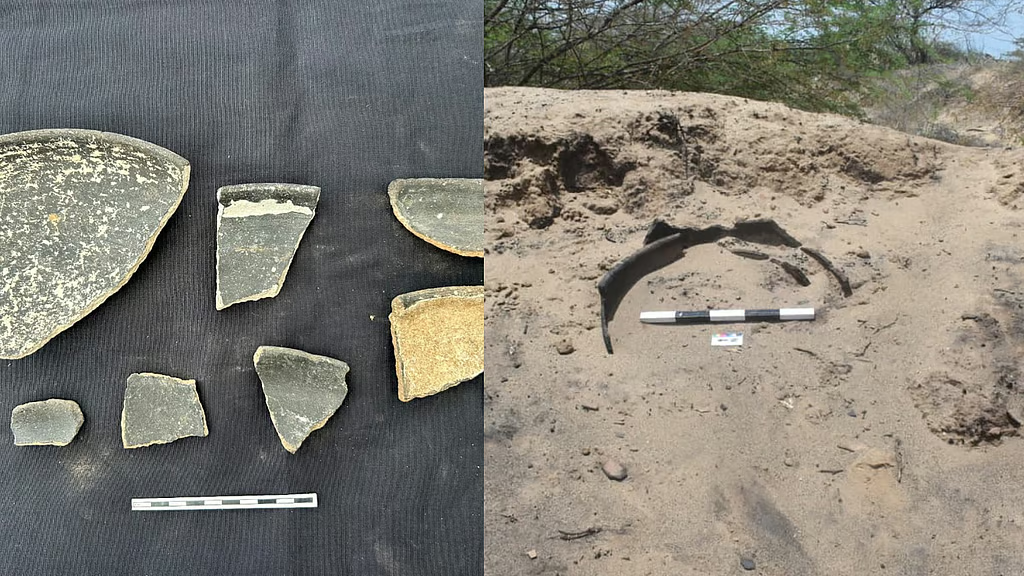
A recent field survey in an area locally known as ‘Odai’, located between Tharuvaikulam and Vellappatti, uncovered a range of archaeological material, including pottery fragments, burial urns, beads, conch bangles and waste from conch-cutting activities.
Archaeologist A. Michael Dinesh Joel, who conducted the survey along with K. Karuppasamy, believes the findings are significant enough to warrant a detailed archaeological excavation to understand the historical and cultural importance of the site.
The survey was carried out while investigating the cultural continuity of Pattanamarudur, where the Tamil Nadu Archaeology Department is currently conducting excavations. Located around 6 km from the Odai site, Pattanamarudur was an important centre for conch-cutting and ornament production during the medieval period.
However, the discoveries at Odai suggest that the area’s history may extend much further back.
Evidence Spanning the Sangam to Medieval Periods
The archaeological material is spread across more than 300 acres.
According to Joel, the northern portion of the site has produced evidence associated with the medieval period, while the southern section contains remains that may date back to the Sangam era.
Among the discoveries are black-and-red ware pottery, graffiti-marked pottery, burial urns, carnelian beads, decorated conch bangles and conch-cutting waste.
Researchers have also identified iron slag, foreign pottery, medieval red ware, glass beads, conch and glass bangles, copper coins, terracotta figurines and pipes.
The diversity of the material suggests that the settlement may have supported a range of activities, including craft production, trade and possibly industrial work.
Possible Links to International Maritime Trade
Some of the most notable discoveries are fragments of Chinese celadon and Barcelona pottery.
According to Joel, the presence of such foreign pottery provides potential evidence of international maritime connections and raises questions about the site’s role in ancient trade networks.
“Over the past two years, I have been conducting field surveys and documenting various archaeological sites in Thoothukudi district. While looking for the cultural continuity of the Pattanamarudur excavation, we surveyed the Odai area,” Joel said.
He said the team found evidence ranging from the Sangam period to the medieval period, along with indications of international maritime trade.
The discoveries could provide valuable information about how communities along the southern Tamil coast interacted with traders and settlements beyond the region.
Conch-Cutting Industry Raises Questions
Another important aspect of the site is the large quantity of conch-cutting waste and decorated conch bangles.
Joel believes these remains could indicate that a conch ornament-making workshop operated at the site during the Sangam period.
Such evidence is particularly significant because of the historical association between conch processing, ornament production and coastal trade in southern Tamil Nadu.
The findings have prompted comparisons with Korkai, the ancient Pandya-associated port known for its maritime connections and conch-related industries.
Could Vellappatti Have Been Part of the Korkai Trade Network?
Korkai is widely recognised for its importance in the ancient maritime history of the Pandya region.
The combination of burial urns, graffiti-marked pottery, craft-production waste, beads and imported pottery found at Vellappatti has led Joel to suggest that the area may have played a comparable role during the Sangam period.
However, researchers emphasise that the available evidence currently provides clues rather than definitive conclusions.
A systematic excavation could help establish the chronology of the settlement, determine the nature of its economic activities and clarify whether it was connected to the wider network of ancient coastal settlements associated with Korkai.
Call for Detailed Archaeological Excavation
Joel has called for a scientific and systematic excavation of the Vellappatti area.
Such an excavation could potentially reveal additional evidence about the site’s settlement patterns, craft industries, burial practices and connections with regional and international maritime trade.
For now, the artefacts scattered across the landscape represent pieces of a much larger historical puzzle.
If future excavations confirm the early dating and maritime links suggested by the survey, Vellappatti could emerge as an important archaeological site for understanding the evolution of coastal trade and settlements in southern Tamil Nadu.
The discoveries also highlight the possibility that the region around Thoothukudi and Korkai may have been part of a much wider maritime world that connected ancient Tamil communities with trading networks across the Indian Ocean.