

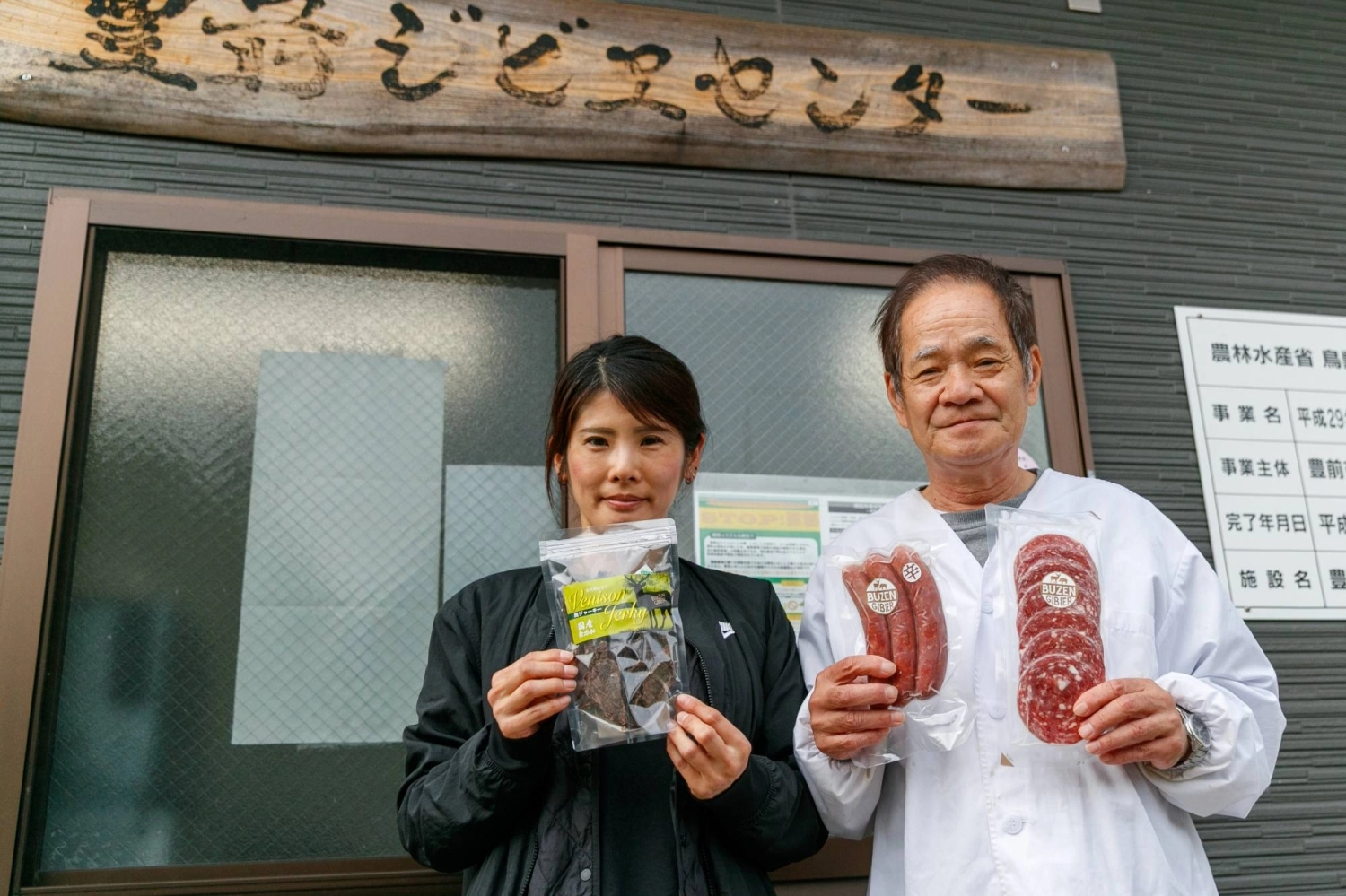

BUZEN, Fukuoka : A state-of-the-art game meat processing facility in Buzen, Fukuoka Prefecture, is transforming animals culled to prevent agricultural damage into premium venison and wild boar products, while creating a new opportunity for regional economic development.
The Buzen Gibier Center, established by the city in 2018, processes wild animals under strict hygiene standards and supplies meat to consumers, restaurants and businesses. The initiative aims to give economic value to wildlife that would previously have been discarded after being culled.
Turning Wildlife Management Into a Food Industry
Inside the facility, workers process freshly harvested deer, wild boar and Japanese badgers. The center is equipped with high-pressure steam cleaning rooms, sterilization systems, refrigerated aging chambers and meat-processing equipment, allowing the entire process from carcass preparation to packaging to be completed under one roof.
Technician Mutsujiro Suda, 51, who is also an experienced hunter, has spent years refining processing techniques to improve the quality of game meat and reduce its characteristic odor.
The center processed 421 animals in the year through March 2024 and 424 animals in the following year, according to the Buzen city government.
Growing Demand for Venison and Wild Boar
Game meat, known as gibier in French, has traditionally been associated with European cuisine. In Japan, however, it is increasingly attracting consumers as a lean, high-protein alternative to conventional meat.
The Buzen center has expanded its sales network beyond local roadside stations and food markets to restaurants and businesses in Fukuoka and the Tokyo metropolitan area.
Its products have also expanded beyond food for human consumption.
Game Meat-Based Pet Treats
The center has collaborated with Nana Hirano, 44, a member of Japan’s Regional Revitalization Cooperation Corps, to develop additive-free jerky for pets using venison approved for human consumption.
The products are made primarily from venison and wild boar, with cuts including backbone, shoulder blade, lung and heart.
Hirano was inspired by her late dog, Kojiro, who suffered from skin allergies. She wanted to develop natural treats that she would feel comfortable giving to pets.
The jerky went on sale in January 2025 through online channels and local roadside stations and has received positive feedback from customers.
Wildlife Damage Drives the Initiative
The economic importance of the project is closely linked to the growing problem of wildlife damage in agriculture.
According to Japan’s agriculture ministry, crop damage caused by wild animals in Fukuoka Prefecture reached approximately ¥687 million ($4.3 million) in fiscal 2024, an increase of about ¥92 million from the previous year.
Using culled animals as food provides an additional economic incentive for wildlife management while reducing waste.
Declining Animal Supply Creates a New Challenge
The center’s success, however, has created a new challenge.
Masaaki Makino, head of the center, said the number of animals available for processing has begun to decline as culling programs become more effective.
Changes in wildlife behavior linked to climate change could also affect the supply. In particular, wild boar are increasingly being observed becoming pregnant during winter, suggesting that traditional breeding patterns may be changing.
The center currently mainly accepts animals harvested within Buzen but is considering expanding its collection area to ensure a stable supply.
A New Future for Buzen
Hirano, whose assignment with the Regional Revitalization Cooperation Corps ends in August, plans to remain in Buzen and pursue her long-standing dream of opening a rural dog cafe.
She hopes the future cafe can also serve locally produced game meat and pet products, helping attract visitors and create another outlet for regional products.
For the Buzen Gibier Center, the goal extends beyond selling meat. It represents an attempt to connect wildlife management, food production, pet products and rural revitalization into a sustainable local business model.
As the center seeks to secure a stable supply of animals, its experience highlights both the potential and challenges of turning a wildlife-management problem into a regional economic opportunity.