


Husband, son, daughter, brother, sister and other close relatives of elected women representatives can no longer be appointed or nominated as their representatives or coordinators
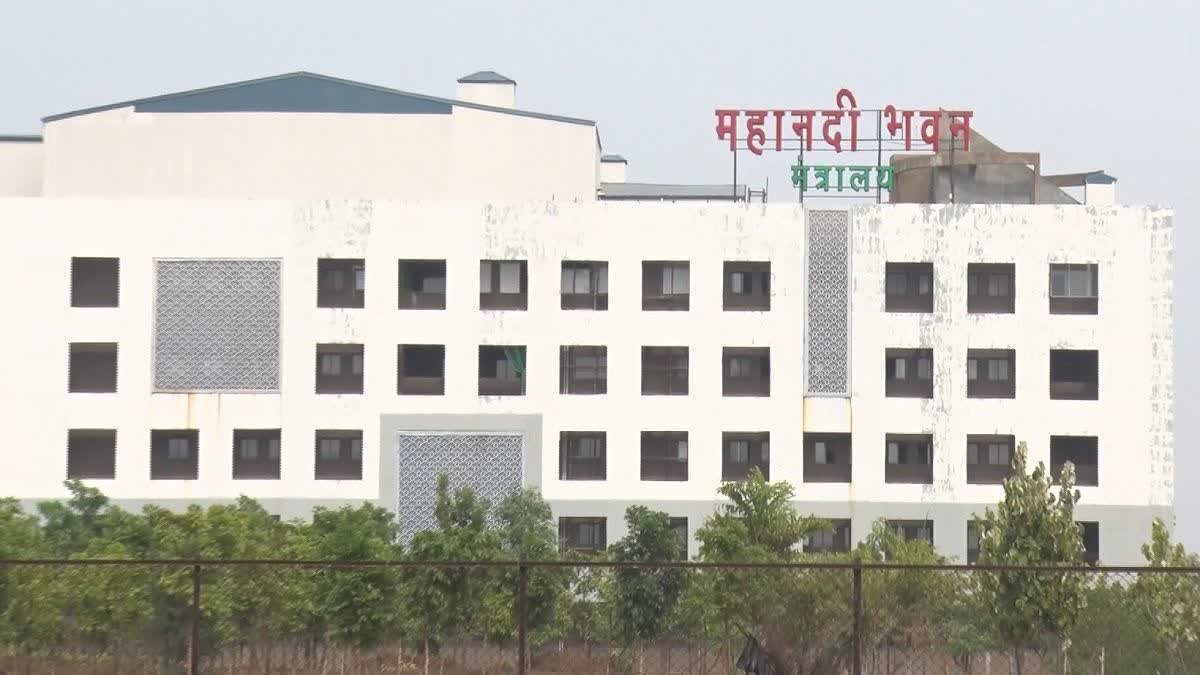
Raipur: The Chhattisgarh government, led by Chief Minister Vishnu Deo Sai, has taken a major decision concerning elected women representatives in urban local bodies. Under the new rules, the husbands, sons, daughters, brothers, sisters and other close relatives of elected women representatives cannot be nominated or appointed as their representatives or coordinators in municipalities and other urban local bodies.
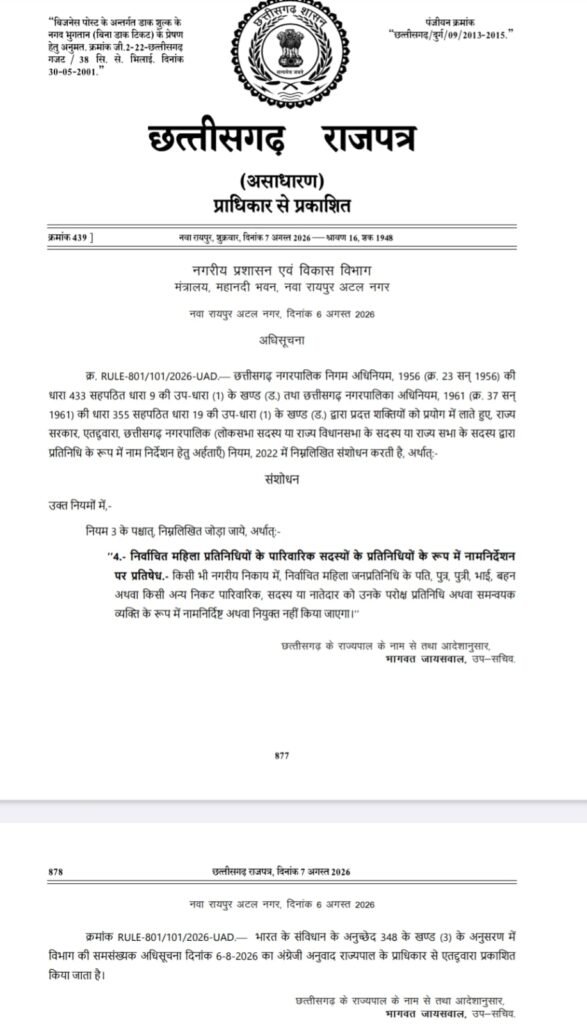
The state government has amended the relevant rules and issued an official notification in this regard. The new provision has come into effect across the state’s urban local bodies following its publication in the Chhattisgarh Gazette.
Family Members Can No Longer Act on Behalf of Women Representatives
The decision will directly affect arrangements in which husbands or other family members of elected women representatives have been functioning on their behalf.
Under the amended provision, a relative of an elected woman representative cannot be designated or appointed as her indirect representative or coordinator.
This means the authority and responsibilities associated with an elected woman’s position cannot be exercised through her family members.
Urban Administration Department Amends Rules
The Urban Administration and Development Department has amended the Chhattisgarh Municipalities Rules, 2022 in this regard.
The amended provision clearly prohibits the nomination or appointment of family members of elected women representatives as their representatives or coordinators.
Which Relatives Are Covered by the Restriction?
The new rule specifically covers:
- Husband
- Son
- Daughter
- Brother
- Sister
- Other close family members or relatives
Such individuals cannot be nominated or appointed as the indirect representative or coordinator of an elected woman representative.
The objective is to ensure that responsibilities attached to an elected position are directly handled by the elected representative herself.
Decision Effective After Gazette Notification
The government’s decision is not merely an administrative announcement. The restriction became effective after the amendment was published in the Chhattisgarh Gazette.
Accordingly, all relevant urban local bodies in the state will now have to follow the amended provisions while making appointments or nominations for representatives and coordinators.
A Step Towards Strengthening Women’s Leadership
The decision is being viewed as an important step toward ensuring that elected women representatives exercise their authority independently.
Women elected to public office receive their mandate directly from voters. The new provision seeks to ensure that the responsibility, decision-making authority and accountability associated with that position remain with the elected representative, rather than being exercised by family members.
Checks the Practice of Relatives Acting as Representatives
In some cases, husbands or other family members of elected women representatives have been seen participating in meetings, coordinating with officials and becoming involved in administrative activities on their behalf.
Such arrangements have raised questions about whether the elected representative or a family member is actually exercising the authority of the office.
The latest amendment seeks to legally prevent such parallel arrangements by prohibiting relatives from functioning as the elected woman’s indirect representative or coordinator.
Applicable Across Urban Local Bodies in Chhattisgarh
The restriction is not limited to a particular municipal corporation, municipality or nagar panchayat. Following publication in the Gazette, the provision applies to the relevant urban local bodies across Chhattisgarh.
Family members of elected women representatives can therefore no longer be nominated or appointed as their representatives or coordinators under the amended rules.
Why Is the Decision Important?
The core objective of the amendment is to ensure that women’s elected representation is genuine and effective.
When voters elect a woman to a public office, the responsibilities associated with that office should remain with her. The new rule seeks to prevent those responsibilities from being exercised indirectly by family members.
The decision could strengthen women’s leadership, accountability and independent decision-making in urban local bodies while reducing the possibility of relatives exercising influence in the name of elected representatives.
Bottom Line
The Chhattisgarh government has introduced a significant rule change to prevent family members from acting as representatives of elected women members in urban local bodies.
Under the amended rules, husbands, sons, daughters, brothers, sisters and other close relatives cannot be nominated or appointed as the indirect representatives or coordinators of elected women representatives.
With the amendment notified through the state Gazette, the provision is now effective across the relevant urban local bodies of Chhattisgarh.