
In a statement issued here, the Ministry of Education stated that the department is supporting institutions such as CBSE, NCERT, KVS, and NVS, along with states and union territories, in designing the course through a consultative process.
In a bid to integrate Artificial Intelligence (AI) and Computational Thinking (CT) as core components of future-ready education, the Department of School Education and Literacy (DoSE&L), Ministry of Education, has engaged leading educational institutions to develop a meaningful and inclusive curriculum under the broad framework of the National Curriculum Framework for School Education (NCF-SE) 2023 through a consultative process.
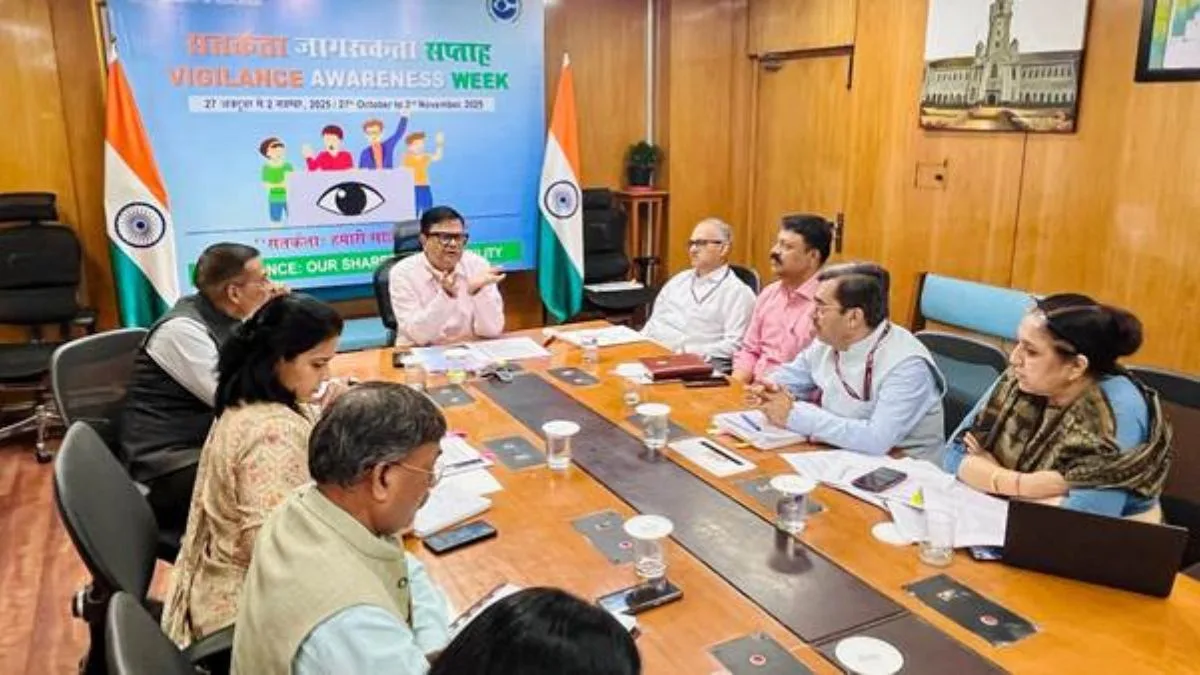
In a statement issued here, the Ministry of Education stated that the department is supporting institutions such as CBSE, NCERT, KVS, and NVS, along with states and union territories, in designing the course through a consultative process. The decision was taken during a stakeholder consultation held here today. The expert bodies, including CBSE, NCERT, KVS, NVS, and external experts, were part of the meeting. The Central Board of Secondary Education (CBSE) has constituted an expert committee chaired by Prof Karthik Raman, IIT Madras, to develop the AI & CT curriculum, the release stated.
Artificial Intelligence and Computational Thinking (AI & CT) will reinforce the concept of learning, thinking, and teaching and will gradually expand towards the idea of “AI for Public Good.” This initiative marks a nascent yet significant step towards the ethical use of AI to solve complex challenges, as the technology will be organically embedded from the foundational stage, beginning in Grade 3.
Speaking at the consultation, Sanjay Kumar, Secretary, DoSeL, emphasised that education in AI should be treated as a basic universal skill linked to The World Around Us (TWAU). He noted that the curriculum must be broad-based, inclusive, and aligned with NCF SE 2023, adding that ”every child’s distinct potential is our priority. “Our job as policymakers is to define the minimum threshold and re-evaluate it based on the changing needs,” he added.
He further highlighted that teacher training and learning-teaching materials, including NISHTHA’s teacher training modules and video-based learning resources, will form the backbone of curriculum implementation. Collaboration between NCERT and CBSE through a Coordination Committee under NCF SE will ensure seamless integration, structuring, and quality assurance. Kumar emphasised that ”it is good to have cross-national and cross-international board analysis and have an international perspective, but it needs to be specific to our needs”.
The meeting covered aspects of the introduction of Artificial Intelligence and Computational Thinking from Grade 3 onwards, starting in the academic session 2026–27, aligned with NEP 2020 and NCF SE 2023. It also included integration of AI & CT curriculum, time allocation, and resources under NCF SE, development of resource materials, handbooks, and digital resources by December 2025, and teacher training through NISHTHA and other institutions, designed to be grade-specific and time-bound.
Education Ministry charts roadmap for AI & computational thinking in schools from 2026–27




advertisement


Letest Post