


India has witnessed an unprecedented expansion of healthcare infrastructure over the past decade. The rapid growth in hospitals across the government and private sectors, Primary Health Centres (PHCs), diagnostic centres, and medical colleges in both urban and rural areas reflects the Government of India’s citizen-centric approach toward strengthening health security.
Under the leadership of Prime Minister Narendra Modi, the Government has worked consistently to make quality healthcare accessible to every citizen. This sustained commitment has contributed to a significant decline in Out-of-Pocket Expenditure (OOPE) on healthcare, from around 65% to 43% in recent years.
From a newborn receiving care in a district hospital to a cancer patient undergoing treatment at a tertiary-care centre, reliable, high-quality and affordable medical devices have become indispensable to modern healthcare.
The Government is strengthening public health systems across rural and urban India through investments in upgraded laboratories, critical-care infrastructure, disease surveillance systems and emergency-response mechanisms under the Pradhan Mantri Ayushman Bharat Health Infrastructure Mission (PM-ABHIM).
As India moves toward the vision of Viksit Bharat 2047, the focus is increasingly shifting toward building an Atmanirbhar MedTech ecosystem that can make healthcare more affordable, accessible and resilient.
Reducing Import Dependence Through Domestic Manufacturing
Historically, India depended heavily on imports for several sophisticated medical devices. While imported technologies contributed significantly to improving healthcare delivery, they also resulted in higher costs, exposed the sector to global supply-chain disruptions and sometimes limited accessibility.
Recognizing these challenges, the National Medical Devices Policy 2023 seeks to strengthen domestic manufacturing capacity and technological capabilities, particularly for advanced medical technologies, with the objective of making medical devices more affordable and reducing diagnostic costs.
The Government has adopted a comprehensive strategy to strengthen the medical devices ecosystem through initiatives including the Production Linked Incentive (PLI) Scheme, Medical Device Parks and the Promotion of Research and Innovation in Pharma-MedTech (PRIP) Scheme.
These initiatives are helping create an enabling environment for manufacturing, innovation, investment and global competitiveness.
The results are encouraging. Manufacturing of more than 50 high-end medical devices has commenced under the PLI Scheme. Equally significant is the growing confidence of global investors, reflected in sustained foreign direct investment in the sector.
These developments demonstrate that India is steadily emerging as a trusted partner in the global MedTech value chain.
Technology for More Affordable Healthcare
India’s MedTech journey is not limited to becoming a manufacturing hub. The country is also rapidly adopting medical technology to improve healthcare outcomes and the lives of its citizens.
Affordable access to advanced diagnostic equipment, imaging systems, implants, intensive-care equipment and digital-health solutions can reduce the financial burden on patients while improving the quality and timeliness of care.
Domestic manufacturing contributes directly to this objective by reducing import dependence, strengthening supply-chain resilience and creating opportunities for greater cost efficiency.
India Has the Foundation to Lead in Next-Generation MedTech
India’s globally recognized pharmaceutical industry, strong engineering capabilities, rapidly expanding digital public infrastructure, vibrant startup ecosystem and skilled workforce provide a strong foundation for developing next-generation medical technologies.
Emerging fields such as Artificial Intelligence, Software as a Medical Device (SaMD), connected medical devices, robotics and remote diagnostics present enormous opportunities for India to develop solutions for both domestic and global healthcare needs.
The convergence of healthcare, technology and manufacturing can position India not only as a large consumer market but also as a global innovation and production centre for medical technology.
Quality Will Define Brand India MedTech
As Indian manufacturers expand into international markets, quality will increasingly become the defining characteristic of Brand India MedTech.
The Government is working to strengthen regulatory systems, expand accredited testing infrastructure, promote clinical evidence generation and align Indian standards with international benchmarks.
These measures are essential not only for ensuring patient safety but also for strengthening the global competitiveness and credibility of Indian medical-device manufacturers.
Government-Industry Collaboration Is Critical
Building a globally competitive MedTech ecosystem requires close collaboration among Government, industry, academia, healthcare providers, startups and investors.
Innovation flourishes when ideas can move efficiently from laboratories to manufacturing facilities and ultimately reach patients.
The Government remains committed to creating a stable, transparent and predictable policy environment that encourages research, investment, technology partnerships and ease of doing business.
Such collaboration will be critical to transforming India’s scientific and engineering capabilities into commercially viable healthcare solutions.
MedTech and the Vision of Viksit Bharat
As India progresses toward becoming a developed nation, healthcare and economic growth will increasingly reinforce one another.
A strong medical-devices sector can generate high-value manufacturing, skilled employment, exports and technological capabilities, while simultaneously making healthcare more affordable, accessible and resilient.
India’s MedTech sector is currently the fourth-largest market in Asia and ranks among the top 20 globally. With the market valued at approximately $15–16 billion and growing at nearly 12% CAGR, it is emerging as one of the country’s fastest-growing manufacturing sectors.
The vision of Viksit Bharat emphasizes global leadership rooted in quality, innovation and inclusivity.
The Government is working to ensure that medical technologies address India’s most important public-health priorities—from maternal and child health and non-communicable diseases to emergency care, cancer, cardiovascular diseases and rural healthcare delivery.
Under the visionary leadership of Prime Minister Narendra Modi, India is steadily building an Atmanirbhar MedTech ecosystem.
This vision is not merely about manufacturing medical devices in India. It is about empowering every citizen with timely access to quality healthcare, strengthening India’s health security and positioning the country as a trusted global partner in advancing better health for humanity.
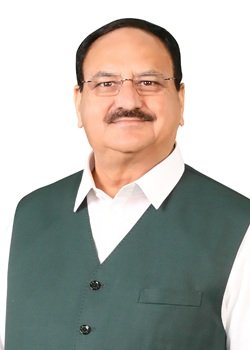
The author is Union Minister of Health & Family Welfare and Minister of Chemicals & Fertilizers, Government of India.