

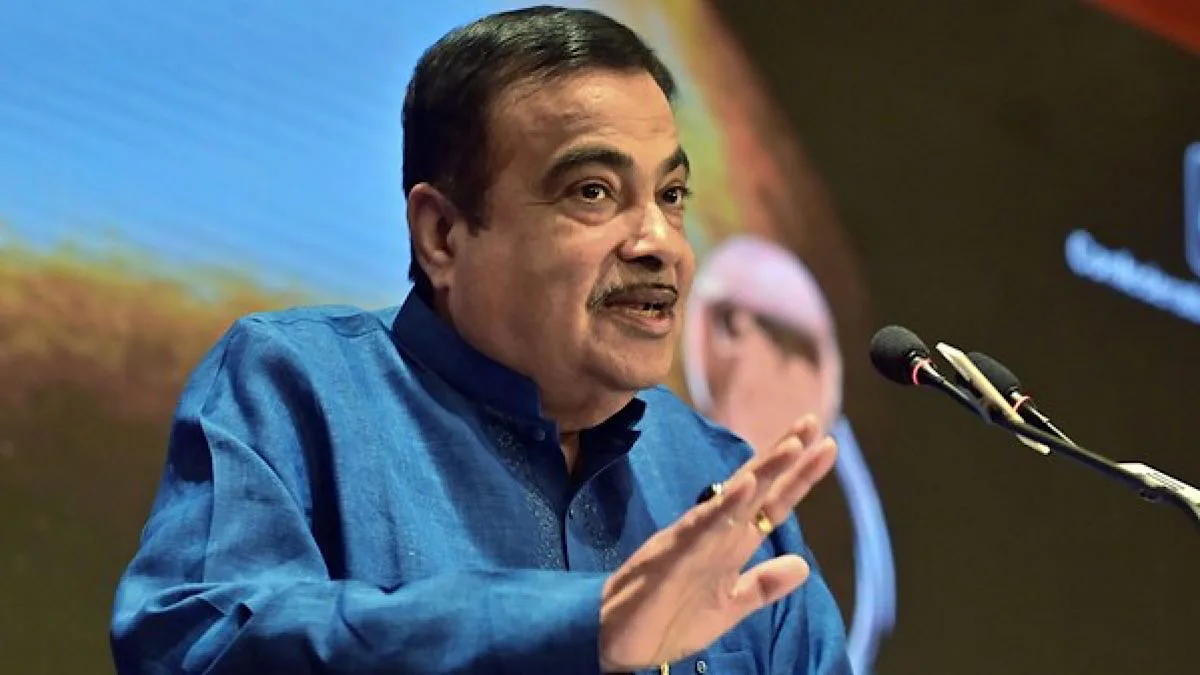

Mumbai : Union Minister for Road Transport and Highways Nitin Gadkari has approached the Bombay High Court seeking urgent legal action against the circulation of alleged AI-generated deepfake videos and social media posts that falsely claim he and his family financially benefited from the Government of India’s E20 ethanol blending programme.
The Bombay High Court has admitted the petition and is scheduled to hear Gadkari’s request for interim relief, including an injunction to prevent further circulation of the disputed content and directions for its immediate removal from social media platforms.
Meta and X Named as Respondents
In his petition, Gadkari has named Meta, the parent company of Facebook and Instagram, along with X, as respondents.
According to the petition, multiple AI-generated videos, manipulated images, and social media posts have been circulating online, alleging that the minister and members of his family profited from the Centre’s E20 ethanol blending policy.
The petition describes the content as “completely baseless, false, misleading, and defamatory,” arguing that it was created using artificial intelligence to deceive the public and damage the minister’s reputation.
Minister Rejects Allegations
Gadkari has strongly denied any connection between himself and the alleged financial benefits portrayed in the viral content.
The petition states that the claims falsely link him to government policy decisions and private financial interests without any factual basis.
According to the minister, the allegations are intended to create a false public narrative and undermine public confidence through digitally manipulated content.
E20 Programme Falls Under Different Ministry
A central argument in Gadkari’s petition is that the E20 ethanol blending programme is administered by the Ministry of Petroleum and Natural Gas, not the Ministry of Road Transport and Highways, which he heads.
The petition contends that the disputed videos incorrectly associate him with policy implementation and alleged financial gains despite his ministry having no direct administrative responsibility for the programme.
Key Demands Before the Court
Through his legal plea, Gadkari has requested the Bombay High Court to:
- Direct the immediate removal of the alleged AI-generated deepfake videos and related social media posts.
- Restrict further publication, sharing, or amplification of the disputed content.
- Order appropriate action against individuals responsible for creating and circulating the allegedly defamatory material.
- Grant interim protection until the matter is finally adjudicated.
The High Court will consider these requests during the upcoming hearing.
Understanding the E20 Ethanol Blending Programme
The E20 fuel programme is a key component of the Government of India’s energy transition strategy.
Under the initiative:
- E20 fuel consists of 20% ethanol and 80% petrol.
- The programme aims to reduce dependence on imported crude oil.
- It seeks to lower vehicle emissions and improve environmental sustainability.
- The policy also promotes the use of domestically produced biofuels, providing additional opportunities for India’s agricultural sector and ethanol producers.
The programme is administered by the Ministry of Petroleum and Natural Gas in coordination with other government agencies.
American Experts Warn About AI Deepfakes
Dr. Emily Carter, an American artificial intelligence researcher, said that AI-generated deepfakes are becoming increasingly sophisticated and pose serious challenges for public trust.
“Deepfake technology can convincingly manipulate audio and video, making it difficult for ordinary users to distinguish between authentic and fabricated content. Strong legal frameworks and rapid platform responses are becoming essential,” Carter said.
Michael Reynolds, an American cybersecurity and digital governance expert, emphasized that misinformation generated through AI can have significant consequences for democratic institutions and public figures.
“Governments, technology companies, and courts must work together to ensure that AI is not misused for defamation, political manipulation, or reputational harm while protecting freedom of expression,” Reynolds stated.
Growing Legal Focus on AI-Generated Content
The case highlights the increasing legal scrutiny surrounding artificial intelligence, deepfake technology, and online misinformation. As AI-generated content becomes more realistic and widely accessible, courts worldwide are witnessing a growing number of disputes involving digital impersonation, defamation, and the unauthorized use of public figures’ identities.
Conclusion
With the Bombay High Court agreeing to hear the matter, Nitin Gadkari’s petition could become an important case in India’s evolving legal approach to AI-generated deepfakes and online misinformation. The proceedings are expected to address not only the immediate removal of the disputed content but also broader questions regarding the responsibilities of social media platforms, accountability for AI-generated misinformation, and the protection of individuals from digitally manipulated defamatory material.