

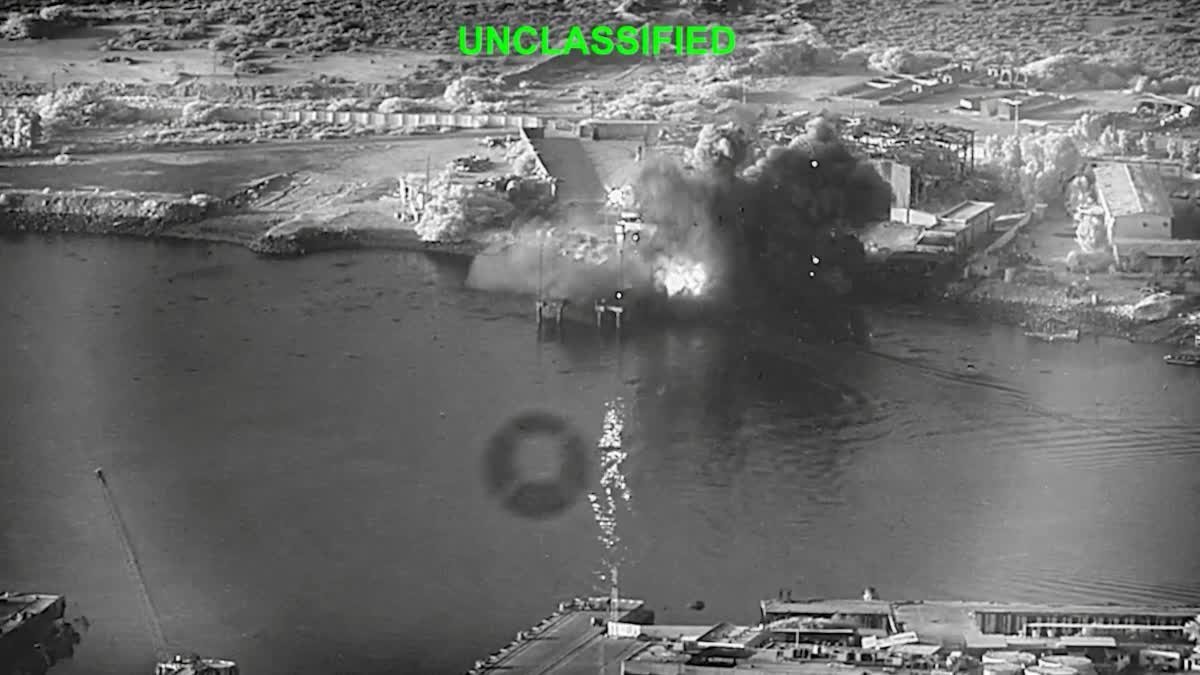

Florida/Washington, D.C. | The United States has launched its 13th consecutive night of military strikes against Iranian military targets, according to the U.S. Central Command (CENTCOM), marking a significant escalation in the ongoing confrontation between Washington and Tehran.
In an official statement posted on social media, CENTCOM said the latest operation began at approximately 6:45 p.m. (U.S. local time) and was aimed at holding Iran accountable while reducing threats posed by the Islamic Revolutionary Guard Corps (IRGC) to commercial shipping in the region.
CENTCOM: Operations Target Maritime Security Threats
According to CENTCOM, the strikes are intended to weaken military capabilities linked to the IRGC and improve the security of international maritime trade.
The command stated:
“U.S. forces initiated another night of strikes against Iranian military targets. This marks the 13th consecutive night of operations aimed at holding Iran accountable and reducing threats posed by the Islamic Revolutionary Guard Corps to commercial shipping.”
Earlier, CENTCOM also claimed that since re-establishing a naval blockade against Iran several days ago, U.S. forces have redirected multiple vessels and prevented at least one ship from entering or departing Iranian ports in an effort to enforce maritime restrictions.
President Donald Trump Reaffirms Tough Stance
The latest military action followed comments by U.S. President Donald Trump on Truth Social, where he stated that compensation for damage to ships and cargo would be drawn from Iranian funds under U.S. control, describing the measure as “fair and appropriate.”
Speaking later, President Trump reiterated that the United States would not allow Iran to develop or possess nuclear weapons.
“We are doing very well against Iran. They have bad intentions, and we cannot allow them to have nuclear weapons. They will never possess a nuclear weapon,” Trump said.
He further argued that preventing Iran from obtaining nuclear capabilities was a responsibility previous administrations had failed to fulfill.
Regional Tensions Continue to Rise
The continued exchange of military actions has intensified concerns over regional stability in the Middle East, particularly regarding:
- Maritime security in strategic shipping routes.
- The potential impact on global energy supplies.
- The possibility of a broader regional conflict involving additional countries.
International observers continue to monitor the situation closely as diplomatic efforts remain limited.
American Perspectives
Dr. Michael Reynolds, a national security analyst from Arlington, Virginia, said:
“Sustained military operations can increase pressure on an adversary, but prolonged campaigns also raise the risk of unintended escalation. Maintaining diplomatic channels alongside military actions remains essential.”
Emily Carter, an international relations researcher from Boston, Massachusetts, commented:
“Protecting commercial shipping is an important strategic objective, but long-term regional stability ultimately depends on diplomatic engagement, confidence-building measures, and international cooperation.”
Key Highlights
- CENTCOM confirmed the 13th consecutive night of U.S. military strikes against Iranian military targets.
- The operations are intended to reduce threats posed by the Islamic Revolutionary Guard Corps (IRGC) to commercial shipping.
- The U.S. military says it has also taken steps to restrict maritime movement involving Iranian ports.
- President Donald Trump reaffirmed that Iran will not be allowed to obtain nuclear weapons.
- Trump also stated that compensation for shipping-related damages could come from Iranian assets under U.S. control.
- Analysts warn that while military operations may address immediate security concerns, continued escalation increases the importance of diplomatic efforts to prevent a wider regional conflict.
Note: The claims regarding military operations, shipping restrictions, and strategic outcomes are based on official statements from U.S. authorities. Independent verification from all parties involved may not yet be available.