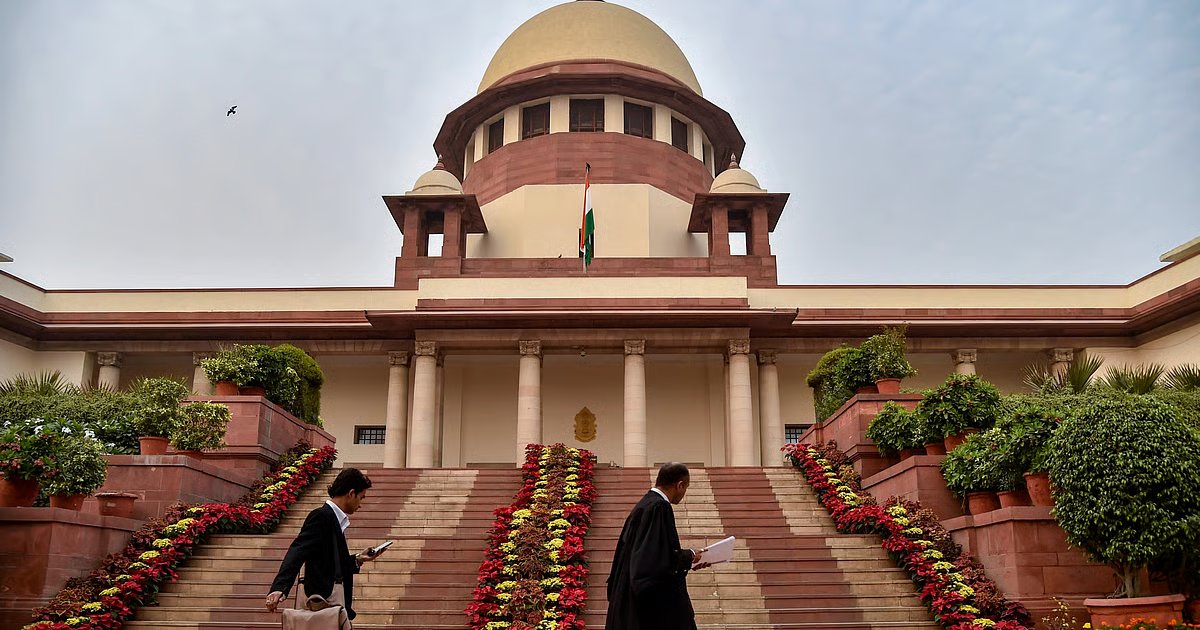

The Supreme Court has raised questions over the validity of Rules 4A, 4B and 4C of the Electricity (Amendment) Rules, 2023, observing that the provisions may be ultra vires the Electricity Act, 2003, as they could conflict with the parent legislation’s framework governing the duration of electricity licences.
A Bench of Justice Pamidighantam Sri Narasimha and Justice Alok Aradhe issued notice to the Union Government through the Ministry of Power, seeking its response on the legality of the three rules before deciding whether they can be sustained.
The Court noted that the Electricity Act, 2003, prescribes a licence period of 25 years from the date of issuance for electricity transmission, trading and distribution, unless the licence is revoked. It questioned whether subordinate legislation introduced in 2023 could provide deemed licensees with a fresh 25-year term and automatic renewal unless their licences are revoked.
The observations came while the Bench was hearing an appeal filed by the Uttar Pradesh government challenging an Appellate Tribunal for Electricity (APTEL) ruling that allowed Noida Power Company Limited (NPCL) to continue operating under its deemed licence until June 9, 2029.
The company had obtained its licence on August 30, 1993, for a period of 30 years, which expired in 2023. APTEL, however, ruled that since the deemed licence predated the Electricity Act, 2003, the 25-year period prescribed under the new legislation would be calculated from the date the Act came into force on June 10, 2003. This extended NPCL’s licence until June 9, 2029, including a one-year transitional period.
Why the Supreme Court questioned APTEL’s decision
While examining the dispute, the Supreme Court questioned the interpretation adopted by APTEL, noting that Section 15(8) of the Electricity Act, 2003, provides that a licence shall remain in force for 25 years unless revoked.
The Bench said this provision cannot be interpreted to mean that a licence, once granted, would continue indefinitely until it is revoked. It also rejected the argument that a deemed licensee would automatically become entitled to a fresh 25-year licence period from the commencement of the 2003 Act after the expiry of its original licence.
“Neither the plain text, the context, nor the intendment of the legislation permits such an interpretation,” the Court observed.
The Bench explained that licences granted under the earlier Electricity Act, 1910, which continued to remain in force after the commencement of the 2003 legislation, were treated as deemed licences under the new Act, subject to its provisions applying after one year or an earlier period specified by the Appropriate Commission.
However, this transition did not mean that every such licensee would automatically receive a fresh 25-year term, irrespective of the original conditions and duration of its licence.
What do Rules 4A, 4B and 4C provide?
During the pendency of the appeals, the Central Government introduced amendments to the Electricity Rules, 2005, through the Electricity (Amendment) Rules, 2023, which came into force on June 30, 2023.
The amendments inserted Rules 4A, 4B and 4C, dealing with the duration and renewal of electricity licences.
Rule 4A provides that the duration of a licence granted under Section 14 of the Electricity Act, 2003, would be governed by the terms and conditions prescribed by the Appropriate Commission.
Rule 4B provides that a deemed licensee falling under the first, second and fifth provisos to Section 14 of the Act would have a licence period of 25 years from the date the 2003 legislation came into force.
Rule 4C provides for automatic renewal of licences granted by the Appropriate Commission under Section 14 and deemed licences covered by the specified provisions, unless they are revoked. Such renewal would be for another 25 years at a time, or for a shorter period if requested by the licensee.
The rule also provides that licences already renewed by the Appropriate Commission for a specified period before the notification of the amendments would be treated as renewed under the new provisions. However, the automatic renewal mechanism does not apply to licences granted to transmission developers selected through tariff-based bidding under Section 63 of the Act.
The Supreme Court observed that the Central Government’s understanding of the 2003 Act, as reflected in these amendments, did not align with the interpretation adopted by the Bench.
“In our view, the Central Government’s understanding of the mandate of the 2003 Act, insofar as deemed licensees are concerned, as reflected in these Rules, is not in alignment with the interpretation of the 2003 Act we have adopted,” the Bench said.
It clarified, however, that Rules 4A, 4B and 4C had not been directly challenged in the proceedings. The Union Government had also not been heard on their validity, which the Court considered necessary before reaching a conclusion on whether the provisions were legally sustainable.
Supreme Court seeks Centre’s response
The Bench noted that subordinate legislation must remain consistent with the parent statute and cannot override or restrict the meaning of the primary legislation.
It observed that rules framed by the executive cannot, by themselves, determine or control the interpretation of the parent Act. While subordinate legislation may help explain certain statutory provisions, it cannot replace the interpretation that emerges from the language, context and purpose of the legislation.
In view of these considerations, the Court decided to implead the Union Government, through the Ministry of Power, as a party to the proceedings and issued notice seeking its response on the legality of Rules 4A, 4B and 4C.
NPCL allowed to continue operating until June 2029
As an interim measure, the Supreme Court directed that NPCL’s licence would continue until June 9, 2029, while the legality of the 2023 amendments is examined.
The Bench considered it appropriate to protect the company’s licence until the broader legal questions surrounding the amendments are resolved. The interim direction does not amount to a final ruling on the validity of the three rules.
The Court directed that the matter be listed on December 14, 2026, for further consideration.