
India ranks as the Singapore International Arbitration Centre’s (SIAC) third-largest foreign user jurisdiction, with 178 Indian parties involved in its arbitrations last year, Singapore’s Minister for Law and Second Minister for Home Affairs Edwin Tong said on Friday.
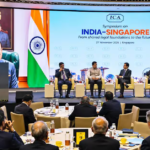
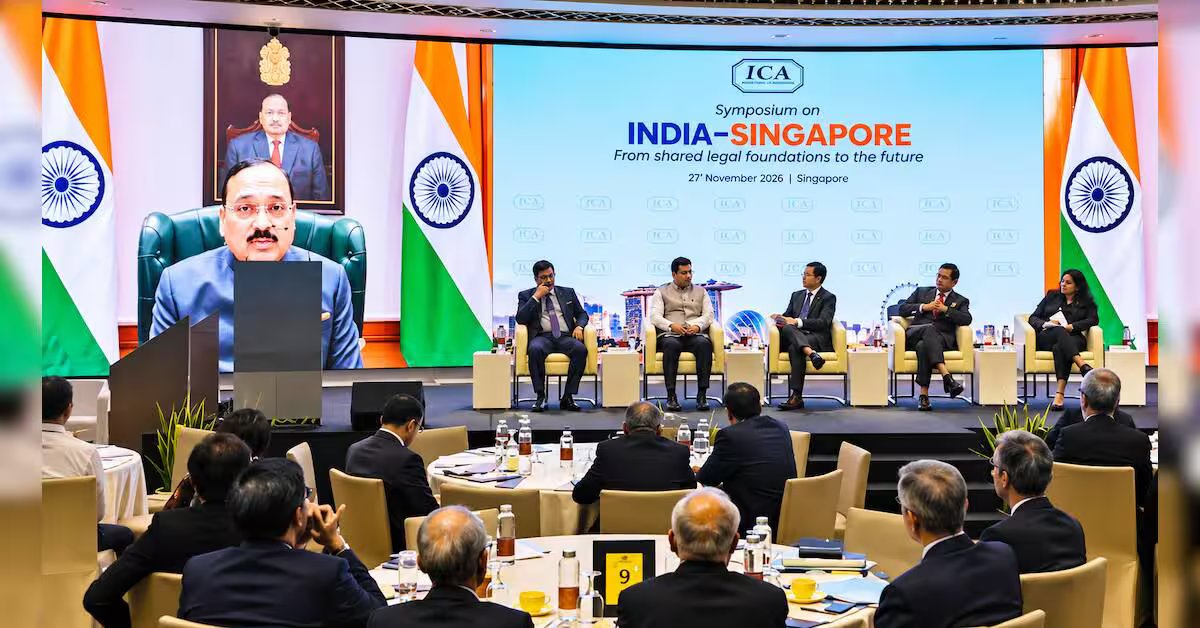
Speaking at the Indian Council of Arbitration’s (ICA) symposium on ‘India-Singapore: From Shared Legal Foundations to the Future’ in Singapore, Tong highlighted India’s growing participation in international arbitration and called for greater innovation by institutions, practitioners and courts to address the complexities of cross-border commercial disputes.
He said investors need the assurance that disputes arising from their investments would be resolved fairly, transparently and predictably. India has long been among SIAC’s most important foreign user jurisdictions, with Indian counsel and arbitrators also participating in cases that do not involve any Indian parties, he added.
Tong also highlighted the challenges posed by complex, multi-contract transactions, where interconnected disputes can end up being heard in separate forums, potentially leading to inconsistent outcomes.
He called for ways to resolve disputes involving interconnected parties more effectively while preserving the fundamental principle of party consent in arbitration.
“Arbitration is built on party consent. So how do we preserve that principle whilst ensuring that interconnected parties and their disputes can be resolved effectively?” he said.
“India and Singapore should aspire not merely to succeed in international arbitration, but to make international arbitration better,” Tong added.
CJI calls for stronger cooperation
In a video message to the symposium, Chief Justice of India (CJI) Justice Surya Kant called for greater cooperation between India and Singapore in arbitration, mediation and institutional development.
He said the two countries could exchange experiences in institutional design, professional standards, training and technology, while encouraging the early use of mediation to resolve commercial disputes.
“Predictability in dispute resolution is not an afterthought to commerce, it is part of the confidence that enables it,” the CJI said.
Highlighting the economic ties between the two countries, Justice Surya Kant said bilateral trade had increased from about $6.7 billion in 2004-05 to $34.3 billion in 2024-25.
Singapore also remains a major source of foreign investment into India, with cumulative foreign direct investment (FDI) inflows of about $174.88 billion between April 2000 and March 2025, accounting for around 24 per cent of India’s total inflows, he said.
The CJI said India’s growing engagement with mediation, including the establishment of the Mediation Council of India, offered further opportunities for cooperation between the two countries. He also highlighted the potential of multi-tiered dispute resolution clauses, which provide for mechanisms such as mediation before arbitration.
“Sometimes the best outcome is not a victory for one side, but an agreement that enables both sides to move forward,” he said.
Referring to the 2024 Memorandum of Understanding on Cooperation in Law and Dispute Resolution between India and Singapore, the first meeting of the India-Singapore Joint Consultative Committee in 2025, and the ICA’s India-Singapore ADR Conclave held in New Delhi on September 10, 2026, Justice Surya Kant said bilateral cooperation should be based on reciprocity.
“Neither needs to replicate the other’s institutional model. The opportunity is to learn from each other. The corridor must be a two-way channel for expertise, professional opportunities and institutional knowledge, measured by the confidence it creates on both sides,” he said.
Legal cooperation linked to trade ties
ICA President and Senior Advocate Dr N G Khaitan said a shared legal future between the two countries depended on strong economic and trade ties.
He highlighted Singapore’s predictable regulatory environment, commercial dispute resolution mechanisms and enforcement of law, noting that the country accounted for about 24 per cent of equity FDI into India.
“It is a win-win situation for all of us,” Khaitan said.
ICA Director General Arun Chawla said the symposium marked 200 years since Singapore’s Second Charter of Justice was granted on November 27, 1826.
He identified four pillars of the India-Singapore partnership: economy and enterprise; emerging technology; energy and environment; and exchanges and engagement, with trust connecting them.
“Commerce needs confidence, investment needs certainty, and both need assurance of justice,” Chawla