


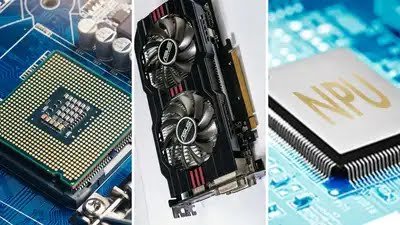

If you’re interested in smartphones, computers or modern AI-driven devices, you must have come across the terms CPU, GPU and NPU. They might look similar at first glance, but each of them plays a very different and crucial role in how your device performs.
Understanding the difference among these three processing units not only helps you judge the real performance of a device but also reveals how powerful a chipset truly is. Here’s a detailed look:
What is a CPU?
The Central Processing Unit (CPU) is often called the “brain” of a computer or smartphone. It handles everyday tasks such as launching apps, browsing the web, managing files and running system operations. In simple terms, the CPU processes commands and directs the hardware to perform various activities. It’s built for versatility and smooth multitasking.
What is a GPU?
The Graphics Processing Unit (GPU) specializes in handling visuals. Whether it’s gaming, video editing, rendering or handling heavy animations, the GPU accelerates all graphics-related tasks. It works parallelly to process thousands of smaller tasks at once, making it perfect for high-performance visuals.
What is an NPU?
The Neural Processing Unit (NPU) is designed specifically for artificial intelligence tasks. Modern phones and computers use NPUs to speed up AI-driven features like image recognition, voice processing, real-time translation, camera enhancements and more. As AI becomes central to user experience, NPUs are becoming a key indicator of a chipset’s capability.
Why This Matters
With CPUs handling general performance, GPUs managing graphics and NPUs boosting AI tasks, each unit plays a critical part in defining a device’s overall speed, efficiency and intelligence. Understanding these roles helps consumers make better decisions when comparing smartphones, laptops or processors.