
At least 45 incidents of mass fish mortality were reported across Indian rivers between November 2025 and November 2026, pointing to a widespread and recurring threat to aquatic ecosystems, according to an assessment by the South Asia Network on Dams, Rivers and People (SANDRP).
The findings come amid a political row over the recent deaths of hundreds of fish in the Yamuna near Delhi’s Sonia Vihar. The BJP and the Aam Aadmi Party (AAP) traded allegations over the incident, with claims of deliberate dumping of fish and chemical spraying into the river. However, the assessment indicates that such incidents are not confined to Delhi and have occurred across several river basins.
SANDRP’s analysis of reported cases found that 60% of the incidents were concentrated in four major river basins: the Ganga, Brahmaputra, Krishna and Indus.
The Ganga basin recorded the highest number, with nine incidents, all reported in the Yamuna basin. The Brahmaputra basin accounted for seven cases, followed by the Krishna with six and the Indus with five.
The assessment also documented repeated fish mortality events in several other rivers, including the Indrayani near Alandi in Pune, where incidents were reported in June, September and October, and the Phalguni in Mangaluru, which witnessed at least three cases in February, May and June.
Repeated deaths in the Yamuna
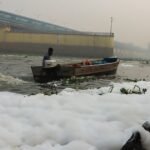
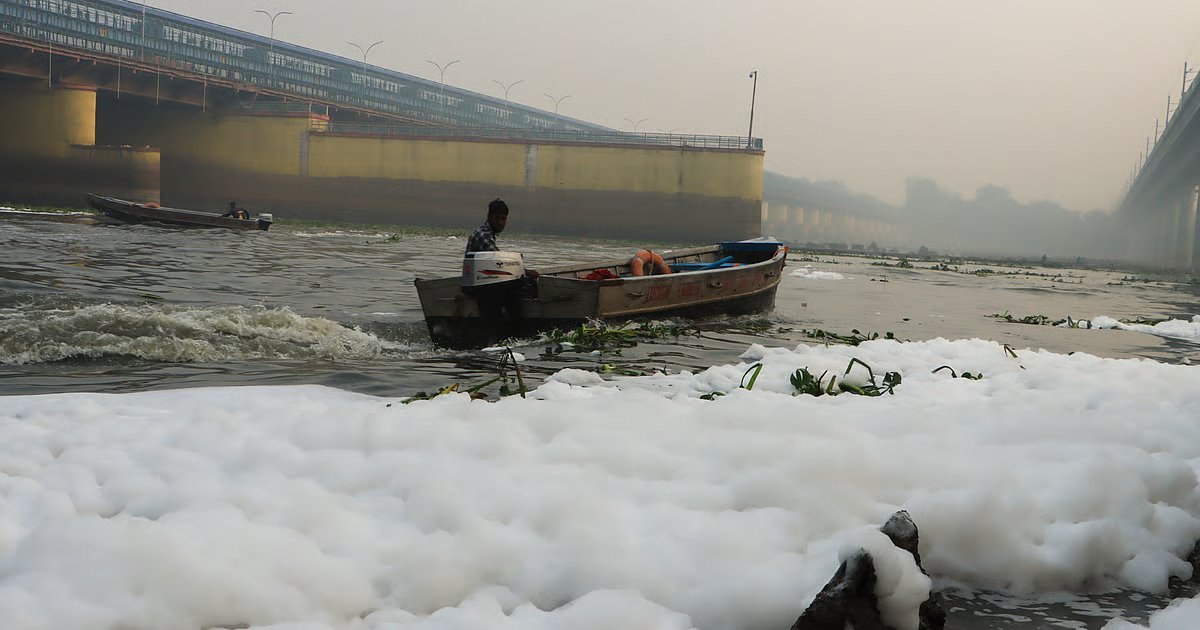
The latest findings have renewed scrutiny of the Yamuna, where multiple mass fish deaths were reported within a month.
Thousands of dead fish were found near Burari in north Delhi on October 14. Hundreds more were seen floating near Sonia Vihar on November 11, a day after the launch of the Namo Yamuna River Safari.
The Sonia Vihar incident triggered allegations from Delhi water minister Parvesh Verma, who accused unidentified people of deliberately dumping fish into the river to discredit the government. The AAP rejected the claim and blamed pollution.
Delhi Police subsequently registered an FIR in connection with the incident. However, the cause of the fish deaths has not been conclusively established.
The Burari episode was particularly unusual because mass fish mortality is more commonly reported during summer, when high temperatures can reduce dissolved oxygen levels in water.
Bhim Singh Rawat, a Yamuna activist and member of SANDRP, said he could not recall a similar episode during the winter months. He suggested that untreated industrial effluents could have contributed to the deaths, pointing to drains carrying wastewater from Haryana as possible sources.
SANDRP’s subsequent review also highlighted three mass fish mortality incidents along the Yamuna within a month, including one in Baghpat on October 13, followed by Burari on October 14 and Sonia Vihar on November 11. The organisation said the causes of these incidents remained unconfirmed, with no conclusive investigation report made public by November 19.
Pollution suspected in most cases
Industrial effluents and chemical pollution were suspected to be the main causes in around 20 of the 45 incidents documented in the assessment.
Sewage and domestic wastewater were identified as possible contributing factors in approximately 10 cases. In some instances, inadequate water releases from dams, declining water levels and physical obstructions in river channels also appeared to have contributed to fish mortality.
SANDRP noted that industrial and municipal pollution continued to affect both urban and rural stretches of rivers. In several cases, oxygen depletion was reported, but the assessment said this was often a consequence of polluted or stagnant water rather than the underlying cause of the deaths.
The incidents were spread across different parts of river systems, including headwaters, tributaries, main channels, creeks and estuaries. The report said the frequency and geographical spread of the events pointed to growing risks for freshwater ecosystems and communities dependent on rivers.
North and South India recorded the highest number of incidents, with 12 each. West India reported eight, Northeast India seven, Central India four and East India three.
The month-wise distribution showed that June had the highest number of incidents, with nine, followed by April and July with seven each. October and November recorded six incidents each, while May accounted for three. February, March, August and September reported two incidents each, indicating that fish mortality was not restricted to a particular season.
Investigations leave crucial questions unanswered
The assessment flagged shortcomings in the response to several incidents, with delays in inspections, sample collection, laboratory testing and public disclosure weakening efforts to identify pollution sources and establish accountability.
In the case of the October 14 fish deaths near Burari, no laboratory investigation had established the cause or confirmed the source of pollution.
SANDRP also raised concerns over the investigation into the fish deaths reported in Baghpat on October 14. Water samples were collected two days later, by which time the suspected polluted water had reportedly moved downstream. Fish samples were not collected for testing.
The organisation said such delays made it difficult to trace the source of contamination and determine who was responsible.
The Sonia Vihar incident also coincided with a rise in ammonia levels in raw water drawn from the Yamuna. Reports citing Delhi Jal Board officials put the level at around 1.3 mg per litre on November 11, affecting production at the Sonia Vihar water treatment plant for nearly five hours. The reading, however, did not by itself establish the cause of the fish deaths.
Rawat called for faster investigations and questioned the functioning of pollution control agencies.
“This shows we need swifter action. At the same time, it also raises questions on the pollution control boards and the Central Pollution Control Board,” he said.
SANDRP’s findings underline the need for timely scientific testing and effective monitoring, as repeated fish deaths across river systems continue to raise concerns over untreated wastewater, industrial discharges and the enforcement of pollution control measures.