
Amid geopolitical tensions and the conflict in West Asia disrupting global fertiliser supply chains and exposing India’s dependence on imported raw materials, the National Institute of Technology (NIT) Rourkela has developed an innovative technology to turn human urine into a source of agricultural nutrients.
The researchers have developed a unique electrochemical process to recover phosphorus from human urine and convert it into struvite, a slow-release fertiliser that can support plant growth. The innovation could help India explore alternative sources of essential crop nutrients, reduce dependence on energy-intensive conventional fertiliser production and tap an unconventional domestic resource to supplement fertiliser requirements.
An important advantage of the electrochemical process is that it eliminates the need for the continuous addition of external magnesium salts and alkaline chemicals, which are generally required in conventional chemical precipitation methods. Reducing the consumption of these chemicals could lower operating costs and simplify nutrient recovery, particularly in decentralised systems.
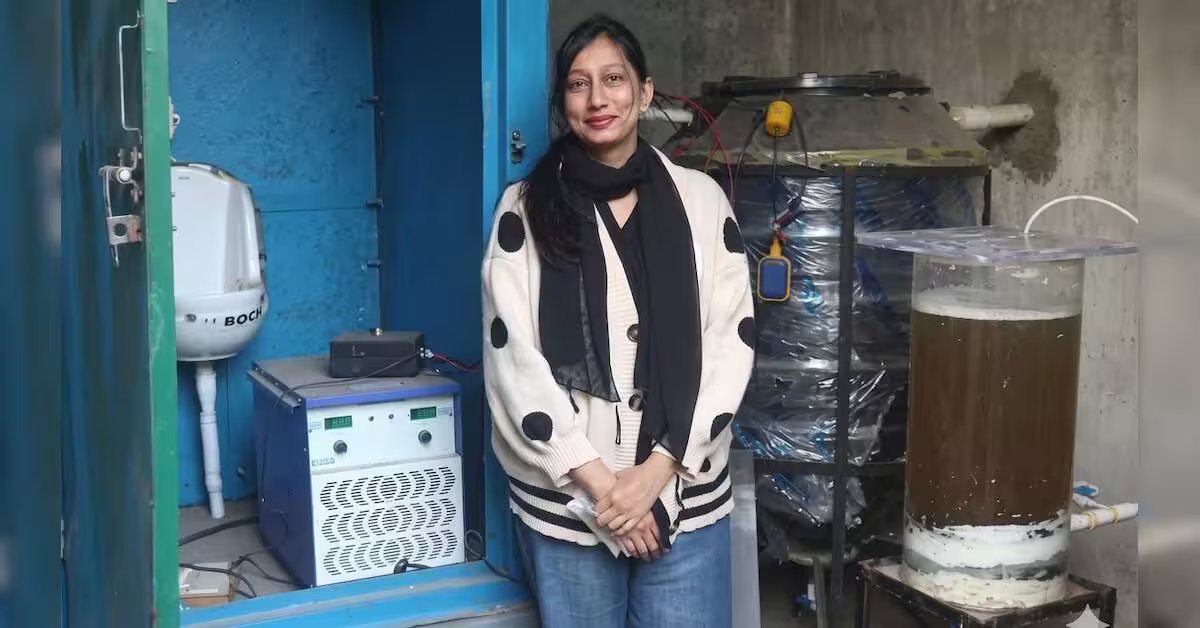
According to the researchers, electricity triggers chemical reactions and separates useful substances during the electrochemical procedure. Instead of additional chemicals, the process uses magnesium electrodes, which gradually dissolve when an electric current passes through the urine. The dissolved magnesium then reacts with other substances present in the urine to form struvite, a useful chemical that acts as a slow-release fertiliser.
Explaining the innovation, P Balasubramanian, associate professor in the Department of Biotechnology and Medical Engineering at NIT Rourkela, said the electrochemical process offers a sustainable and chemical-free route for nutrient recovery.
“We can generate the required magnesium ions in situ by using a sacrificial magnesium anode, eliminating the need for external chemical addition and enabling precise control over the precipitation process. This makes the technology compact, modular and well-suited for decentralised nutrient recovery,” he said.
The researchers have introduced a reverse-polarisation mechanism, periodically reversing the direction of the electric current to dislodge accumulated deposits from the electrodes and ensure more uniform dissolution of magnesium into the urine solution, improving the consistency of the process.
They have tested the electrochemical system in two reactors with working volumes of five litres and 35 litres, using urine collected from male urinals. The experiments demonstrated a phosphorus recovery efficiency of more than 98 per cent in the five-litre reactor and over 91 per cent in the larger 35-litre reactor.
“The recovered solid material was subsequently analysed using X-ray diffraction and Fourier-transform infrared spectroscopy. Both techniques confirmed that the precipitate was struvite. Further experiments to assess its agricultural utility showed that the recovered fertiliser performed comparably to commercially available NPK fertilisers in supporting the growth of basil, cowpea and okra,” said Alisha Zaffar, a research scholar.
The results indicate that human urine could serve as a recoverable source of plant nutrients, particularly phosphorus, while reducing the volume of nutrient-rich waste entering conventional wastewater treatment systems. The technology could eventually support a decentralised model of nutrient recovery in the country, where urbanisation is generating increasing volumes of wastewater and agricultural demand for fertilisers remains high.
The researchers have already conducted a techno-economic assessment to check the technology’s commercial viability. They explored integrating the process with additional nutrient recovery operations, including the production of ammonium sulphate.
“The integrated system, when assessed at a proposed 500-litre pilot scale, demonstrated financial viability, with an estimated payback period of 6.5 years and an internal rate of return of 13 per cent. This confirmed that a multi-nutrient recovery approach is the key to making this technology economically sustainable,” Balasubramanian said.
The breakthrough assumes significance as India grapples with the risk of supply disruptions and rising costs of critical fertiliser inputs, including rock phosphate, ammonia and sulphur. The technology could offer an additional avenue for strengthening India’s long-term fertiliser security by recovering essential nutrients from human waste rather than relying entirely on mined resources and energy-intensive industrial production.
According to estimates by the Fertiliser Association of India, the country imports around 86 per cent of its rock phosphate requirement, 75 per cent of the ammonia used in complex fertilisers and 52 per cent of its sulphur requirements. This dependence makes domestic agriculture vulnerable not just to fertiliser import disruptions but also to volatility in the prices of raw materials used by Indian manufacturers.
“We are now planning to develop continuous-flow electrocoagulation systems and conduct field trials to assess the performance of struvite-based fertiliser under actual agricultural conditions,” said Sivaraman J, an associate professor.
If successfully scaled up, the research could help turn an everyday human waste stream into a source of agricultural nutrients, offering India another option in its efforts to build a more resilient and resource-efficient fertiliser ecosystem
“We will also explore technology upgrades for green hydrogen recovery and a comprehensive life-cycle assessment to establish the environmental and economic sustainability of the process,” said Bikash Chandra Maharaj, an assistant professor.